Wang, K., Liu, C., Shu, Q., Wekerle, C., Wang, C., Wang, Q. Warming transforms the western Arctic Ocean into a hub of drifting matter. Nature Communications 17, 5317. (2026). https://doi.org/10.1038/s41467-026-74439-5
The Arctic Ocean is one of the most rapidly changing places on Earth. Today, the Arctic is warming nearly four times faster than the global average, leading to reduced sea ice cover and transformed ocean circulation patterns. While the Arctic Ocean contains only about 1% of the world’s ocean volume, it receives roughly 10% of global river discharge, making rivers an important driver of Arctic Ocean environmental change.
Major Arctic rivers such as the Ob, Yenisey, Lena, Kolyma, and Mackenzie transport enormous quantities of freshwater carrying nutrients, carbon, and pollutants into the Arctic Ocean. Notably, the Ob-Yenisey system represents the largest combined freshwater input to the Arctic Ocean from Eurasia. As climate change accelerates permafrost thaw and increases precipitation across Arctic watersheds, river discharge is expected to increase throughout the 21st century.
Historically, most freshwater entering the Arctic experienced a long layover. River water often remained on continental shelves or circulated within regional reservoirs for approximately 6 years before exiting the Arctic. However, a new study by Wang and colleagues suggests climate warming is transforming the Arctic from a slow-moving rail yard into a more connected transportation network, with faster routes linking distant regions of the Arctic and North Atlantic.
Tracking Arctic River Water
To investigate how river discharge spreads throughout the Arctic Ocean under climate warming, Wang and colleagues used numerical simulations to track water from major Arctic rivers under historical and future climate conditions.
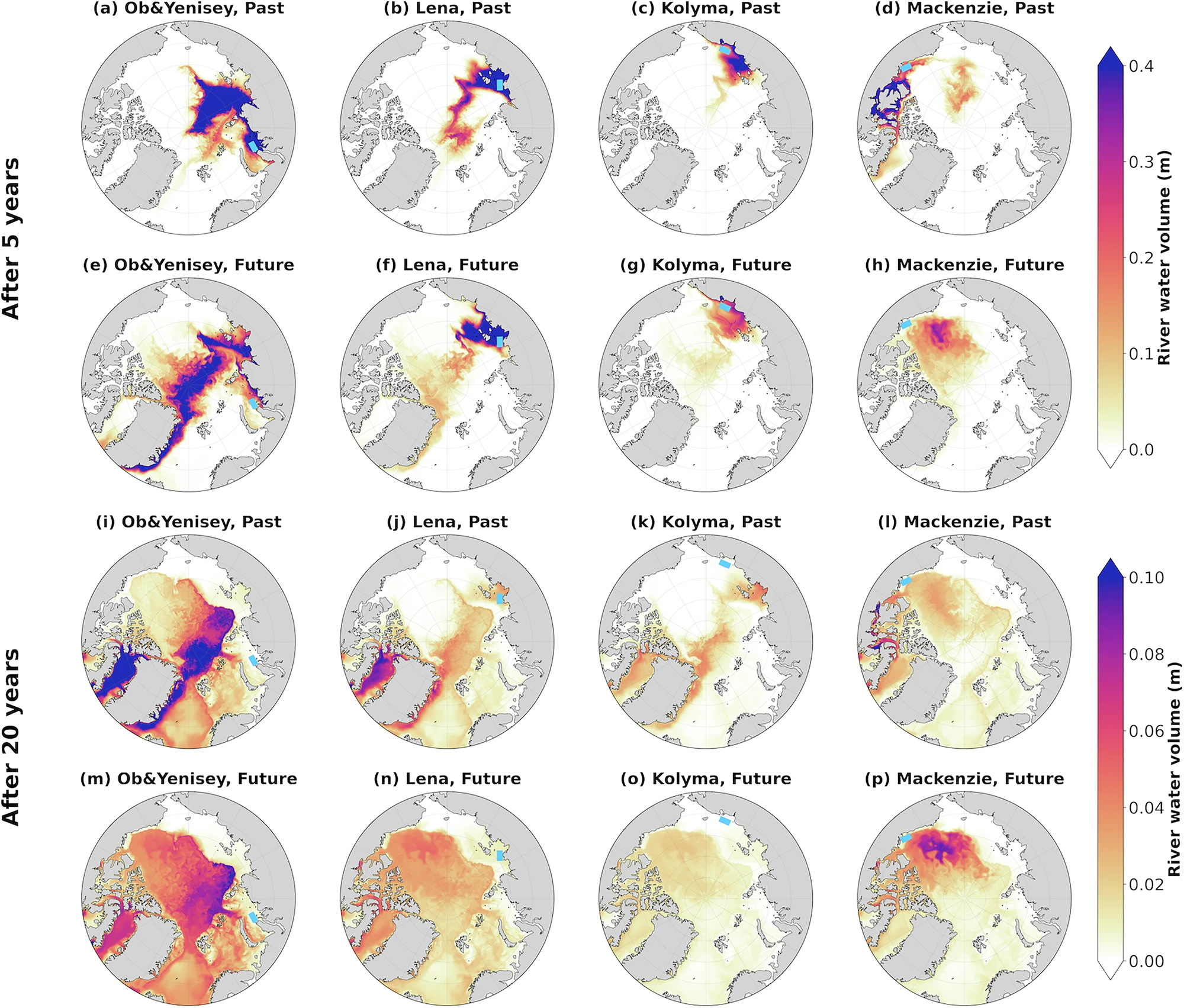
They found that climate warming accelerated the dispersal of Arctic river discharge, allowing river materials to spread farther and faster across the Arctic Ocean due to circulation changes (Figure 1). While it previously took 6 years for Ob-Yenisey waters to exit the Arctic Ocean, their simulations showed accelerating Arctic currents both along continental shelves (shelfbreak currents) and from Eurasia to Greenland across the center of the Arctic Ocean (Transpolar Drift) that reduced this exit time to under 4 years.
A New Arctic Pathway
The research team linked these changes to shifts in Arctic circulation. Historically, the Beaufort Gyre, a large clockwise circulation system in the western Arctic Ocean, acted as a regional freshwater reservoir. It predominantly held water from the Mackenzie River, sea ice melt, and inflowing Pacific Ocean water.
Under future warming, however, the Beaufort Gyre was found to take on a new role. Rather than functioning mainly as a holding area, it increasingly shifted to resemble a major transfer station.
The Changing Circulation Mechanism
To understand the Arctic Ocean circulation response under future warming, the authors proposed a cascading chain of linked physical changes in their model simulations. As sea ice declined and winds intensified in the simulations, more energy was transferred into the ocean, strengthening circulation in the upper Arctic Ocean. At the same time, warming and freshening reduced the density of shelf waters, causing currents to shift closer to the surface. This strengthened the shelfbreak current and intensified the Transpolar Drift, creating faster pathways that moved Siberian river discharge toward the central Arctic and the North Atlantic Ocean. Together, these processes changed Arctic circulation under future warming. For example, in one future scenario, the authors reported that ocean current speeds in the upper 100 meters of the Arctic Ocean could increase by up to 73% by the end of the 21st century (Figure 2).
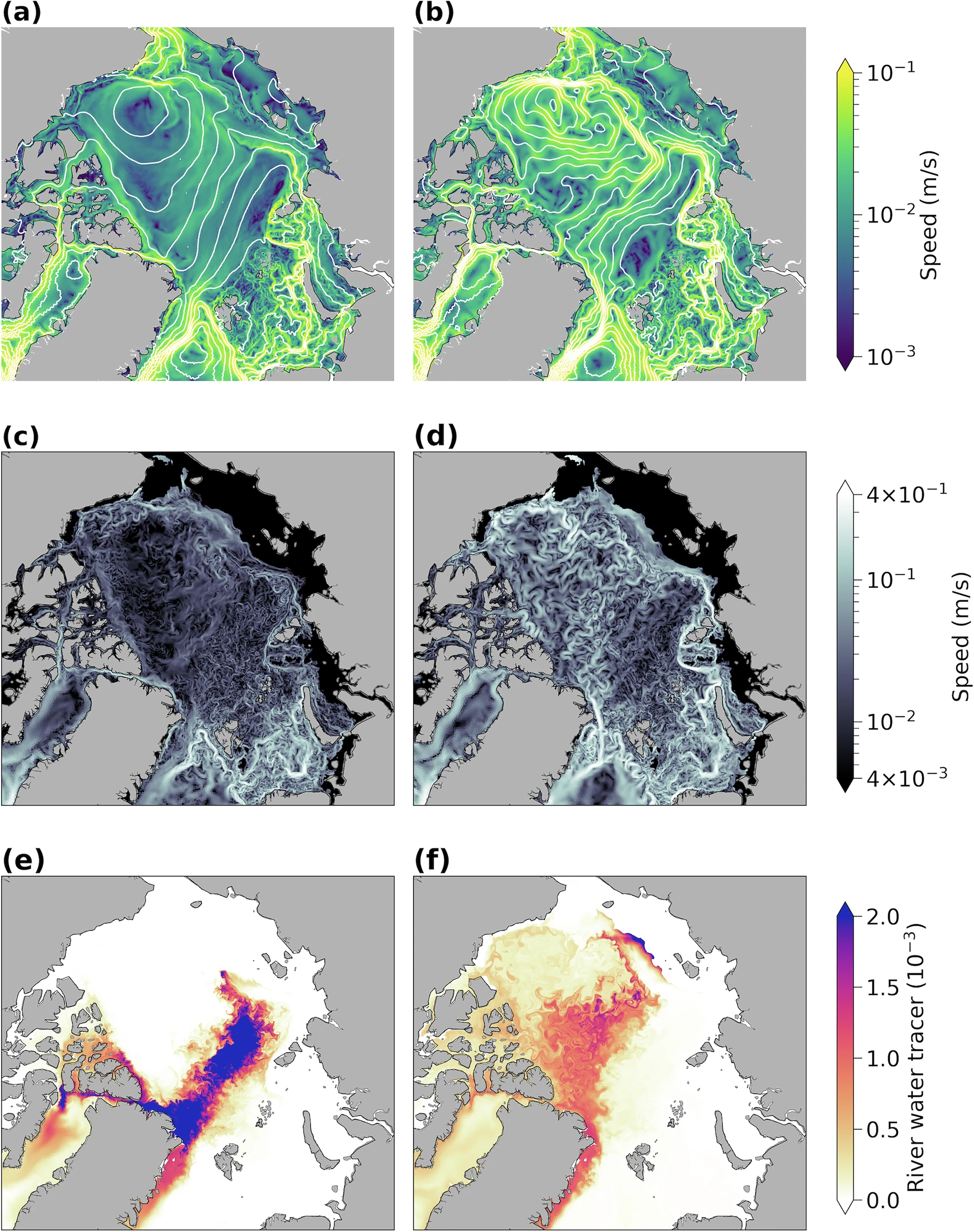
Still, another important factor was eddies. Over the future study period, eddy activity increased. Eddies are swirling mixing zones of water that transport material across the ocean. In a largely ice-covered Arctic, eddy activity was limited, but declining sea ice allowed eddies to become more widespread, enhancing Siberian river discharge accumulation and transport across the basin.
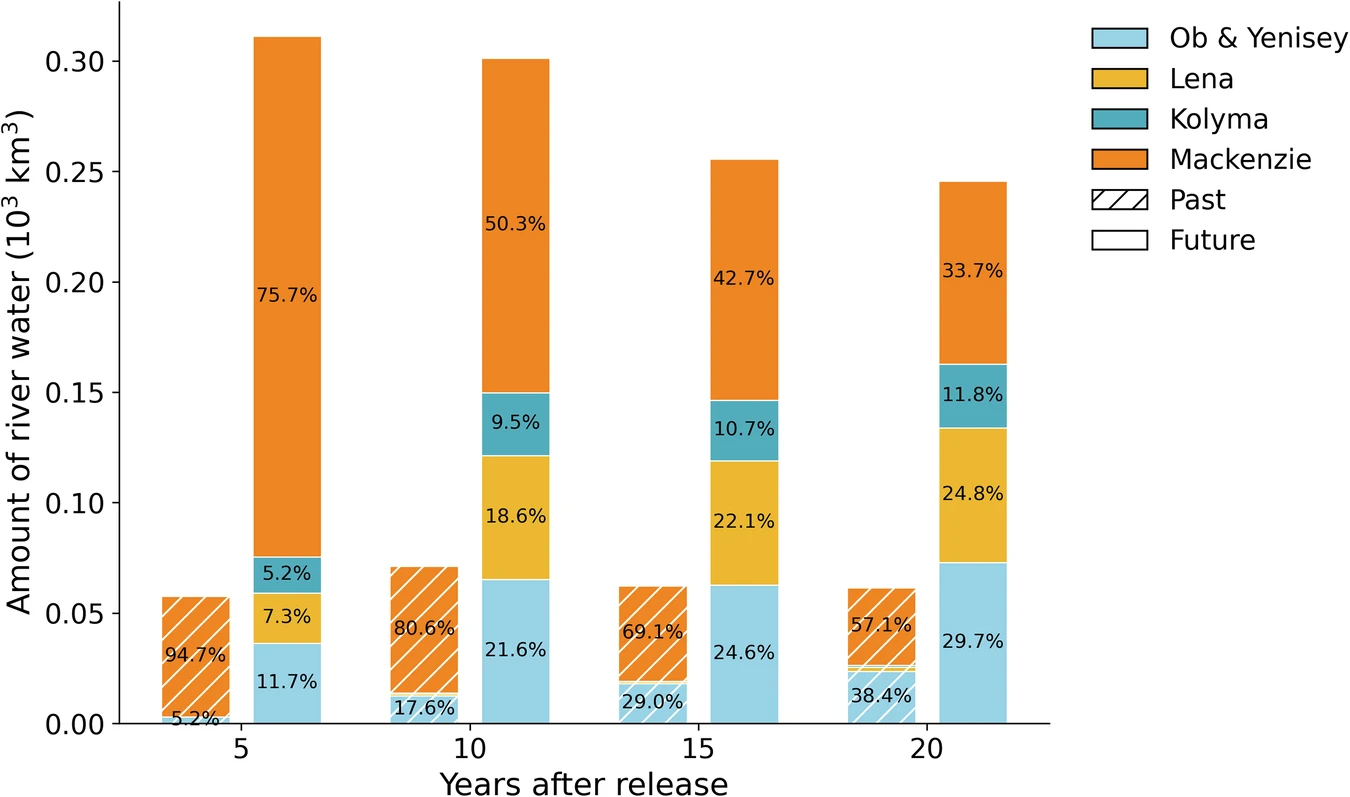
Ultimately, these changes highlighted a shift towards both a pan-Arctic convergence zone that accumulated material from Siberia into the western Arctic and accelerated transport toward the North Atlantic. As a result, cross-basin connectivity increased, with the fraction of Siberian river water in the Canada Basin rising from about 25% after 5 years to 50% after 10 years in the future scenarios (Figure 3).
So what?
Because Arctic rivers carry nutrients, carbon, and pollutants, these circulation changes will have broad impacts on Arctic biological, geological, chemical, and ecological processes. Particularly, the emergence of a western convergence zone may help identify where Eurasian pollutants are likely to accumulate.
Ultimately, climate warming is reshaping Arctic transportation. Rather than a region defined by long freshwater layovers, the Arctic is becoming increasingly connected by fast-moving routes. In the future Arctic, what enters the Arctic may not stay for long.
Cover image is taken near the MacKenzie and Red River of the North junction. Photograph was taken by Dr. John Cloud in 2010 and obtained from the NOAA Public Domain Library.
I am a Ph.D. Candidate at the University of Connecticut–Avery Point studying the marine carbonate system in the Arctic Ocean. My research focuses on biogeochemical changes occurring within sea ice as the Arctic continues to warm. Outside of my research, I enjoy hiking, running, aerial gymnastics, paddleboarding, traveling, and spending time with family and friends.