Wan, T.T., Ho Him, W.T., & Tsang, L.M. (2026) Protective benefit of sea anemone host to symbiotic palaemonid shrimps and predator-avoidance behaviours among palaemonid shrimps. Zoology, 178-179, 126353. https://doi.org/10.1016/j.zool.2026.126353
Anenome sweet anenome
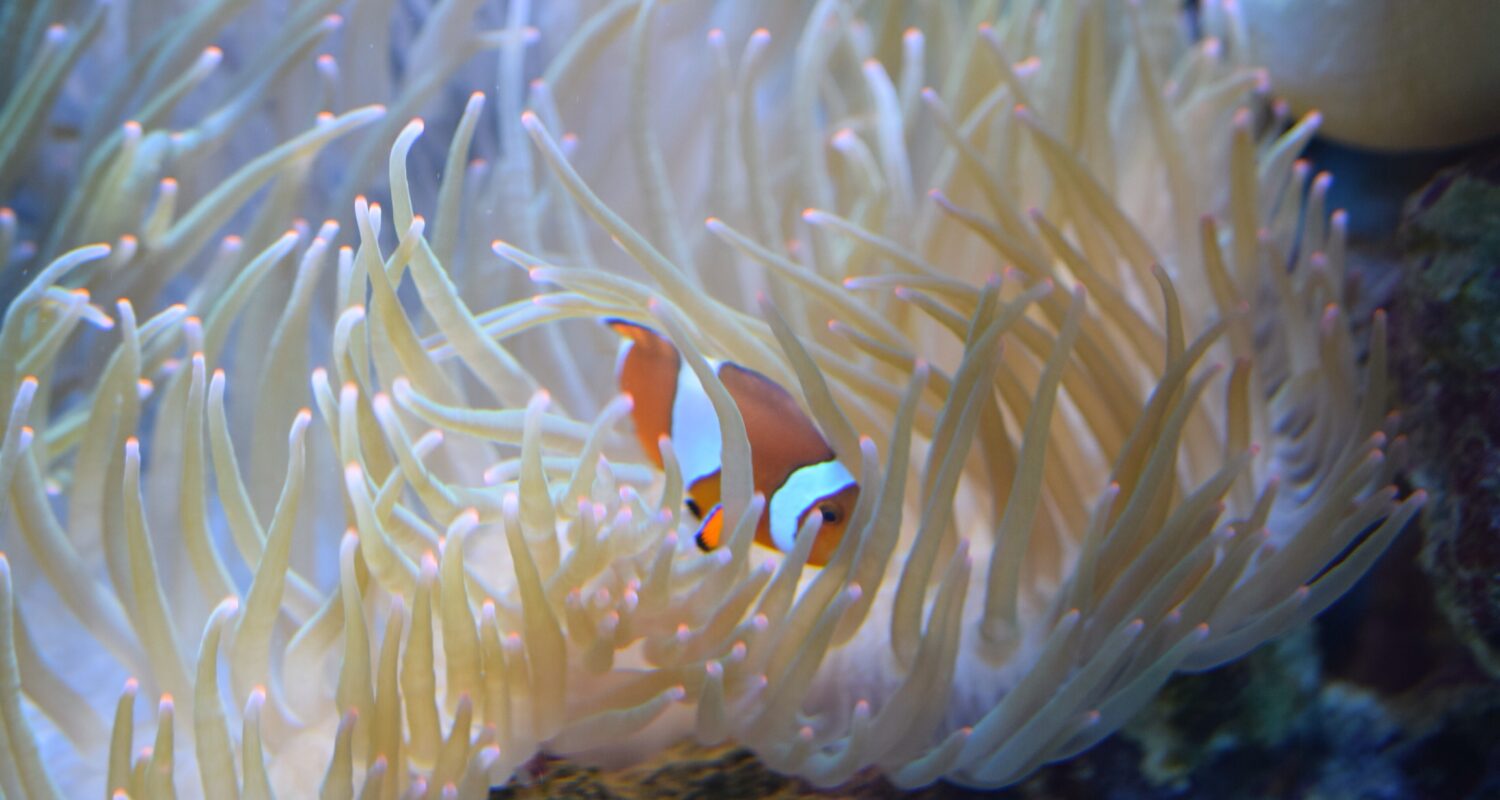
One of the movies that cemented Pixar as a family-friendly studio was the 2003 film Finding Nemo. Across the country, we fell in love with the little clownfish who got lost and his father’s quest to find him. One of the movie’s many iconic images shows Marlin and his son poking their heads out of a beautiful pink anemone. It makes sense that a collection of stinging tentacles would make for prime real estate in a bustling coral reef…especially when a barracuda is around. But are clownfish the only critters that seek out anemones for housing?
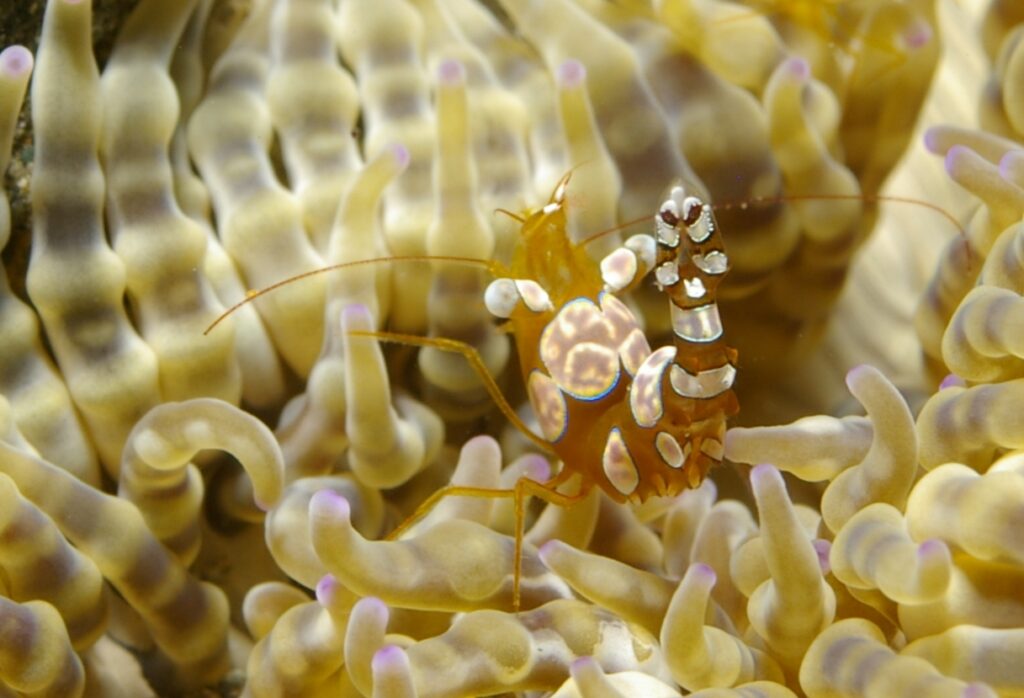
In the ocean, predation is one of the major pressures animals face. If you live in the sea, whether you walk, swim, or crawl, something else probably sees you as dinner. Palaemonid shrimps are one such group of arthropods, known for their many “cleaner” species. More than 500 species are also known to form symbiotic associations with macroinvertebrates like anemones. Many host-symbiont pairs have coevolved, with some species developing physical features adapted to their hosts. For instance, one sea urchin-associated shrimp has developed a long, dark body shape to blend in with the host’s spines! Anemones, however, are particularly common hosts for shrimp.
A home with a sting
Anemones belong to the phylum Cnidaria and possess stinging cells that can injure potential predators, making them attractive hosts for smaller symbionts. Typically, the symbiont has a way of coating itself in mucus, which prevents the nematocyst (structure inside the stinging cell) from firing or masks the chemical signals that trigger them. While some shrimp maintain loose associations, spending half their time away from the anemone, others rely heavily on it for protection and remain close throughout their lives.
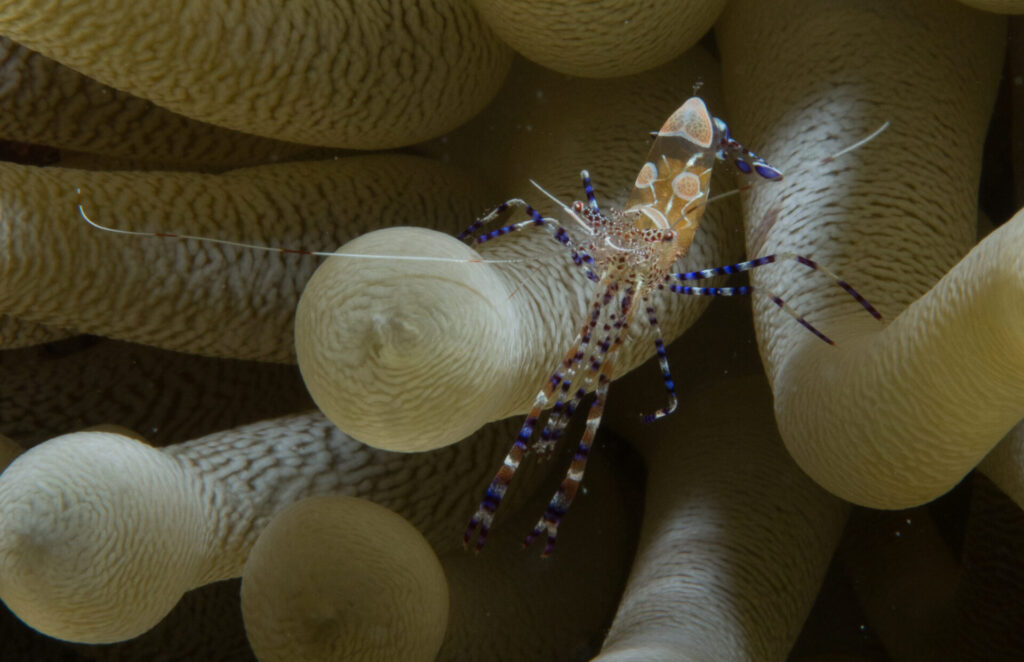
In addition to the protection their hosts provide, shrimp have a variety of behavioral strategies to avoid detection or escape hungry predators. These include remaining motionless, finding shelter, or fleeing in an unpredictable direction via “tail flipping.” However, such strategies remain poorly understood because they are difficult to study under controlled conditions.
A relationship tested…literally
In 2022, a group from Hong Kong investigated the relationship between palaemonid shrimp symbionts and their host anemones. They focused on three things: how closely shrimp associated with anemones for physical protection, whether the protection came primarily from their stinging cells, and how symbiotic shrimp behaved compared with free-living species. They introduced five shrimp species (three symbiotic and two free-living) into tanks containing no anemone, a natural anemone collected in Hong Kong’s eastern waters, or a synthetic anemone. They then introduced juvenile giant grouper as the predator. The researchers studied both species’ behavior and measured how the presence of an anemone affected shrimp survival.
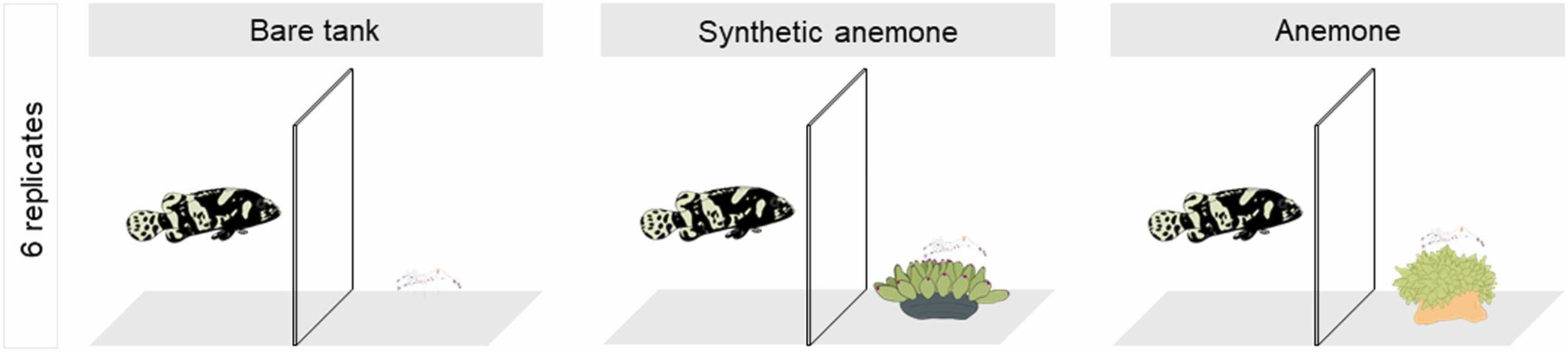
As you might imagine, the presence of a sea anemone greatly reduced predation risk for the symbiotic shrimp. Interestingly, the synthetic anemones did not offer the same type of protection to the symbiont species, and free-living shrimp species were preyed upon regardless of the anemone present. These findings suggest three things. First, shrimp known to associate with anemones benefited the most from their protection. Second, the protection came primarily from the anemone’s stinging cells rather than its physical structure. Third, real anemones discouraged the grouper from hunting, and a single sting stopped further attacks on symbiotic shrimp. So, if you’re a marine organism house-hunting, finding a place with stinging walls is well worth it!
Stand your ground or flee
The behavior of the symbiotic and free-living shrimp was also distinct. Several symbiotic species are known as “cleaner” shrimp, which clean larger fish. Researchers observed these species often swayed, perhaps signaling their identity and willingness to clean the predator. However, these fish must have been hungry, because without the anemone present, the shrimp faced the same predation risk as non-cleaner species.
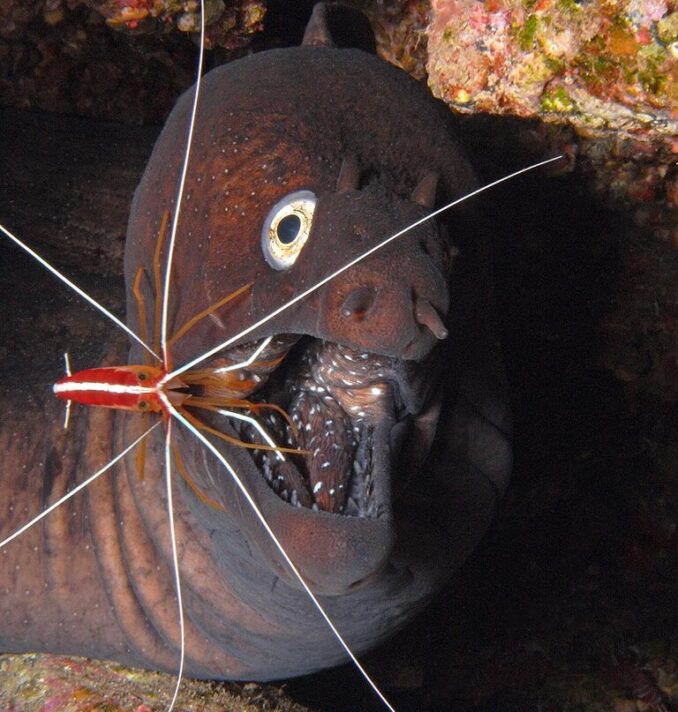
Meanwhile, the free-living species had a much higher frequency of “tail flipping.” Many arthropods use this behavior to escape predators in a rapid, unpredictable burst. The symbiotic species rarely displayed this behavior, perhaps because their association with anemones exposes them to less predation in general. A similar example is seen in anemonefish, which have less proficient swimming abilities than comparable species that live elsewhere.
Altogether, these differences help paint a picture of the diverse ecological niches created in the world’s oceans, turning coral reefs into the bustling cities that movies like Finding Nemo bring to life.
Cover image is a clownfish in an anemone, Magnus Johansson, Wikimedia

I’m a former oceanographer with an MSc in Biological Oceanography from UConn where I studied mixotrophy in marine ciliates. After a year in Poland (studying freshwater critters) I moved to California. I currently work as a lab technician at Stanford. Outside of science, I enjoy a good book, a long run, and frozen fruit.


.jpg)