Kappa, F., T.Härkönen, C.Freitas, D.Carroll, and K. C.Harding. 2026. “Shifting Harbor Seal (Phoca vitulina) Diet May Reflect Ecosystem Changes in Skagerrak.” Marine Mammal Science 42, no. 1: e70069. https://doi.org/10.1111/mms.70069.
Information diet
Harbor seals (Phoca vitulina) are able to feed on lots of different species. Being a “generalist predator”, as this is feeding strategy is known, means that they have the ability to change their diet if needed – if one prey species becomes harder to find, they can feed on something which is more readily available. This also means, that by studying their diet, scientists can get information on the abundance of different prey species. In short, scientists are able to use seals to provide information on changes in fish communities.
It’s a poop job…
Harbour seals regularly come ashore (haul out) on beaches to rest. When they are on land, they do what all animals do… and their poop (known as “scat”) samples can be used to study what they have been eating. These scat samples can be collected off the beach, popped into a plastic bag and frozen, ready for analysis. Tiny ear bones (otoliths) from the consumed fish can be found in the scat samples. As different fish species have different shaped otoliths, this can be a great source of information.
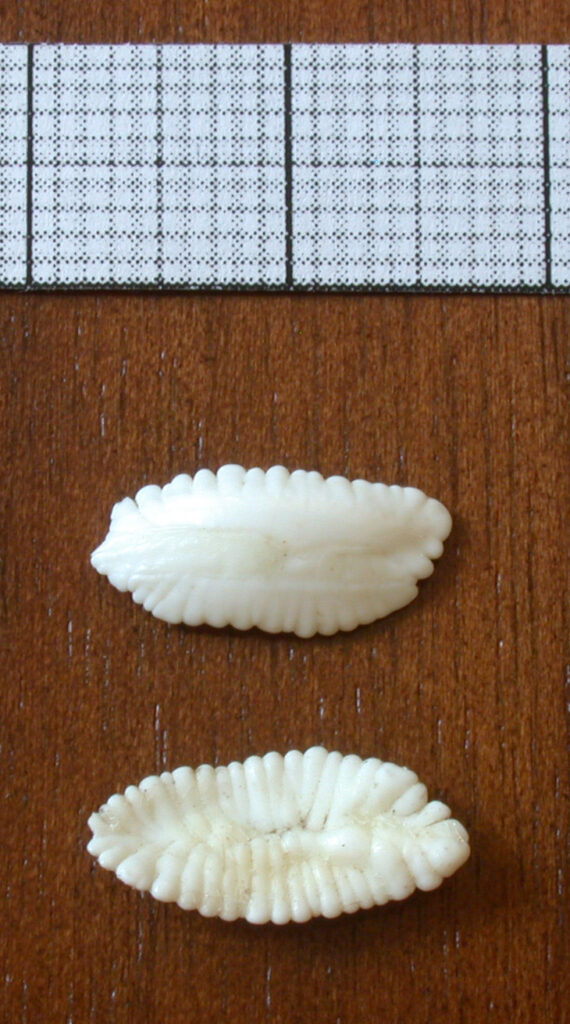
Otolith from Atlantic cod – Gadus morhua – by Gunter Tschuch, via Wikimedia commons

A new study by Foteini Kappa and their team has been looking at seal diet using these tiny fish ear bones. The team collected 73 harbor seal scats from an area in the northern Skagerrak, Norway. They took the scat samples from three different locations where seals regularly haul out. Otoliths found in the samples were assigned to species and counted, allowing scientists to work out the proportion of each fish species in the individual samples.
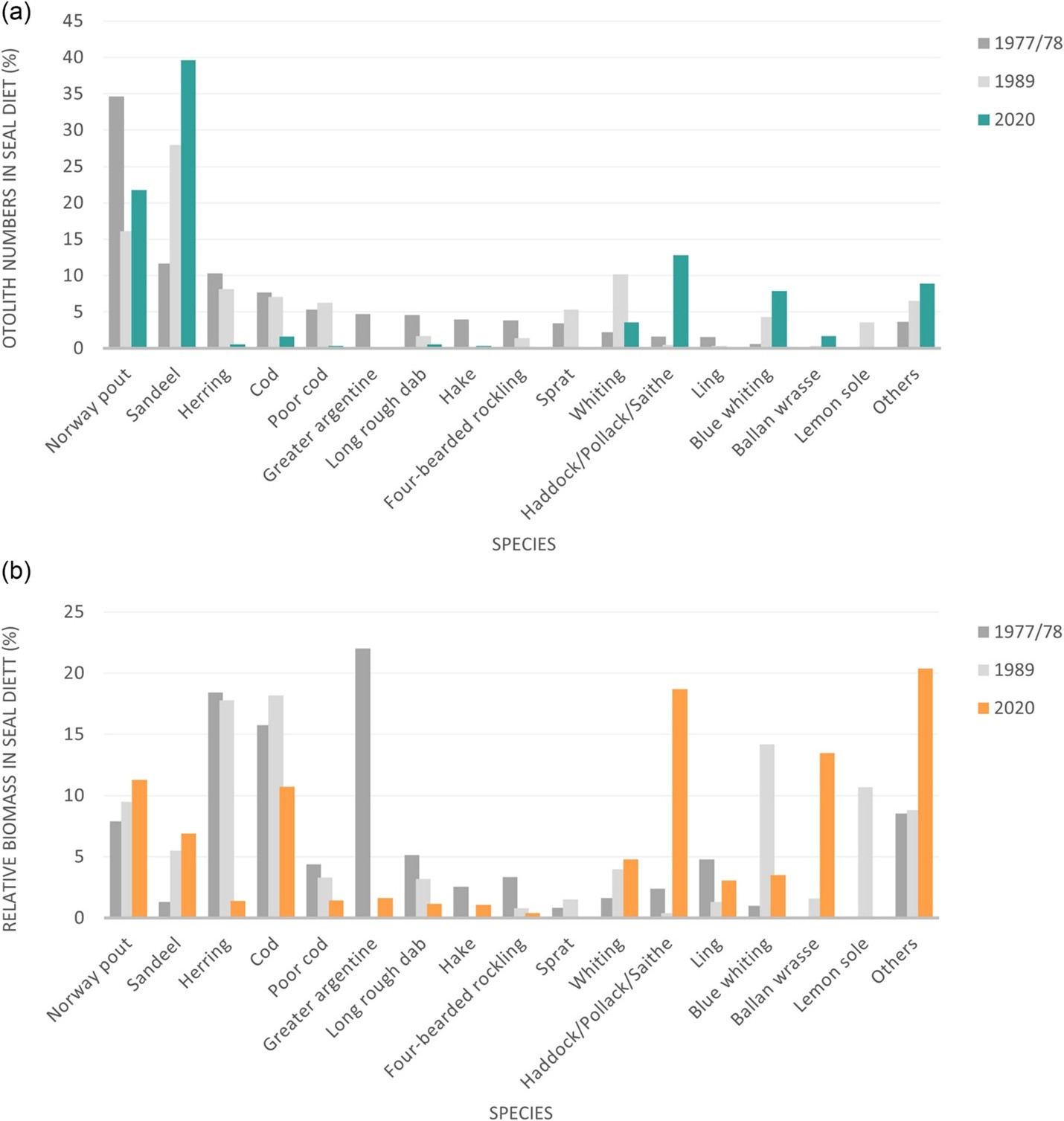
Kappa and their team were then able to explore changes in diet over time, by comparing diet data from 1977, 1978, 1989 and the recent samples from 2020. They certainly found some changes had taken place over time (Figure 1). In the more recent sample, the highest number of otoliths came from sandeel (39.6%), then Norway pout (21.8%), then herring / pollack / saithe (grouped together)(12.8%) and blue whiting (7.9%). The gadid family, which includes Norway pout, whiting and the group herring / pollack / saithe represented 50.3% of the diet.
In the historical data set, the diet was dominated by Norway pout (34.7%), sandeel (11.7%) and herring (10.3%).
What does this mean?
There is a lot of variety of species in harbor seal diet found in this study – which supports the fact they are generalist predators and highlights how incredibly adaptable they can be. In the recent data, 19 species of fish were represented in the diet. Compared with previous studies and the historical data used in this study, the number of cod in the diet of harbor seals in this area has decreased. The contribution of herring to the diet has also decreased dramatically.
Why is this important? Not all prey species are created equal. Some species have a higher energy content, and these are important for predators as they can get more energy for less effort when choosing these prey species. Herring are considered to be high quality prey, and the recent data show fewer of these in the diet. This causes some concern about whether seals are able to get enough energy. They may be catching enough fish – but if the fish are the wrong species to be fulfilling the seals nutritional needs, the seals may show signs of “nutritional stress”. This eventually shows up in the population as smaller animals and fewer seal pups.
This may also give information about the fish communities over the time period. Fish populations do fluctuate annually, but seeing a large-scale shift in diet in seals means there has likely been some ecosystem changes, which shifts in distribution or abundance of some of the prey species.
The study shows the importance of long-term monitoring programs, to better understand both the seals themselves, but also wider environmental change.
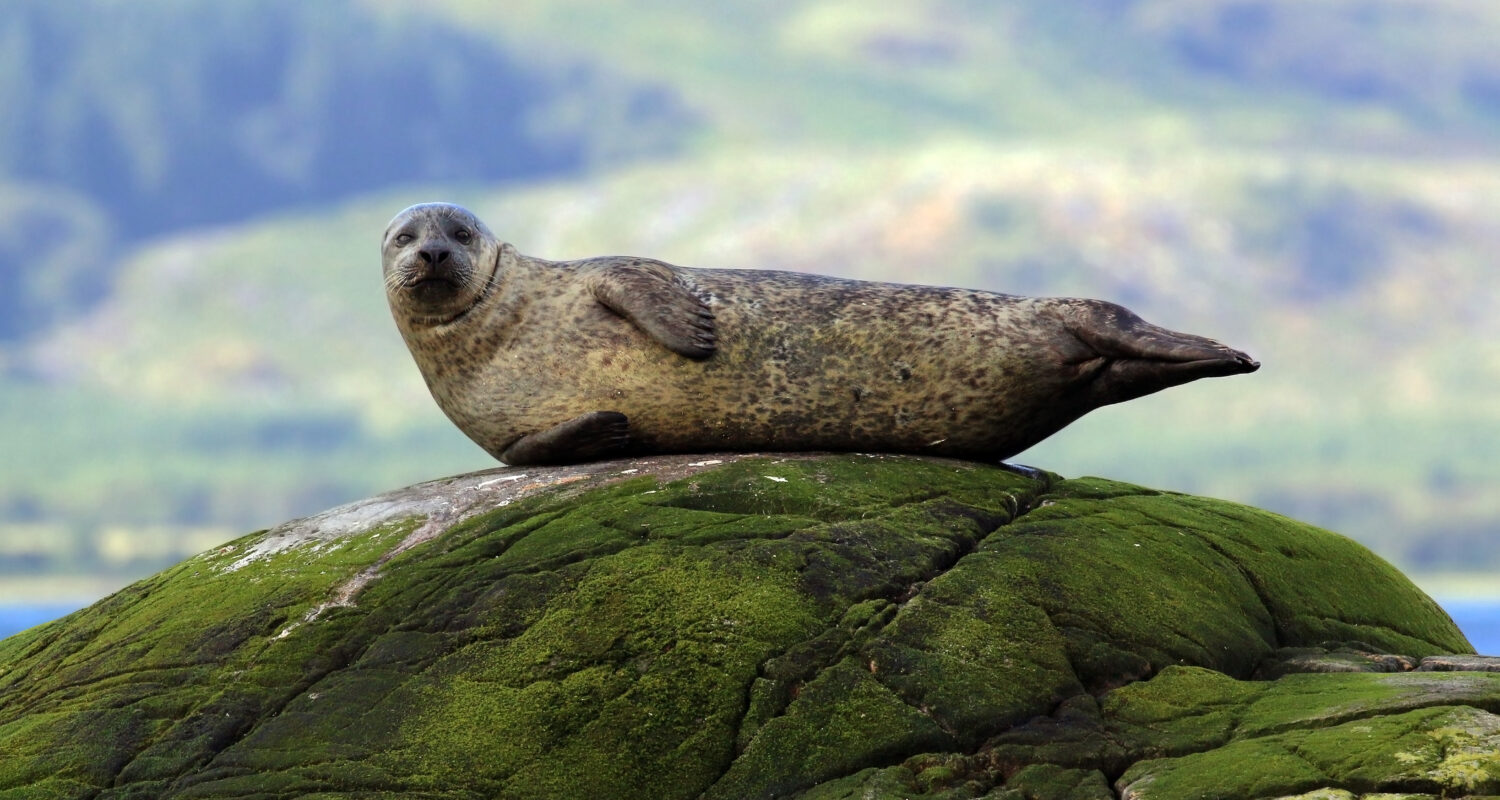
Cover photo – A harbor seal (Phoca vitulina) hauled out on a rock. by Charles J. Sharp via Wikimedia Commons
_2.jpg)
I am a post-doctoral researcher at the University of Hawaiʻi at Mānoa. My research interests cover many aspects of the ecology of marine mammals, in particular the factors that drive distribution and abundance of whales and dolphins, as well as the impacts of human activities on these animals. I’ve spent a lot of time in the field, conducting surveys (very lucky). When back at my desk, I use ecological modelling techniques to investigate relationships between animals and their environment.