Source Article: Gbedemah SF, Amenyogbe GK, Frimpong LK, Mensah SL, Adanu SK. Coping with tidal waves: households and institutional financing support mechanisms for climate resilience in storm ravaged coastal communities in Ghana. Anthropocene Coasts. 2026 Mar 11;9(1). DOI: https://doi.org/10.1007/s44218-026-00130-3
Financing climate change
As climate change looms over the planet, more and more communities find their livelihoods and futures challenged by rapidly transforming conditions. Sea level rise, storms, floods, and land erosion are slowly but surely redefining the world’s coastal ecosystems. About 1 billion people live within 10 km of shoreline, and many can already feel climate change breathing down their necks. This rings especially true in the Global South, where people are much more likely to be at the front line of extreme weather events.
Existing attempts to alleviate the gap between which countries are largely responsible for accelerating climate change and which bear the brunt of its impacts take the form of climate funding. International climate funding —like the Green Climate Fund or COP27’s Loss and Damage Fund— is currently essential for both recovery and adaptation, but it isn’t clear how these high-level funds translate in the context of actual vulnerable communities worldwide.
Ghana’s fishermen
In Ghana, fishing is historically the main occupation of men living close to the sea – a testament to both the reliance of local communities on the ocean and to the limited alternatives offered in the area. This lifestyle is under fire from frequent storm surges (rises in sea level due to strong winds and low atmospheric pressure during tropical storms or hurricanes reaching land) and the subsequent coastal erosion they cause. Combating their impacts relies on mobilizing national resources as well as international funding, but does monetary relief actually reach the affected populations?
Gbedemah and his team aspired to address the many physical, social, and institutional impacts of storm surges and see whether current funding actually supports recovery. A mixed-methods approach was used: 192 households in 12 coastal communities in southeastern Ghana, mostly headed by fishermen (54%), participated in surveys about their experiences, and interviews with focus groups and local officials provided qualitative data for the same phenomena. A framework combining the pillars of housing, livelihoods, disaster preparedness, and policy was introduced to assess the efficacy of current post-disaster adaptation strategies.
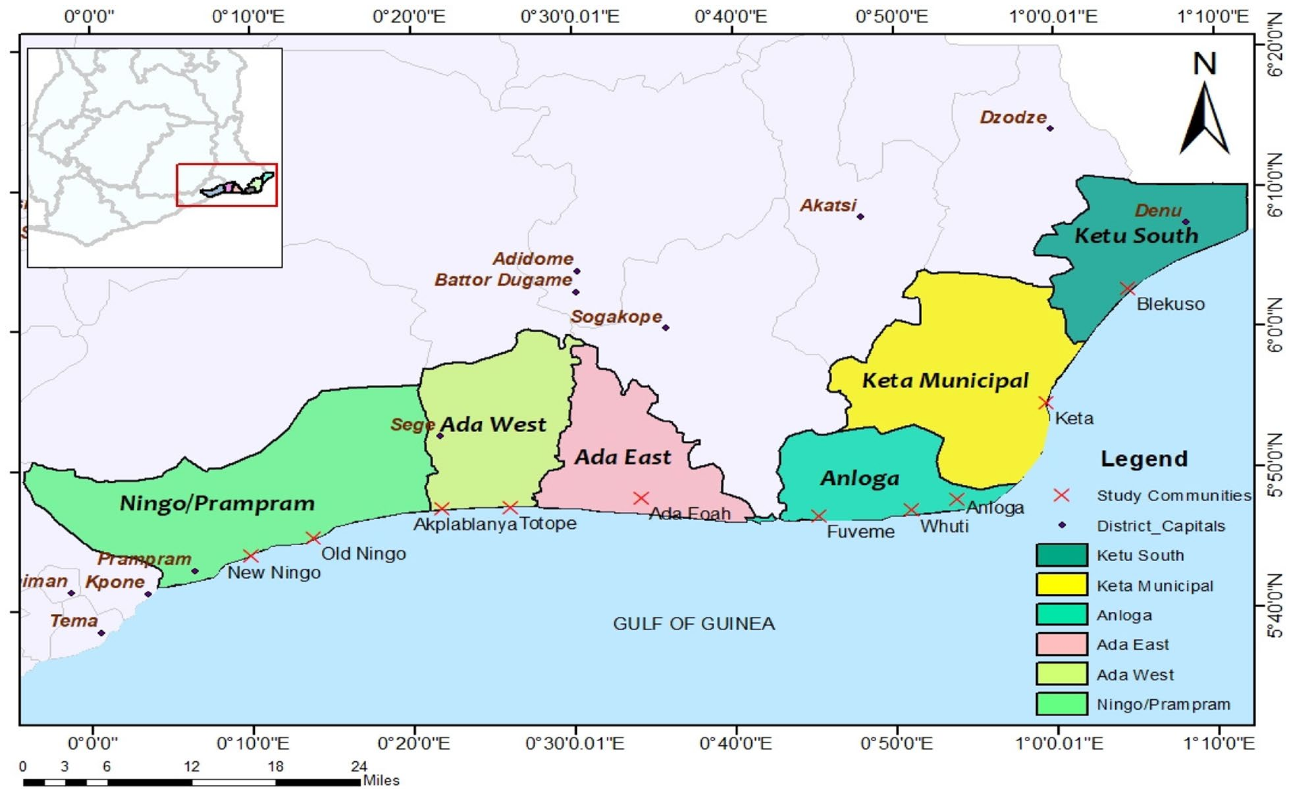
The communities included in the study, along six different coastal districts (see legend) in southeastern Ghana (Gbedemah et al., 2026).
Trouble on the shore
The respondents described sustained exposure to climate change-related hazards, as well as challenges from the loss of fishing gear (reported by 42%), homes (38%) and the scarce arable land. Besides physical proximity to the sea, socioeconomic conditions directly correlated with the level of exposure: 78% of the respondents faced substantial income losses, with many affected (26%) unable to afford basic necessities. Over half reported that school-age children had dropped out of school, further pushing the communities into poverty and leaving them no more prepared to brave the next storm surge.
A staggering 54% reported that their main source of assistance was informal support networks: family, friends, and fellow community members. In contrast, only 16% said the same for government-related support, almost the same share (14%) as non-governmental organizations (NGOs). While interviewed local officials reveal empty relief warehouses and bureaucratic constraints that lead to slow response times, the lack of foresight for long-term solutions in official planning is extremely problematic. Short-term relief (food, mattresses etc.) is important, but its scope is too narrow and doesn’t support people’s attempts to return to normalcy by resuming work.
Designing sustainable recovery
Gbedemah’s team suggests that sustainable recovery strategies must come to the forefront: local governance should be strengthened to actually deliver funds, and livelihood recovery —including fishing gear restoration— should be prioritized in order to construct reliable formal support systems. They also acknowledge the study’s limits: it focused only on eastern Ghana at a specific time and relies on self-reported data, which are prone to bias. Future research tracking households over years and across different regions will yield much more robust insights into the coping mechanisms that help Ghana’s coastal peoples, as well as the efficacy of more innovative solutions like fisheries insurance or cash-transfer programs.
Nevertheless, this “snapshot” is telling of the ways climate funding solutions may end up failing the communities that would benefit the most from them. Increased scholarly as well as public attention to the climate-borne plights of ocean-adjacent people is needed to help restructure both their present lives and our collective future.
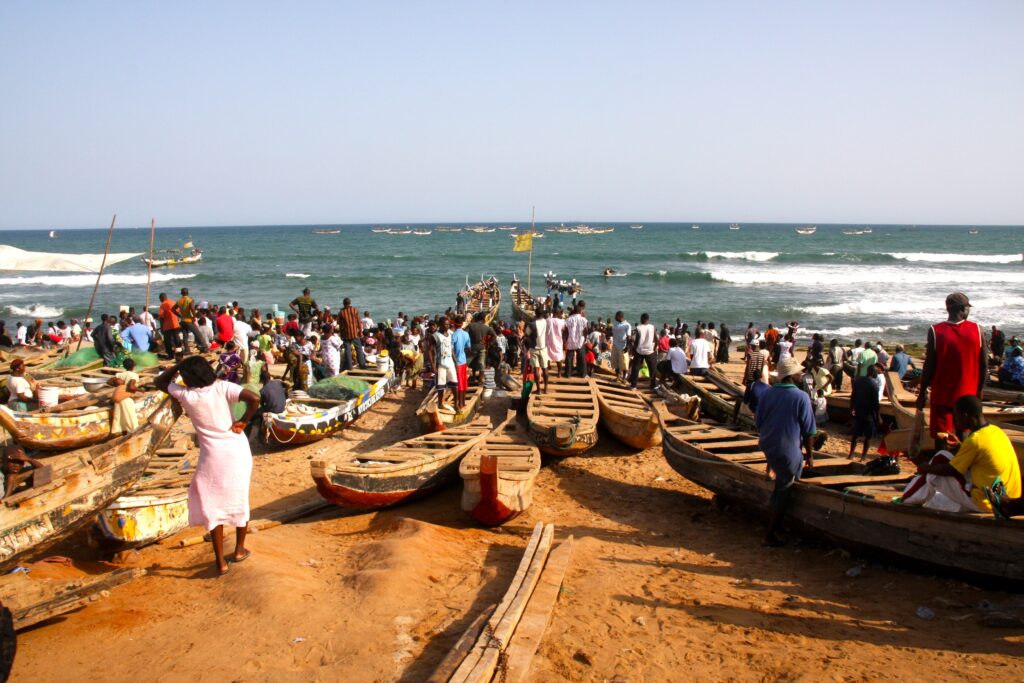
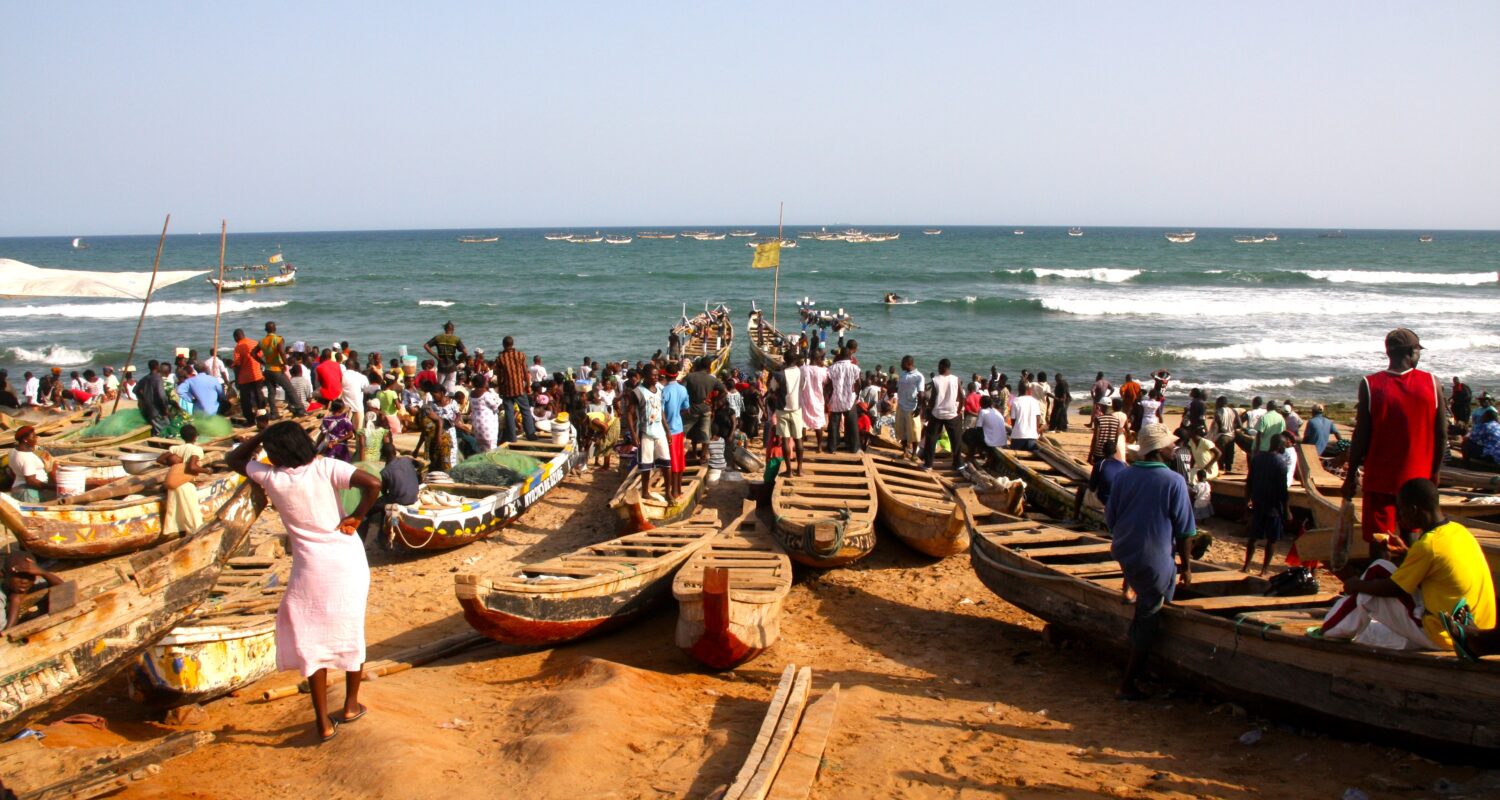
Cover Image: Fishermen coming in at Prampram, the capital of Ningo Prampram, one of the districts included in the source article (Photograph by Roger Husvik, CC BY-SA 3.0, via Wikimedia Commons).

I’m an aspiring environmental writer, a MSc candidate in Host-Microbe Interactions and a former researcher in microbial ecology. I’m passionate about the surprising ways marine ecosystems and their neighboring communities respond to climate change and how science communication, art and collective effort influence our planetary impacts. I’m based at Skopelos, a small Greek island right next to the largest marine park in the Mediterranean.