Torres, G. A., Martins, R. S., Fischer, L. G., Cardoso, L. G., Sant’Ana, R., & Mourato, B. (2026). Age and growth of the endemic groovebelly stingray (Dasyatis hypostigma), a heavily exploited batoid in the Brazilian Meridional Margin (21–34° S). Journal of Fish Biology, 108(4), 1246–1258. https://doi.org/10.1111/jfb.70305
Sea to Belly
Stingrays probably aren’t the first thing that come to mind when you think of seafood. However, some species are highly valued around the world for their meat. In southern Brazil, the groovebelly stingray (Dasyatis hypostigma) is regularly targeted by commercial fisheries along the Brazilian Meridional Margin (BMM).
Despite an estimated 250.3 tonnes caught annually, the species is often misreported in catch records. Rather than being identified individually, groovebelly stingrays are frequently grouped with other stingray species under generic labels, making it difficult to accurately monitor harvest rates and population trends.
The problem is compounded by the lack of information on the species’ life history, particularly its age and growth. This information is critical for fisheries management because they help determine sustainable harvest levels and assess a population’s vulnerability to overfishing. To address this knowledge gap, Torres et al. sampled groovebelly stingrays from the BMM to develop age and growth models that can support future management efforts.

Age Rings
While measuring a stingray’s size is straightforward, determining its age is more challenging. Fortunately, researchers can estimate age by examining growth bands within the vertebrae. Much like the rings of a tree, these bands are deposited annually as the animal grows, providing a reliable record of age.

Of the 280 rays sampled, the largest male found was 10 years old with a disc width (widest distance across a ray’s pectoral fins) of 465 mm (18.31 in). On the other hand, the largest female was 11 years old with a disc width of 580 mm (22.83 in). Most individuals sampled were anywhere from one to seven years old.
Males were found to grow faster than females, but reached smaller sizes than females, as indicated by the largest individuals found for each sex. This pattern, along with estimated growth rates, matched southern populations along the coast of Argentina and Uruguay. While this may seem like an obvious conclusion, the vast difference in latitudes had potential to affect growth rates due to seasonality and/or water temperature.
Selective Limitation
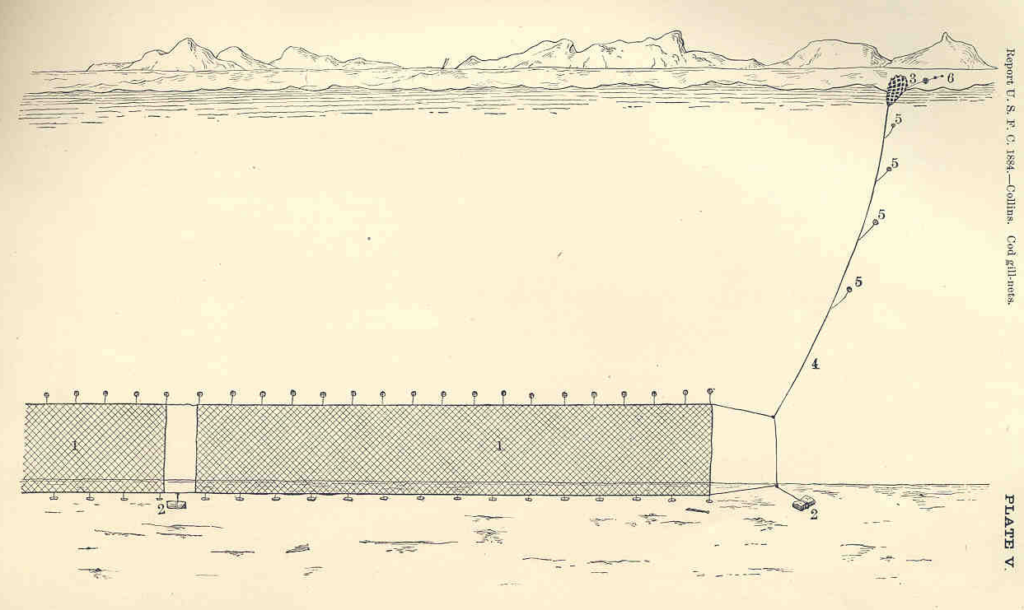
The researchers did note their study results may be limited by fishing gear selectivity. Specifically, many rays sampled were between 300 and 450 mm disc width which came from gillnet gear. Since gillnets are designed with specific mesh sizes, they tend to catch individuals within a limited size range. Smaller rays may pass through the mesh, while larger individuals may avoid becoming entangled altogether. Therefore, there is a possibility that the sample does not represent the full population, with results skewed towards medium sized individuals. Further work should aim to sample from a wide variety of gear types to get a more accurate distribution of sizes.
Collecting the Pieces
Even with this limitation, this study takes a large step forward in understanding the groovebelly stingray population on the Brazilian Meridional Margin. The similarity in growth patterns observed across Brazil, Argentina, and Uruguay may suggest the existence of a large, interconnected population spanning much of the southwestern Atlantic coast. If true, migration from southern portions of the species’ range could help replenish heavily fished areas.
However, additional research is still needed. Improved reporting of groovebelly stingray landings, combined with more accurate estimates of growth and mortality rates, will allow researchers to better assess population size and long-term stability. Such information will be essential for ensuring that this valuable fishery remains sustainable in the future.

I am a recent MSc graduate in marine biology from Bangor University, where I studied population dynamics of elasmobranchs off the coast of Wales. My interests lie in ecological data analysis to understand environmental processes and identify natural patterns. However, nothing beats being in the field and interacting directly with the marine life.