Bendag, S., Barth, A., Nitzsche, J., Schubert, P., Wilke, T. Wood as Alternative Tank Construction Material in Sustainable Shrimp Aquaculture. Aquaculture Research 2026(1), 8342238. (2026). https://doi.org/10.1155/are/8342238
Aquaculture & Pacific White Shrimp
Aquaculture is the farming of aquatic organisms, including fish, shellfish, and plants. One important branch of aquaculture focuses on crustaceans, or the marine invertebrates such as crabs, lobsters, and shrimp. Among the most widely farmed species is the Pacific white shrimp, a staple of global seafood production.
Modern shrimp farming increasingly uses closed aquaculture systems, where water quality and environmental conditions can be tightly controlled. While these systems improve efficiency, they also depend heavily on manufactured materials with significant environmental footprints.
The Problem with Plastic Aquaculture Tanks
Most closed system aquaculture tanks are bult from fiberglass-reinforced plastic, which is popular because it is durable, corrosion-resistant, strong, lightweight, moldable, and relatively inexpensive to manufacture. However, fiberglass-reinforced plastic also comes with sustainability concerns. Producing fiberglass-reinforced plastic is energy-intensive, disposal at the end of its lifespan can be difficult, and plastic materials may contribute to microplastic contamination in aquatic environments. As aquaculture continues expanding to meet growing global food demands, researchers are seeking sustainable construction materials that can maintain the high production efficiencies of modern aquaculture systems.
Could Wood Be a Sustainable Alternative?
Wood has long been used in applications outside aquaculture, including wine and spirit barrels, cheese aging, and traditional bathtub construction. Historically, wood was even used in aquaculture systems in the early 1900s before plastic.
Interestingly, Pacific white shrimp juveniles often reside in mangrove forests, suggesting that wood may be a viable construction material. Previous studies have found that wood may provide benefits within aquaculture systems by supporting microbial communities, improving water quality, and reducing ammonia concentrations. Some wood extractives, or the naturally occurring chemical compounds released from wood, such as ketones, terpenes, and terpenoids, have also been associated with antioxidant, antiviral, and antimicrobial properties.
But wood is not automatically beneficial. Different wood species contain different extractives. Some, such as tannins and tannic acid, negatively impact aquaculture by reducing food intake, slowing growth, or lowering water quality. Wood durability is another concern, especially in humid environments where coatings or treatments may be needed. With these tradeoffs, choosing the right wood is critical.
Testing Wood Tanks for Shrimp Aquaculture
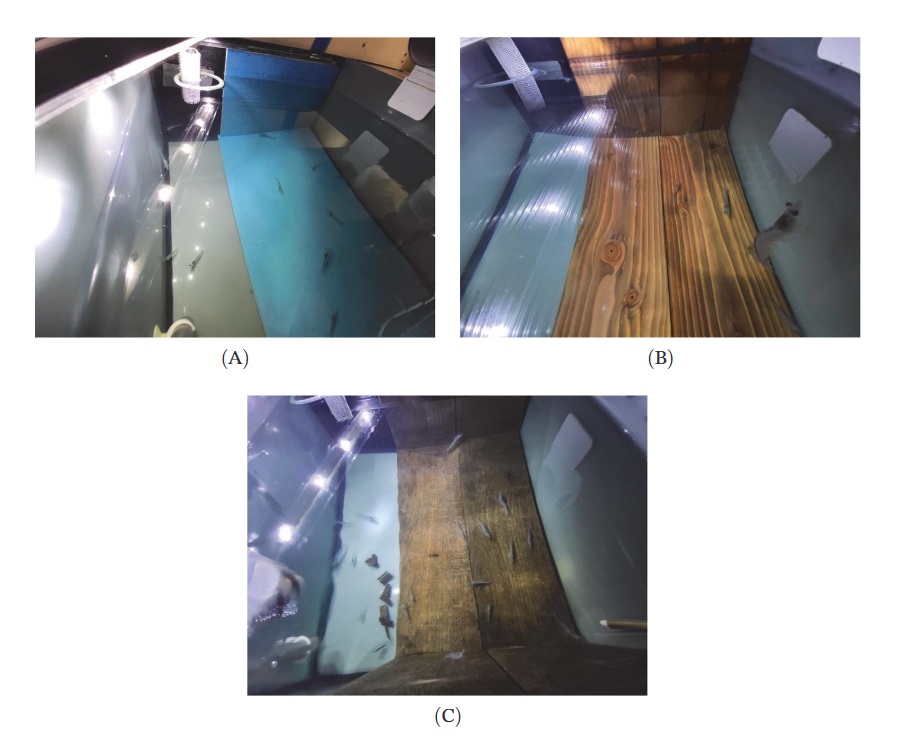
To investigate whether wood aquaculture tanks would negatively affect the survival, growth, and feeding characteristics of shrimp, Bendag and their research team conducted a 42-day laboratory experiment comparing oak, Douglas fir, and fiberglass-reinforced plastic aquaculture tanks with juvenile Pacific white shrimp (Figure 1).
How did the Shrimp Perform?
Researchers evaluated several performance metrics, including survival rate, weight gain, specific growth rate, and feed conversion ratio. Shrimp raised in the fiberglass-reinforced plastic tank showed highest survival rates, followed by Douglas fir and then oak (Figure 2). However, these differences were not statistically significant.
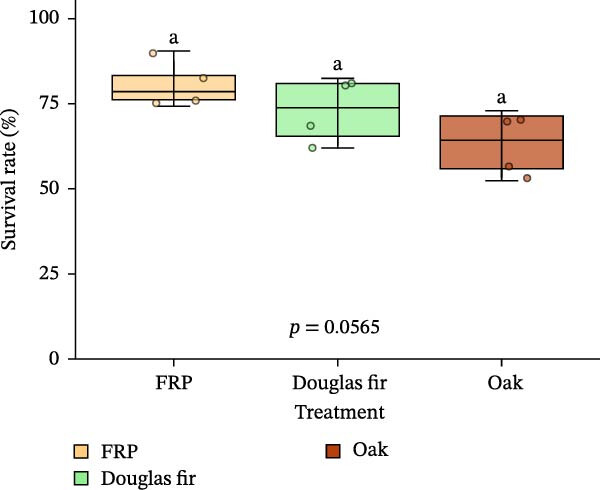
The same pattern appeared in weight gain and specific growth measurements. The fiberglass-reinforced plastic produced the greatest weight gain and growth rates, Douglas fir performed similarly, and oak ranked lower. Again, these growth differences were not statistically significant.
The clearest difference between materials appeared in the feed conversion ratio, which measures how efficiently shrimp convert feed into bodyweight. Oak wood had a significantly higher feed conversion ratio compared to both the fiberglass-reinforced plastic and Douglas fir systems (Figure 3).
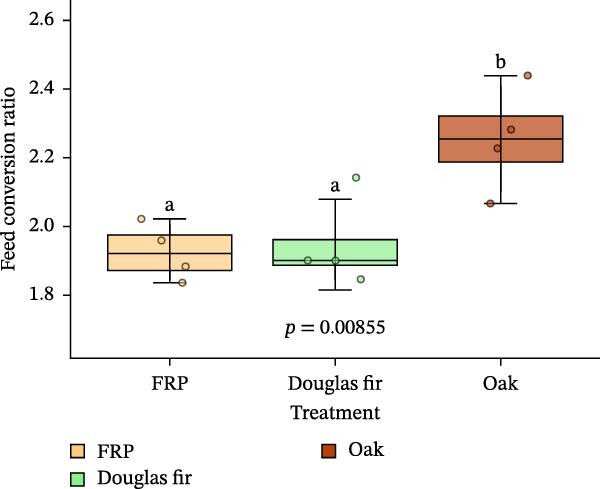
Overall, the fiberglass-reinforced plastic had the best survival, growth, and feed conversion ratio. Nevertheless, the Douglas fir performed similarly, suggesting it could be a sustainable alternative to plastic in shrimp aquaculture tanks. Oak wood, on the other hand, was found to negatively affect all metrics, and thus, was not a reasonable alternative. It was likely that the oak wood released higher concentrations of harmful extractives into the water that negatively affected shrimp feeding behavior and welfare whereas Douglas fir released fewer harmful extractives. This highlights an important study takeaway: not all wood species are suitable for aquaculture.
A More Sustainable Future for Aquaculture?
Employing a wood aquaculture structure, compared to plastic, can improve sustainability by addressing ecological, economic, and societal factors. Wood is a renewable resource, and its implementation can reduce plastic pollution. While wood is more expensive than plastic, wood is cost-effective and repairs can be less expensive in wood systems over time. Consumers are also likely to perceive wood as more environmentally friendly, and it may be more locally available than industrial plastic materials.
Ultimately, Bendag and their team concluded that Douglas fir could be a viable plastic alternative in Pacific white shrimp closed aquaculture systems, particularly because it showed no major rotting issues and did not require synthetic coatings. Wood tanks may be able to replace plastic, provided that the wood species is carefully selected and properly treated. Future research will likely focus on improving pretreatment methods and understanding the longer-term impact of these materials on aquaculture.
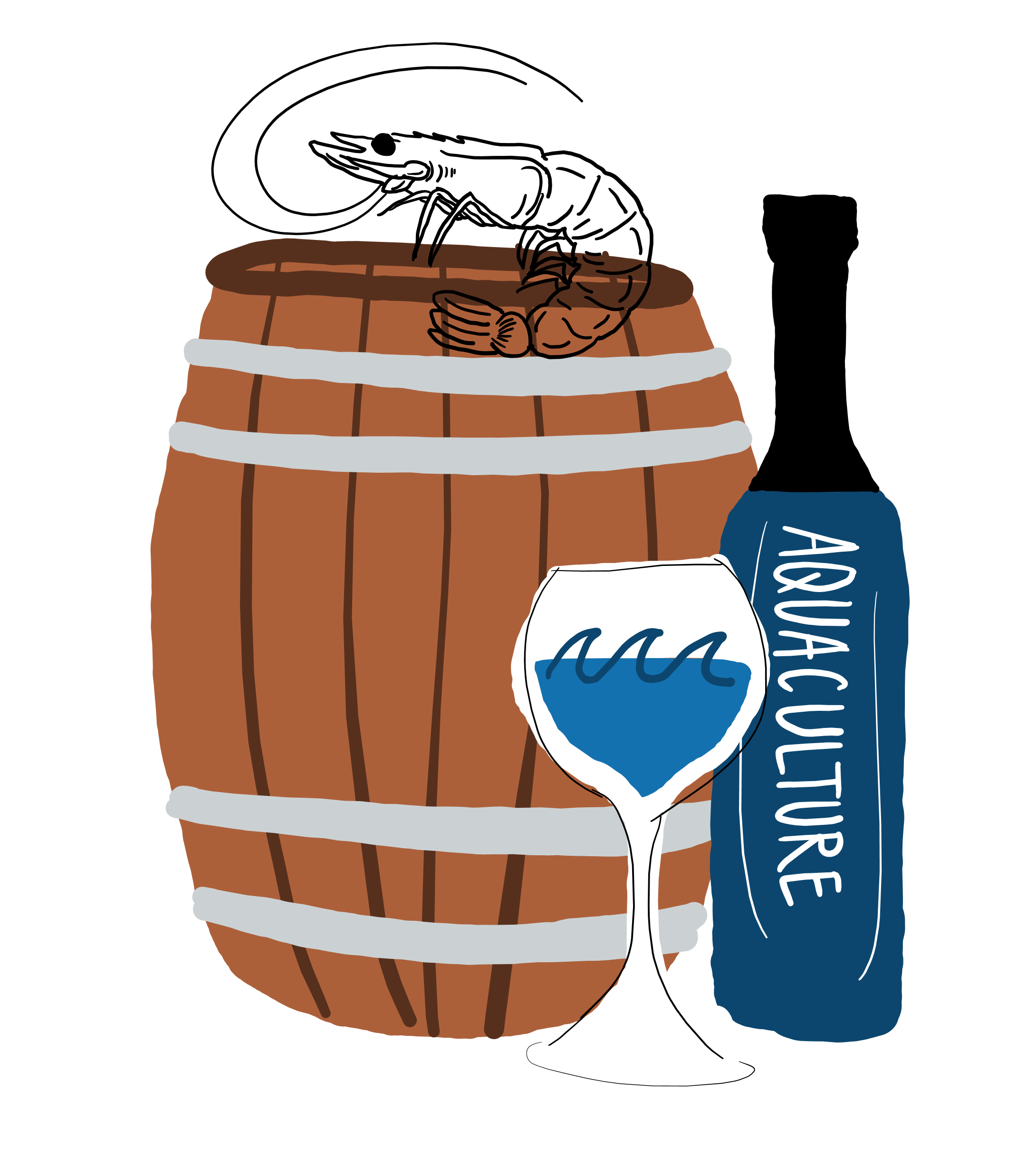
Cover image is a sketch of a shrimp resting on a wine barrel beside a wine glass filled with ocean water and a wine bottle labeled “Aquaculture,” illustrated by Samantha Glass.

I am a Ph.D. Candidate at the University of Connecticut–Avery Point studying the marine carbonate system in the Arctic Ocean. My research focuses on biogeochemical changes occurring within sea ice as the Arctic continues to warm. Outside of my research, I enjoy hiking, running, aerial gymnastics, paddleboarding, traveling, and spending time with family and friends.