von Montfort, G.M., Sutherland, K.R., Colin, S., Costello, J.H. and Nagata, R.M. (2026), Small jellyfish, large consequences: The overlooked predatory role of hydromedusae in subtropical estuarine ecosystems. Limnol Oceanogr, 71: e70360. https://doi.org/10.1002/lno.70360
Small, squishy, and powerful
One of the most enticing yet enigmatic organisms in the marine environment is the jellyfish. These gelatinous animals all belong to the phylum Cnidaria and are best known for their stinging cells, called nematocysts, which can quickly turn a beach day into a letdown. Jellies are found in nearly every aquatic environment, from marine to brackish to even freshwater systems. They often exhibit remarkably high feeding rates and can form dense “blooms,” creating striking visuals or bounce houses for traveling fish. Lab studies show these gelatinous predators can consume more than 10× their body weight in a single day when prey is abundant. Given their voracious appetite, it is important to understand their impact on local ecosystems.
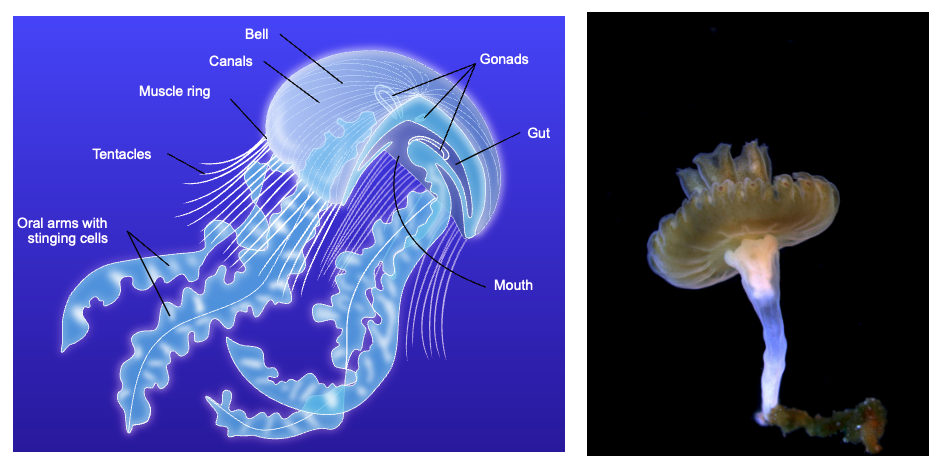
The phylum Cnidaria can be divided into two main classes, the well-known “true jellies” (Scyphozoa) and their less popular cousins, the Hydrozoa. Key differences between these groups include the dominant life stages (the medusa in scyphozoans and the polyp for hydrozoans), the bell thickness, and the presence of a velum (found only in hydrozoans), a thick shelf-like membrane on the inner margin of the bell that enhances swimming propulsion. Since scyphozonans get more than enough shine, we’ll focus on the hydrozoans.
How climate speeds up the food web
Hydrozoans are distributed globally across all latitudes. Warmer temperatures in tropical regions can increase metabolic demand and ingestion rates and alter seasonal timing. This makes it especially important to understand their ecosystem role in warmer areas to better contextualize global open ocean food webs. Climate projections from the Intergovernmental Panel on Climate Change (2023) suggest that rising sea temperatures could accelerate metabolism and reduce digestion times by up to 20% with just a 2–4°C increase.
In the coastal estuaries of the southwest Atlantic, a critical fishery region, research has examined the temporal dynamics of hydromedusae and their impact on the mesozooplankton (critters that range from 0.2 mm to 20 mm) populations. However, the impact on energy transfer from these organisms is largely unknown. Two of the key species in this region are the native Liriope tetraphylla and the non-indigenous Cnidostoma fallax. Both are notable for their high abundance and frequent blooms. Invasive hydromedusae especially can disrupt local community structure and lead to ecological, economic, and social repercussions. Understanding their long-term impact requires examining the trophic roles of both native and non-indigenous species.
Measuring a predator made of jelly
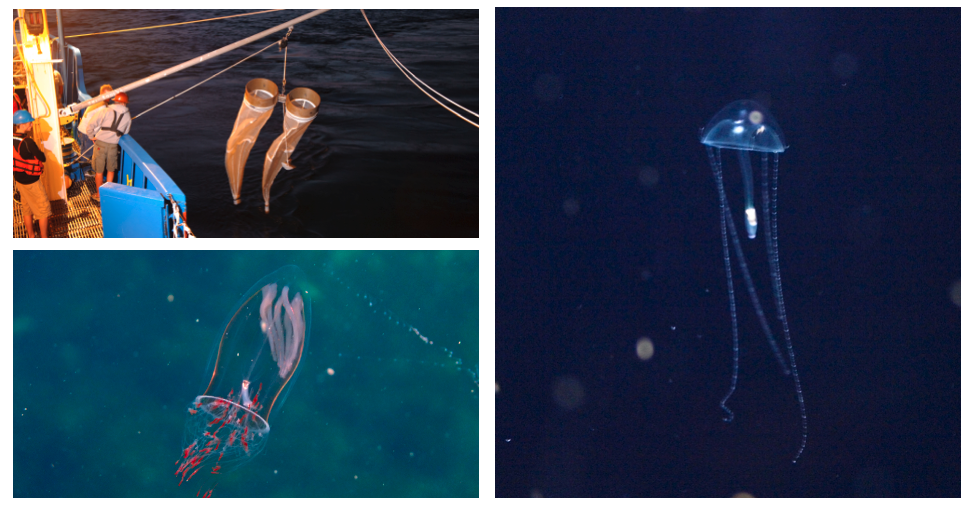
This study, conducted mainly in Brazil, sought to understand how hydromedusae exert top-down control over local zooplankton abundances, how their differing shapes drive prey selection, and how development affects feeding behavior (bigger things tend to eat more). Monthly samples were collected from January to December 2021 in the Patos Lagoon estuary in the Rio Grande do Sul state using horizontal tows with a 200 µm net. Live L. tetraphylla and C. fallax were later collected in early 2024 and kept at a zooplankton lab at the Universidade Federal de Rio Grande for diet analysis.
Drifting hunters in disguise
The hypothesis that both key species exert strong top-down pressure on mesozooplankton like copepods was partially supported. L. tetraphylla showed significant pressure with predation impacts (the proportion of prey stock consumed), ranging from 38 to 103%! Contrary to expectations, its wider and more flat shape did not restrict it to slower prey; instead, it proved effective at capturing fast-moving organisms like copepods.
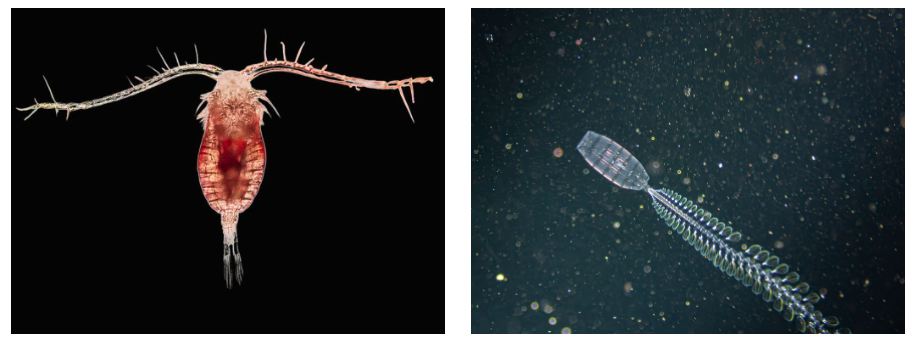
These findings have several ecological implications. At the local level, L. tetraphylla has a clear high predatory impact due to high daily ingestion rates and consistent abundance. It also behaves as a generalist feeder, gorging on both the abundant copepods and larger, slower organisms such as tunicates (another group of translucent ocean feeders often mistaken for jellyfish). Interestingly, there was a negative correlation between medusa size and the ratio of gut volume to prey volume, suggesting that larger individuals use gut capacity less efficiently.
Warm waters and hungry jellies
At a broader scale, the study reinforces that digestion time in gelatinous predators decreases with increasing temperature. The high predation impact of species like L. tetraphylla is partly driven by shorter digestion times. As a result, bloom-forming cnidarians—including both hydrozoans and scyphozoans—may exert even stronger top-down control under future warming scenarios, where higher temperatures further accelerate feeding cycles.
All together, the results show that even the smallest hydrozoans can have a significant impact on the carbon flux in local marine ecosystems. While larger jellyfish like cannonball jellies or sea nettles get all the shine, it’s important to remember that the marine world is dominated by their smaller but just as hungry hydrozoan cousins.
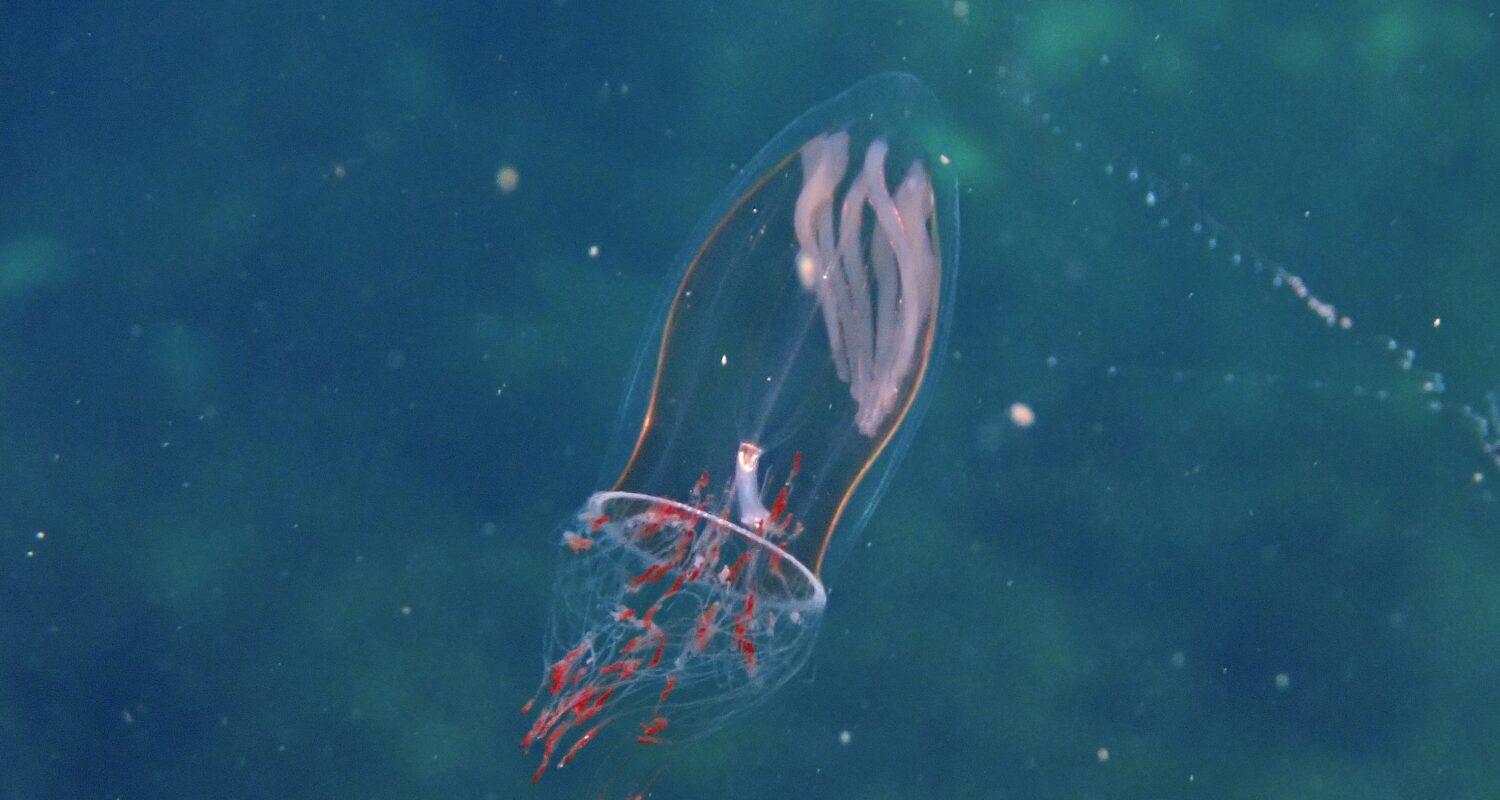
Cover image is a hydrozoan medusa of the species Aglantha digitale, Belostomatid, Wikimedia

I’m a former oceanographer with an MSc in Biological Oceanography from UConn where I studied mixotrophy in marine ciliates. After a year in Poland (studying freshwater critters) I moved to California. I currently work as a lab technician at Stanford. Outside of science, I enjoy a good book, a long run, and frozen fruit.


.jpg)


