Source Article: Guimarães LN, Prado JHF do, Daudt NW, Freitas RHA de. Way beyond its primary goal: a decade of scientific contributions from the world’s largest systematic beach survey program. Ocean and Coastal Research. 2026;74. DOI: https://doi.org/10.1590/2675-2824074.25148
Monitoring marine wildlife
Biodiversity monitoring programs are some of the most robust tools in an ecologist’s arsenal: they can generate loads of precious data regarding threats to local wildlife across both space and, perhaps more importantly, time. Reliable information on the shift of ecological patterns across years or even decades are indispensable for our understanding and sustainable future management of ecological systems and the communities that rely on them for survival. How can you tell if something affects something as wonderfully complex as natural ecosystems if you don’t look at it for long enough?
Among other benefits, monitoring programs can often evolve beyond the scope of their original purpose (which is usually in the form of “how X affects Y across this space for this time period”) and influence more scientific sectors than originally planned. This was exactly the case of the PMPs (Projeto de Monitoramento de Praias, the Portuguese acronym for “Beach Monitoring Programs”), which, at the time this article is written, are the world’s largest monitoring program of marine tetrapods – including sea turtles, seabirds and marine mammals.
Brazil’s beach monitoring programs
PMPs are an initiative of the Brazilian Federal Institute for the Environment and Renewable Natural Resources and have significantly boosted academic research and policy-making in the country since their launching in 2010. They belong to a wider array of monitoring programs required to grant permission to oil companies to explore and produce in the area. Spanning over 3000 km of Brazilian coastline, PMPs aim was to monitor how oil and gas extraction affects those coasts by assessing how they affect the marine tetrapods that reside there. Or, more accurately, by documenting local strandings of these animals.
A “stranding” is a term used to describe a number of different scenarios: a dead marine tetrapod may be washed up on shore or floating in nearby water, or a live one cannot return to its natural aquatic habitat without assistance or medical attention. Since the oceanic habits of these animals make their study challenging for us land-dwellers, looking at strandings as a metric of their population is a less labor-intensive alternative. While many factors contribute to marine species getting stranded, if the scope of the study is big enough in both the spatial and the temporal scale, this method yields robust insights.
Guimarães and his team wanted to chart the impacts of PMPs by looking at research articles published using data collected in the project. What specific area did the data come from? What species did research cover? What was the subject of each study? Along with these questions, they also hypothesized that more endangered animals would get more “spotlight”, as their conservation is a priority.
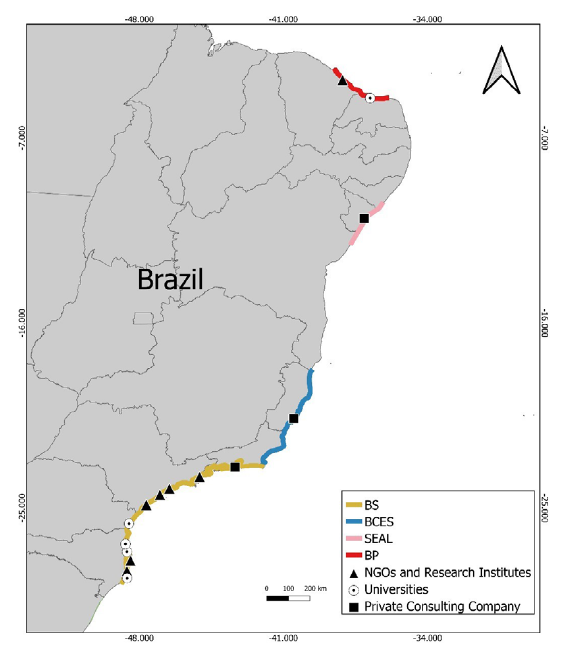
Survey area of the PMPs. The legend depicts the colors describing different monitored sedimentary basins (“BS” = Santos Basin, “BCES” = Campos/Espírito Santo Basin, “SEAL” = Sergipe/Alagoas Basin, and “BP” = Potiguar Basin) and the shapes corresponding to various contributors to the project per area, from research institutes to NGOs, Universities and private consulting companies (Guimarães et al., 2026).
Above and beyond the primary goal
Turns out, while the program’s aim was oil and gas impacts, this was actually the focus of only one publication in over 100 articles assessed; the bulk of the research from PMPs covered a vast array of subjects that weren’t connected to fossil fuel impacts, including wildlife pathology and health, human interactions with the tetrapods, ecology and conservation and biochemistry or genetics studies. Unlike Guimarães’ team hypothesized, higher endangerment categorization didn’t necessarily come with more attention. Instead, the available sample sizes co-selected which species got the spotlight. In practice, it means that the less threatened tetrapods tended to have more reported stranding incidents due to their ubiquity when compared to their scarcer, more vulnerable counterparts.
Arguably, the most important finding of Guimarães’ team was how the free availability of the PMPs database impacted research. In fact, it was identified as the reason behind the impressive publication record of the PMPs despite their relatively recent implementation. Although institutions and research teams directly involved in the PMPs dominated in authorship, non-affiliated institutions contributed no less than 1/3 of the publications, an impressive figure that speaks to how unobstructed flow of information and researcher independence promotes scientific efforts.
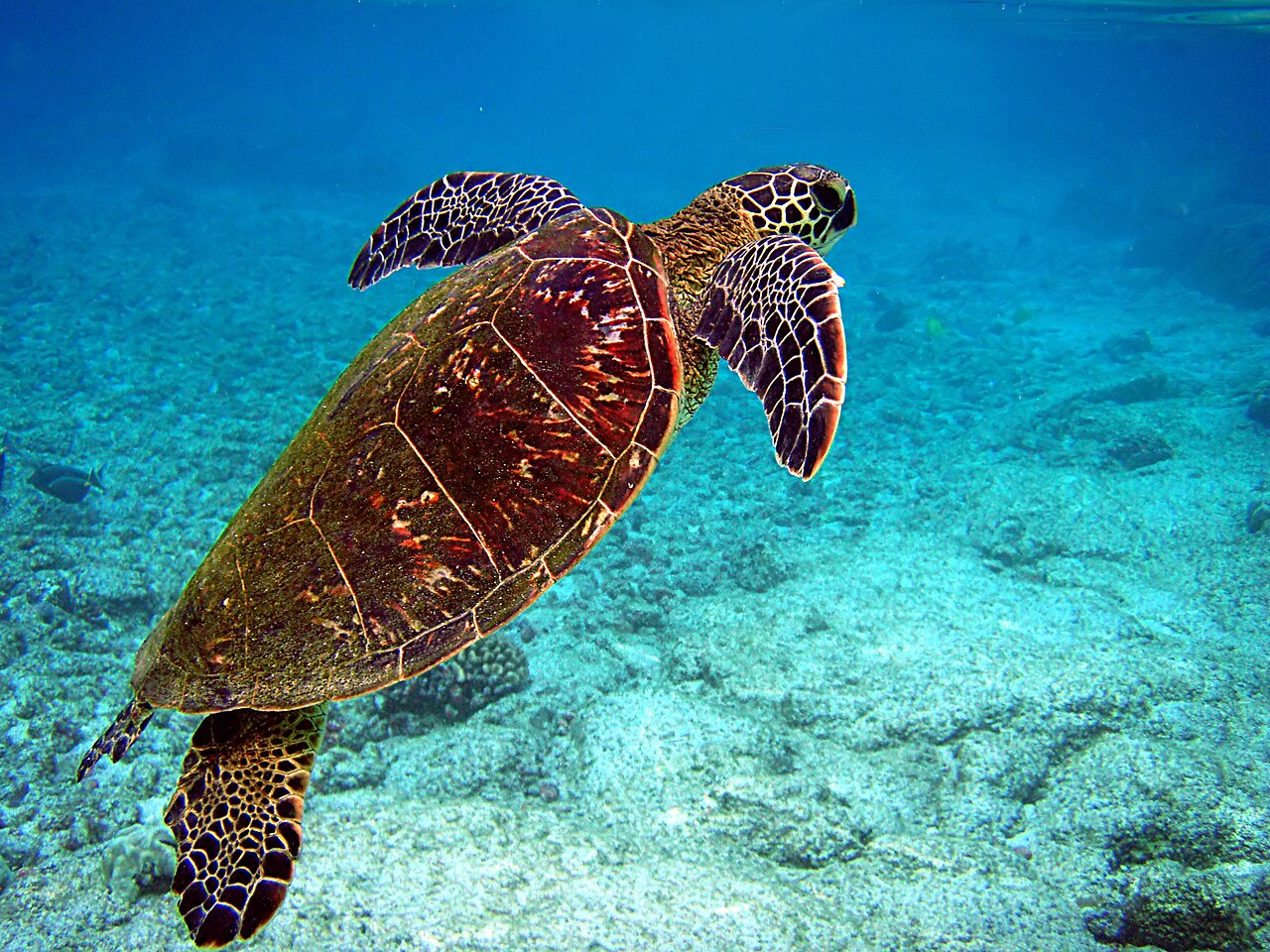
Green turtle (Chelonia mydas), the most studied species in the PMPs, surfacing for air (Photograph by Brocken Inaglory, CC BY-SA 3.0, via Wikimedia Commons).
The future of PMPs
Improvements to the PMPs can be made: scheduled inquiries into the reliability of their database will ensure consistent quality of the data. Moreover, it should be considered that while the database is open-access, some information may still need to be accessed through the institutions directly involved in the PMPs. Geographical and stranding reporting biases should not be overlooked, as it was evident the more populated and academically represented South part of Brazil had a stronger presence in the data. The above do not undermine the significance and multi-functionality of the PMPs but help reinforce their strengths and their vital importance as Global South scientific initiatives. Their continued implementation would benefit us all and act as a beacon and blueprint for future projects that will help us better understand (and ensure the well-being of) our oceanic neighbors.
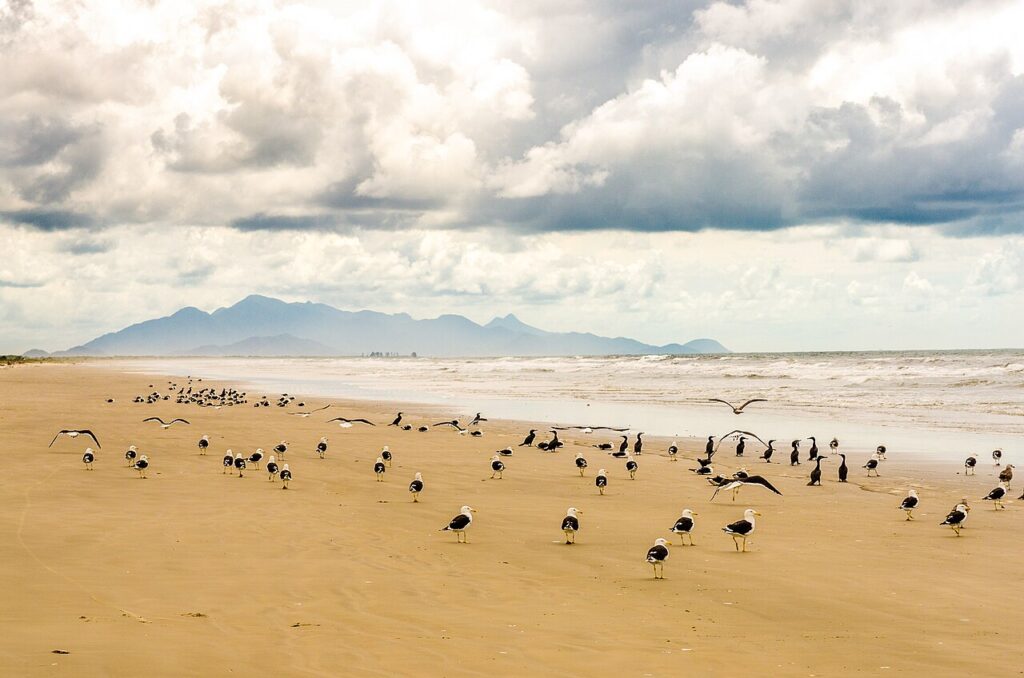
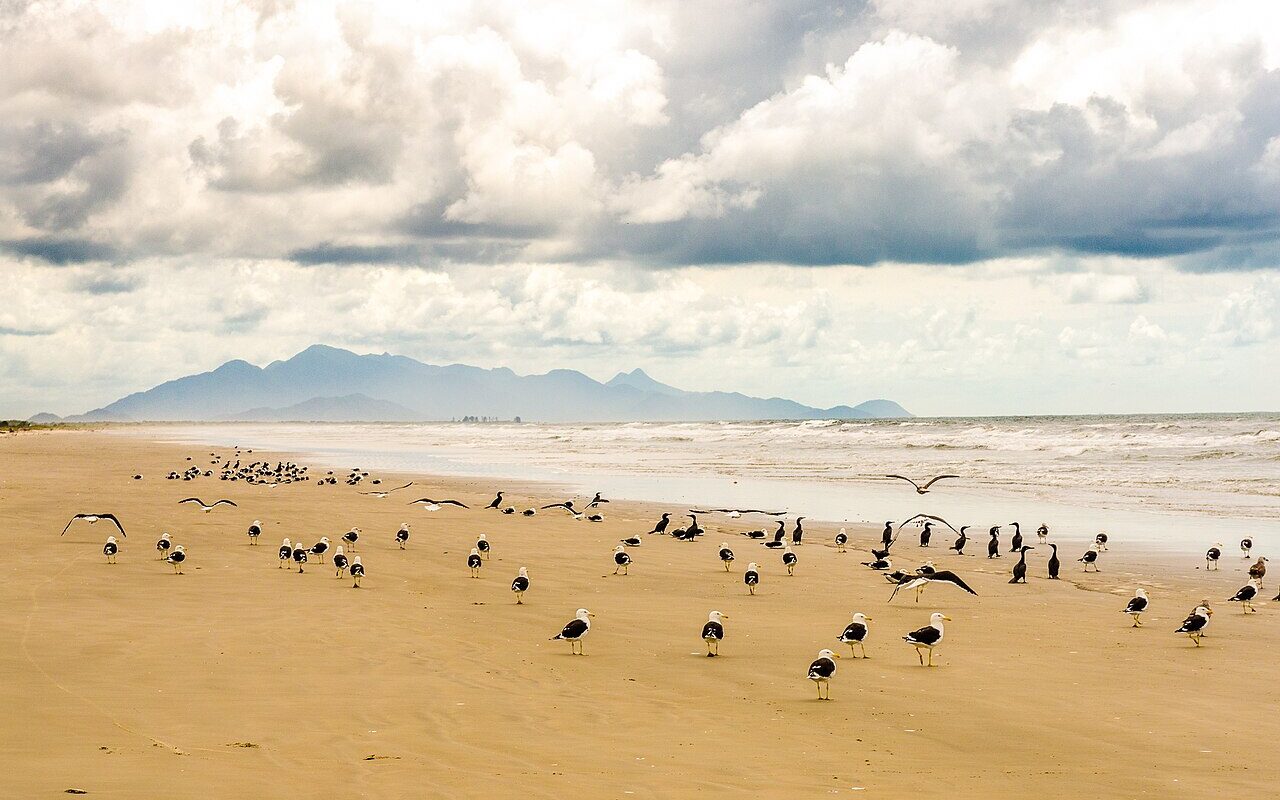
Cover Image: Seabirds on the Island of Superagui, part of the Santos Basin survey area of the PMPs (Photograph by Chostakovis, CC BY-SA 3.0, via Wikimedia Commons)

I’m an aspiring environmental writer, a MSc candidate in Host-Microbe Interactions and a former researcher in microbial ecology. I’m passionate about the surprising ways marine ecosystems and their neighboring communities respond to climate change and how science communication, art and collective effort influence our planetary impacts. I’m based at Skopelos, a small Greek island right next to the largest marine park in the Mediterranean.