Coulon, N., Feunteun, E., Carpentier, A. and Lizé, A. (2026), The Overlooked Threat of Global Warming on Elasmobranch Fertility. Fish and Fisheries, 27: 41-55. https://doi.org/10.1111/faf.70031
Temperature Extremes
Climate change from human activity is disrupting natural climate patterns. Currently, we are shifting to a warmer climate as average temperatures continue to steadily rise. While there have been many studies on how this change will impact the ocean, less is known about how this will impact the reproductive processes of marine animals.
Of the few studies that have looked at marine animal reproduction and how it relates to temperature, many have focused on sea turtles. Like other reptiles, the temperature of the eggs influences the sex of the hatchling. For the turtles specifically, if the temperature of the nest is above 31℃ (88.8℉) then the majority of the hatchlings will be female. If the temperature is below 27.7℃ (81.86℉) then the majority will be male. As we experience warmer than average temperatures, it can disrupt natural sex ratios in turtle populations. Having more females than males makes it more difficult for individuals to find suitable mates to reproduce. Learning this information has been incredibly valuable in helping manage vulnerable turtle populations. However, many other marine species rely on certain temperature ranges to successfully reproduce as well. This includes some of our most vulnerable species; elasmobranchs.
Elasmobranch Vulnerability
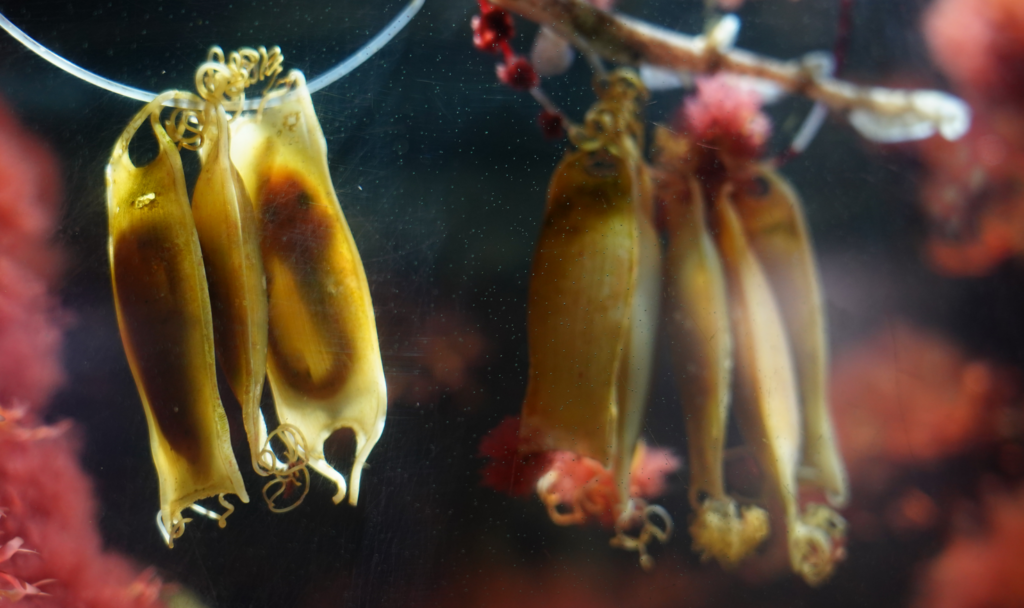
Elasmobranchs (sharks, skates and rays) are a vulnerable group of animals due to their reproductive strategy. They are long-lived, late maturing animals that produce few offspring. For example, spiny dogfish (Squalus acanthias) can live over 40 years, but don’t reach maturity until they’re around 10 years old. They average 6 offspring every other year with embryos taking 18 – 24 months to develop. Current management policy addresses this vulnerability through the lens of catch rates. In other words, population loss is caused by humans catching too many individuals at one time. While this is one piece of the puzzle, climate change may now be impacting how many new individuals are entering the population. If we don’t understand successful reproduction as it relates to rising temperatures in these species, then we may be underestimating how long it may take for populations to recover.
Therefore, in this study scientists collected available literature that examined how rising ocean temperatures may impact elasmobranch reproduction. The goal was to identify vulnerable reproduction steps and knowledge gaps for future study to help guide potential management policies to protect these populations.
Disrupting the Reproductive Cycle
The team identified five key steps in the elasmobranch reproductive cycle which had potential to be vulnerable to temperature changes. They are as follows:
- Gametogenesis
- The process to make haploid gametes (sperm or eggs).
- Mating
- Sperm Storage/ Sperm Quality
- Post-zygotic Development
- Development of embryo (fertilized egg).
- Offspring
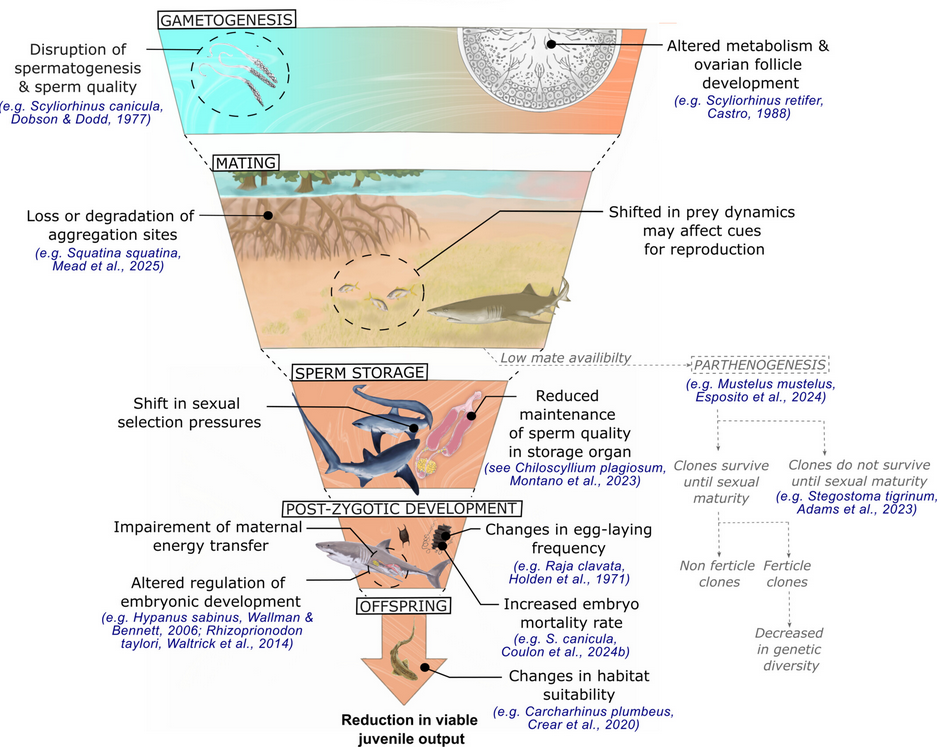
Each step was found to be potentially vulnerable to warming temperatures in researchers’ review. Table 1 outlines each step in the cycle and lists hypotheses and knowledge gaps identified in prior studies.
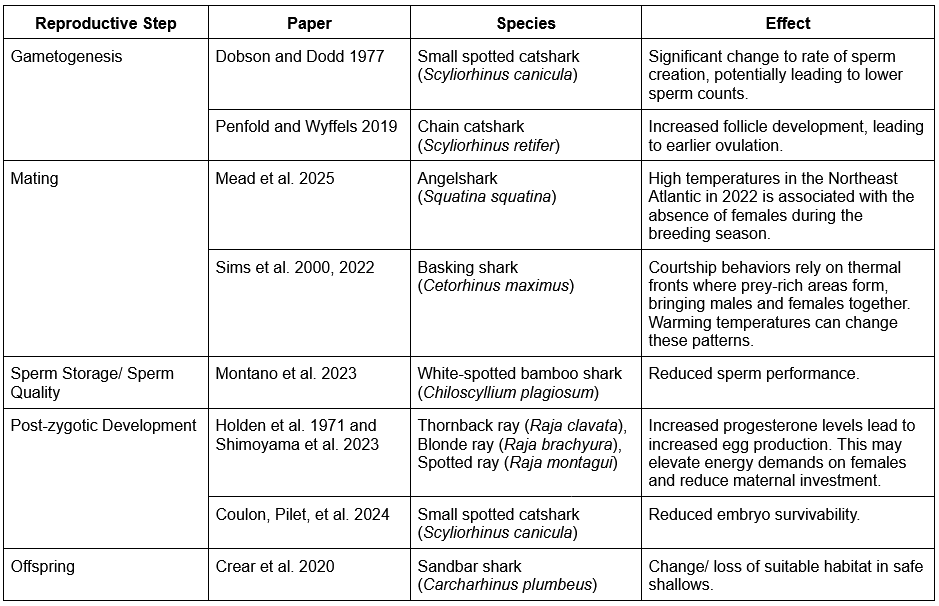
Future Management Policy
Overall, the research team found evidence across 88 elasmobranch species that warming temperatures significantly impact their reproductive cycle. However, this vulnerability isn’t accounted for in current management policies. Therefore, there needs to be a push to further study these impacts and better assess how elasmobranch populations will look in a warmer world. Management policies accounting these changes can better address potentially lower numbers of new individuals entering a population, leading to a stronger, healthier elasmobranch population.

I am a recent MSc graduate in marine biology from Bangor University, where I studied population dynamics of elasmobranchs off the coast of Wales. My interests lie in ecological data analysis to understand environmental processes and identify natural patterns. However, nothing beats being in the field and interacting directly with the marine life.

