Coral, C., Doorenspleet, K., Marjolijn, J.A. et al. Shellfish reefs as essential fish habitats: complementary insights from eDNA and BRUVs in the North Sea. Mar Ecol Prog Ser 789:meps15179 (2026). https://doi.org/10.3354/meps15179
Innovations in Field Sampling
Biological sampling in the field is often limited to methods that take organisms from their habitats, known as extractive sampling, to assess the biodiversity of an area. In the last several years, several innovations have increased our ability to capture species biodiversity without capturing the organisms, known as non-invasive sampling, which include environmental DNA (eDNA) and baited remote underwater videos systems (BRUVs, Figure 1). Techniques like eDNA and BRUVs use genetic information in water samples and use baited video cameras, respectively, to examine organisms that are present in an environment. While eDNA captures more species detections, BRUVs can capture more specific data such as the life stages (e.g.: juvenile, adult) of the species attracted to the bait. Dr. Coral and her science team used both eDNA and BRUVs to create a study that used their complementary outputs.
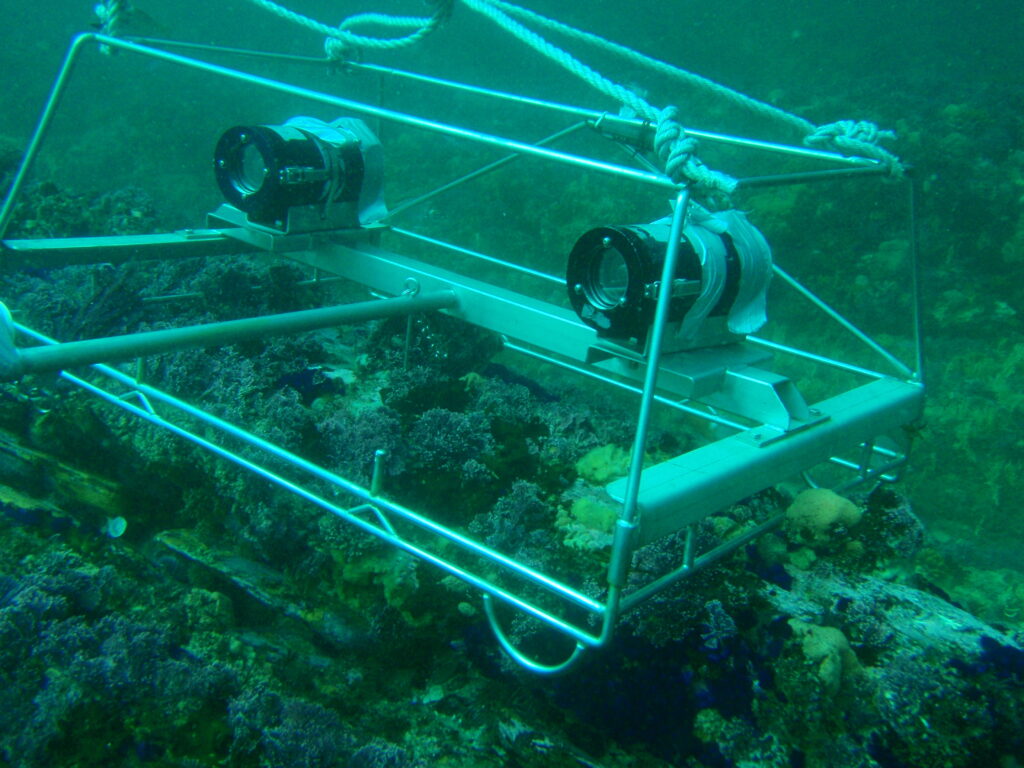
Figure 1: A baited remote underwater video system (BRUVs). Photo by Pbsouthwood, CC BY-SA 3.0, via Wikimedia Commons.
In this study, Coral’s team collected eDNA samples and used BRUVs to collect vertebrate biodiversity information from two locations in the North Sea: Voordelta near the Netherlands and Noss Head off the coast of Scotland (Figure 2). These locations are both protected from commercial fishing and feature natural shellfish reefs and sandy-bottom areas. The science team deployed both eDNA and BRUVs to assess the vertebrate communities in these two areas, putting eDNA and BRUVs to the test.
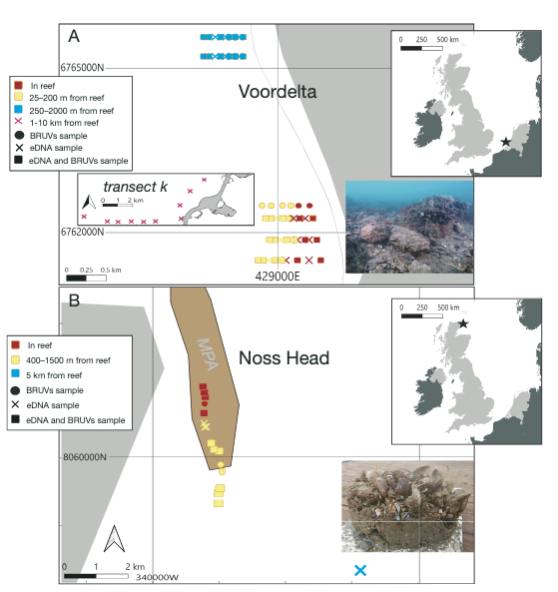
Figure 2. Study locations and habitat photos of the different shellfish reefs at Voordelta and Noss Head.
Hide and Seek
The results show that eDNA identified more species than when using the BRUVs; however, the biodiversity remained higher on the reef than away from the reef for both sampling methods (Figure 3). Because of the differences between eDNA and BRUVs species detections, an in depth analysis of the species present relied exclusively on eDNA.
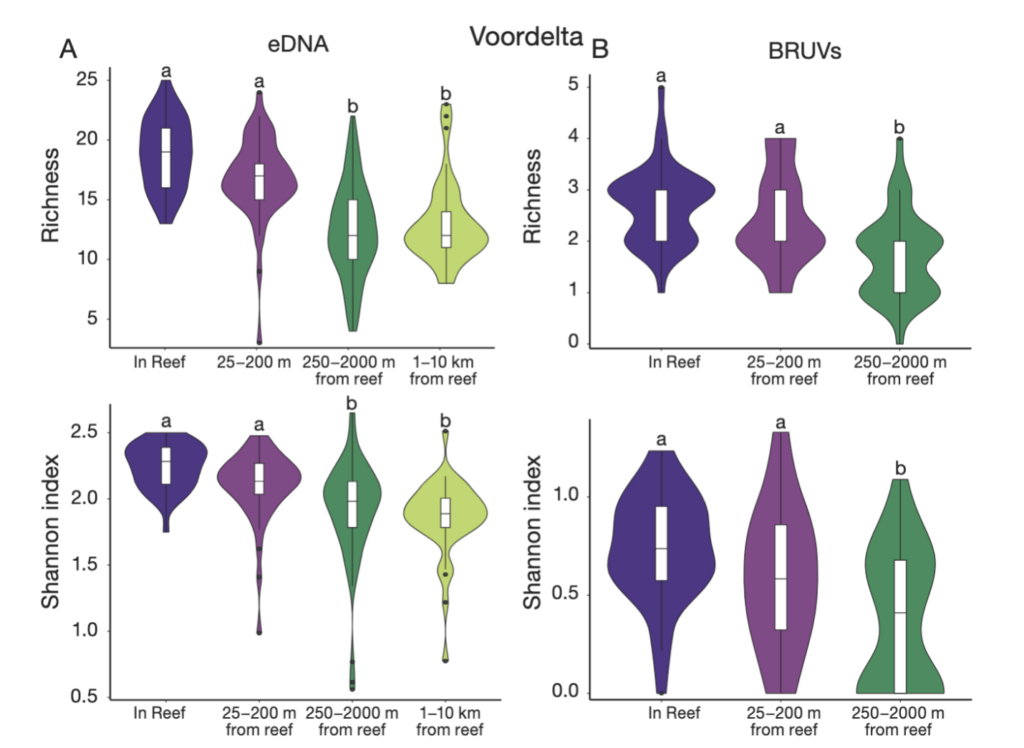
Figure 3. Comparison of biodiversity via species richness (the number of different species present in a community) and the Shannon index (the amount of similarity between the number of different species present in a community) for the two sampling methods: eDNA (A) and BRUVs (B).
The Reef Effect
While some species were more common on or off the reefs, habitat preference and feeding strategies provided a guide for who to expect at the different locations. For example, species that spend their time in the water column, known as pelagic species, were found closest to the reef at Voordelta and Noss Head. Species that feed on fish, known as piscivores, were commonly found off the reefs at both sites as well, while species that feed on invertebrates were more commonly found at the reef sites.
This study showed that the presence of shellfish reefs played an important role in which vertebrates were present at the two reef sites, Voordelta and Noss Head. Despite being at different parts of the North Sea, the results were similar. These natural shellfish reef habitats are vital for vertebrates who are seeking shelter and feeding opportunities.
Camera-shy or in the Spotlight?
Understanding who is in what location is sometimes hard to figure out, especially when examining highly mobile species. Finding ways to investigate without disrupting the habitat is difficult but not impossible. Different methods like eDNA and BRUVs can provide different insights into who is there and when. Many studies use one or the other but diversifying the non-extractive methods and using more than one at a time can help our understanding of communities and ecological changesL. When used in tandem, eDNA and BRUVs can show us many species, including those who are camera-shy and those who are attracted to the spotlight.
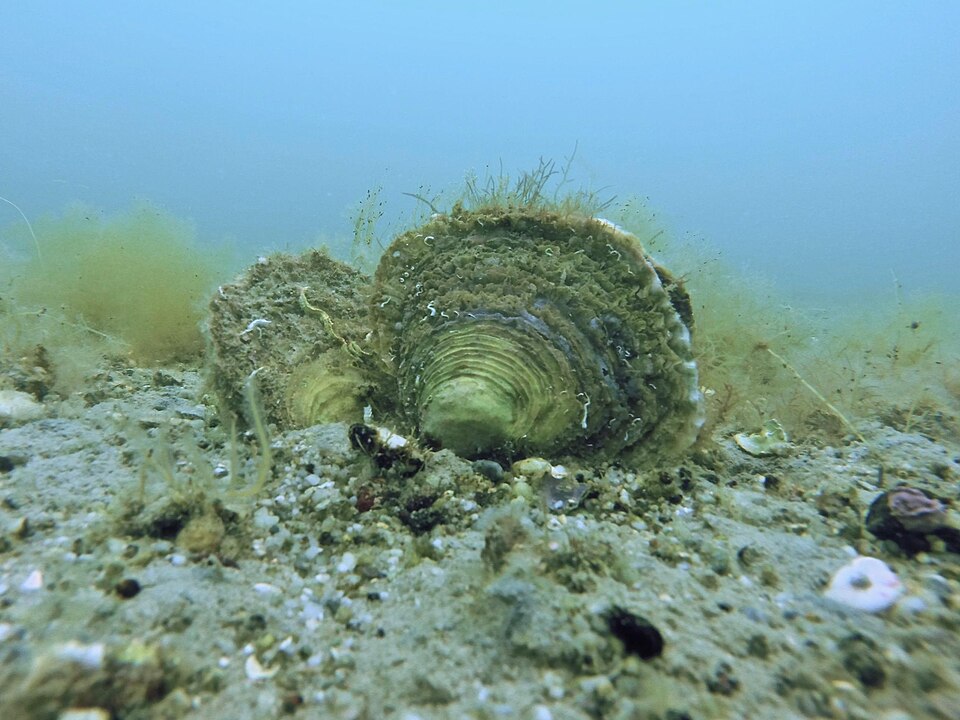
Cover image is of a native oyster reef in Brittany, France. Photo by Stéphane Pouvreau sourced from WikiMedia Commons
I am a Ph.D. candidate in Oceanography at Rutgers University where I study early life stages of bivalves. My research interests include bio-physical interactions in the ocean and invertebrate larval ecology. When I have free time, I spend it reading, participating in theatre productions, and writing poetry.



_(Ifremer_00377-48842_-_6).jpg)