Barrowclift, E., J. S. Bigman, E. D. Digel, P. Berggren, and N. K. Dulvy. 2026. “ Offspring Size Resolves a Population Growth Paradox in Rays and Skates.” Fish and Fisheries 27, no. 4: 927–941. https://doi.org/10.1111/faf.70091
Finding the Limit
A successful fishery relies on its ability to harvest as many fish as possible without causing a population collapse. A variety of equations help us find those limits including r max. In a nutshell, r max describes the maximum growth rate a population can experience by calculating the number of females produced per spawn. While its primary purpose is to identify fishing limits and potential population recovery for economically important fish, researchers are looking to apply r max to other vulnerable populations such as skates and stingrays that have suffered from bycatch and/or overfishing.
Barrowclift et al. 2023 recently calculated r max for skates and stingrays, but they had an unexpected result. Typically, r max increases with temperature and decreases with depth. For example, shallow, warm water species will have a high r max while deep, cold water species will have a lower r max. Barrowclift et al. 2023 found the opposite. Shallow, warm water stingrays had a lower r max than deep, cold water skates. The pattern of r max across temperature and depth isn’t a universal law like gravity, but the results from 2023 puzzled the researchers enough that they continued to explore this paradox in a new study that was recently published. Barrowclift et al. 2026 found that they were missing an important variable apart from temperature and depth that influenced the r max value.
The Value of Offspring
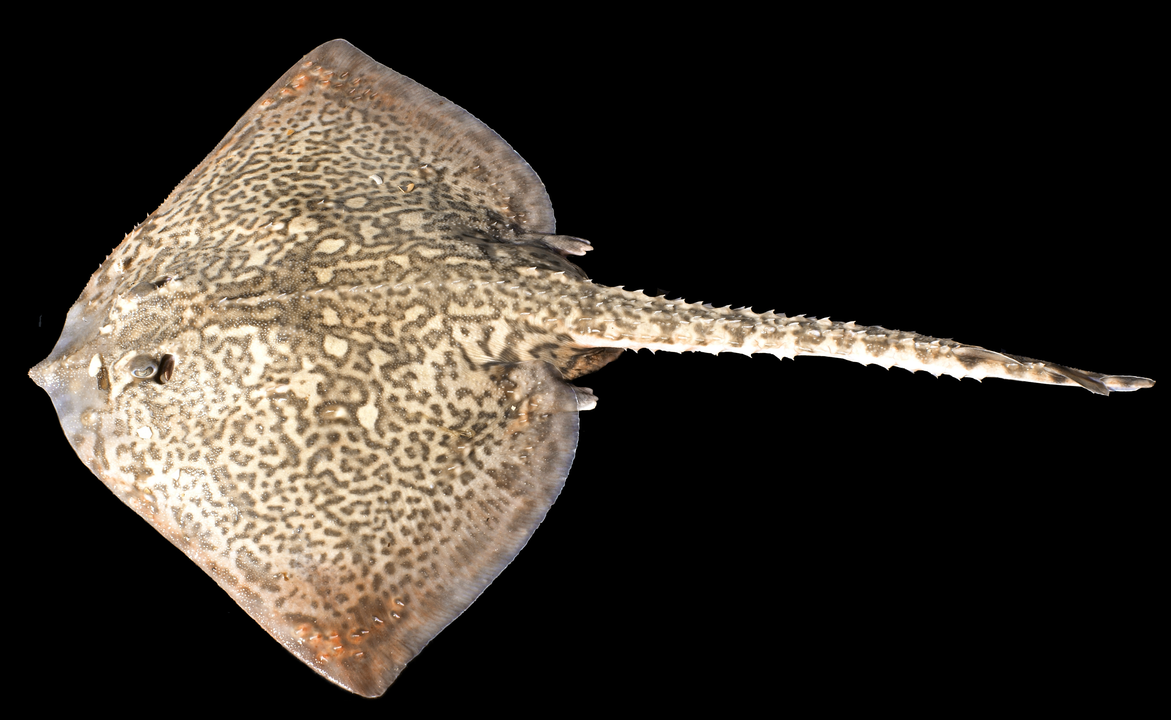
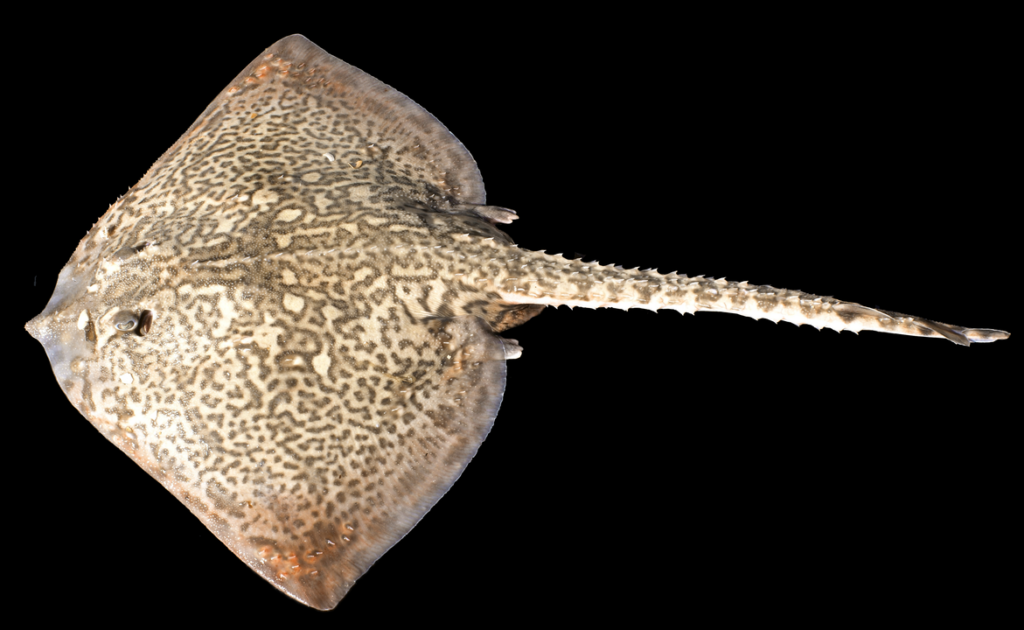
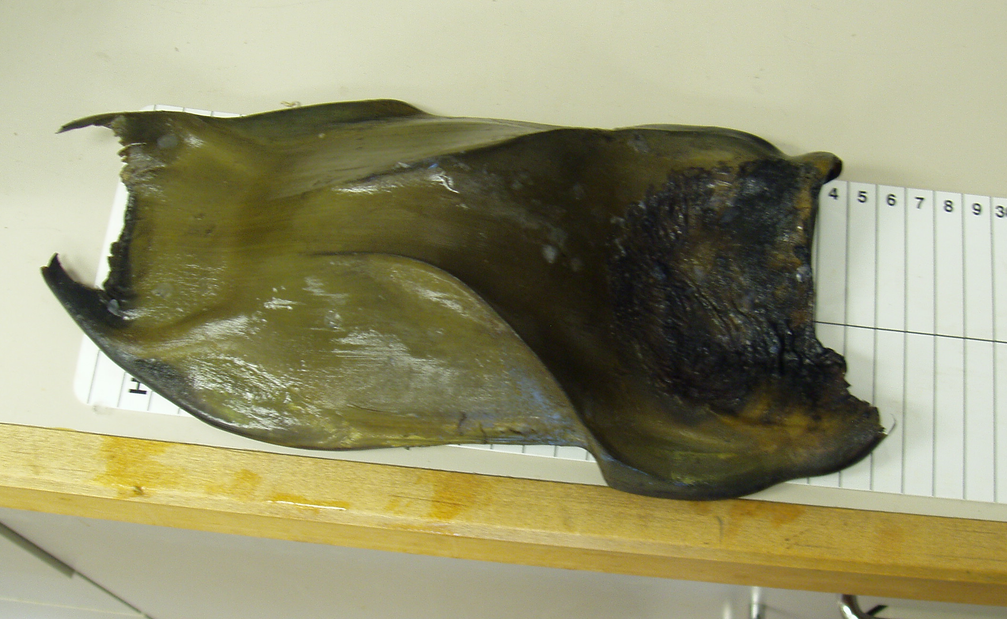
Batoids (skates and stingrays) are a diverse group with global distribution across many distinct habitats. Skates belong to the Rajiformes group and typically feature a thick fleshy tail, two pelvic fin lobes and reproduce by laying eggs. Stingrays, on the other hand, typically have a long, whip-like tail with one pelvic fin lobe and reproduce by birthing live young. These differences make assessing r max for the entire group difficult with a lot variables to account for. Therefore, the researchers tested a bunch of models with those variables to determine which one best described the r max pattern they found in 2023. They found offspring body mass was the variable they were missing. Pairing it with depth and temperature in separate models, both equally described the variation in r max.
Offspring body mass can not only explain the pattern typically seen for r max with increases with temperature and decreases with depth, but also why we see the opposite in skates and stingrays. In general, offspring size has a negative relationship with temperature due to differences in maternal investment. Females will tend to produce larger, better-developed offspring in colder environments so they have a better chance to survive the harsher environment. There isn’t a need to survive as extreme temperatures in warmer environments so females put their energy into more offspring at smaller sizes. Stingrays tend to be found in warmer, shallower water, but produce few, large offspring. Skates on the other hand are found in cooler, deeper water, but produce more offspring at smaller sizes.
Truly a Paradox?
So while skates and stingrays don’t follow the typical r max pattern, they are two distinct groups that evolved completely different reproduction strategies. It wouldn’t be unfair to say that comparing the two groups is like comparing apples and oranges. It’s because of their different reproduction strategies that the paradox seemingly exists. Future work should remove reproduction strategy as a variable and see if just skates or just stingrays follow the established r max pattern.
Nevertheless, without this study, the team wouldn’t have found how important offspring size is to calculating r max. It may be worthwhile for other studies to utilize this variable for future calculations to see how it may impact sustainable fishing limits. The better we are at finding this limit, the better off the fishery is for people and the fish.

I am a recent MSc graduate in marine biology from Bangor University, where I studied population dynamics of elasmobranchs off the coast of Wales. My interests lie in ecological data analysis to understand environmental processes and identify natural patterns. However, nothing beats being in the field and interacting directly with the marine life.


