Pi, J., Martinez, S., Cook, D.T. et al. Isotope metrics refine herbivory among three nominally herbivorous reef fishes of socio-ecological importance. Coral Reefs (2026). https://doi.org/10.1007/s00338-026-02925-9
Fish Function
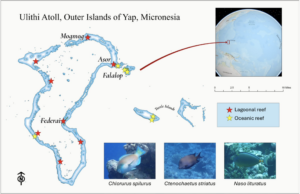
Herbivorous (eats things that perform photosynthesis) coral reef fishes are classified into functional groups, or groups that have different jobs within the reef ecosystem, based on their feeding habits. Some of these groups include browsers, grazers, scrapers, and excavators and are responsible for things like removing algae or sediment from the reef. While these functional roles have been well-documented, how fish get nutrients from their diet is less certain. Sometimes, their feeding habit (function) does not align with the source of their nutrition, suggesting the two things are not exclusive. This concept is important to consider as climate change progresses and coral reef ecosystems continue to change, especially in small communities that rely on fishing as a major food source. Pi and his team of scientists explore this misalignment for three species of herbivorous fishes (one parrotfish, Chlorurus spilurus and two surgeonfishes, Ctenochaetus striatus and Naso lituratus) within Ulithi Atoll (Yap State, Federated States of Micronesia; Fig. 1), where villages depend on these species for food and trade.
Gone Fishing
The team collected most of their samples in June 2023, with additional field visits in January and June 2024. Upon collection, fish were photographed and measured before a small sample of muscle was taken. The muscle was stored on ice to be brought back to the laboratory. Pi then used amino acid carbon and nitrogen isotopes to compare the three species. Each type of material eaten by the fish has its own specific isotope signature, or flavor, if you will, that allows scientists to identify where the organism was getting its nutrition from (e.g., algae, coral, sediment organic matter).
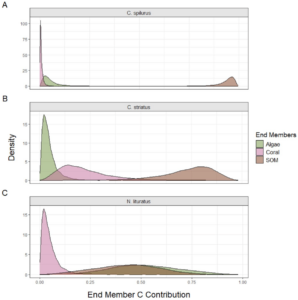
Each species of fish in this study is classified as an herbivore because they are observed to eat algae, but the team’s results show that not all the nutrients absorbed and utilized by the fish come from that algae. Across all their metrics, the team found N. lituratus to be getting most of its nutrition from algae (Fig. 2). C. striatus and C. spilurus, however, obtained most of their nutrients from sediment organic matter (SOM), so material ranging from fish poop, sponge tissue, and coral mucus to other organic particles (Fig. 2).
These results support previous studies that suggest while some parrotfish and surgeonfishes appear to be herbivores, they may actually be getting their vital nutrients not from the algae they are observed to eat, but the microbes and other things that live on the algae. This challenges the traditional definition of what an herbivore is and supports the idea that feeding habit and nutritional source are not interchangeable.
One fish, two fish…
As climate changes, these nutritional differences are important to consider. Changes to coral reefs, like bleaching or warming water temperatures, may impact and alter the nutritional source of fishes, which could influence their functional role in the ecosystem. Understanding these dynamics is critical for conservation efforts and management, which directly impacts island communities that are reliant on fish as both a food and income source. The knowledge gained and shared from this study provides more species-specific data for reef ecosystem monitoring and models that may better inform management practices for coral reef fisheries around Ulithi and other similar island communities.
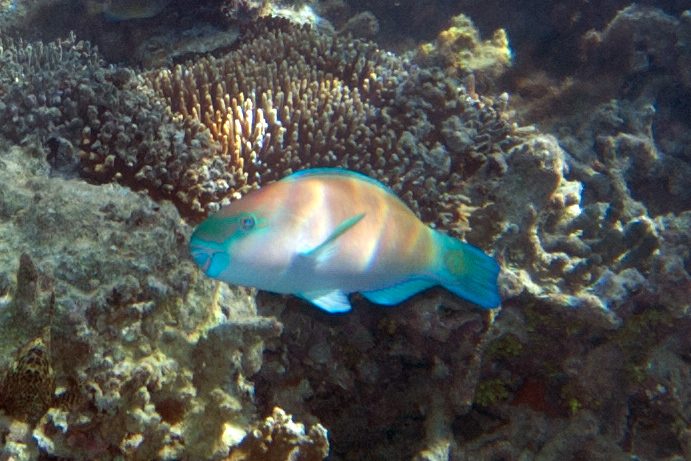
Cover image is of a Chlorurus spilurus, sourced from WikiMedia Commons.

I just completed my Ph.D. in Geological Oceanography at the University of Rhode Island, Graduate School of Oceanography. I received my B.S. in Geology from Union College (NY). I study submarine volcanoes! I use the chemical composition of lava to figure out what is happening inside the Earth and how magma is formed. When I’m not working with rocks, I enjoy reading on the beach, cooking, and hiking.


.jpg)