Díaz-Delgado, E., Chung, M. T., Magozzi, S., Willis, T. J., & Trueman, C. N. (2025). Potential metabolic records in isotope signals of chondrichthyan hard tissues. Journal of Fish Biology, 107(3), 1001–1017. https://doi.org/10.1111/jfb.70109
Fish Metabolism Measurement
Scientists have recently demonstrated a way to measure the energy used by individual fish in the wild, known as field metabolic rate. Field metabolic rate (FMR) essentially tells us the animal’s energy usage as it lives its life. For scientists who study animal lifestyles and how they interact with their environment, this is an important value to know. While this has only been demonstrated with bony fish (teleost fish), could FMR be estimated for cartilaginous fish such as sharks and rays as well?
The immediate response may be a confident “yes,” but scientists were unsure because of the methodology used to estimate FMR. Field metabolic rate was estimated by analyzing the variations in stable carbon isotope ratios (¹³C/¹²C) in the otoliths of fish. The ratio is expressed as δ¹³C. Essentially, the lower the value δ¹³C is, the higher the FMR of the fish is (the more energy they use). Otoliths were sampled for this isotope ratio because they are mineralized structures made of calcium carbonate which preserve these carbon isotopes. This is where scientists were unsure this method could work for cartilaginous fish.
No Bones, No Problem
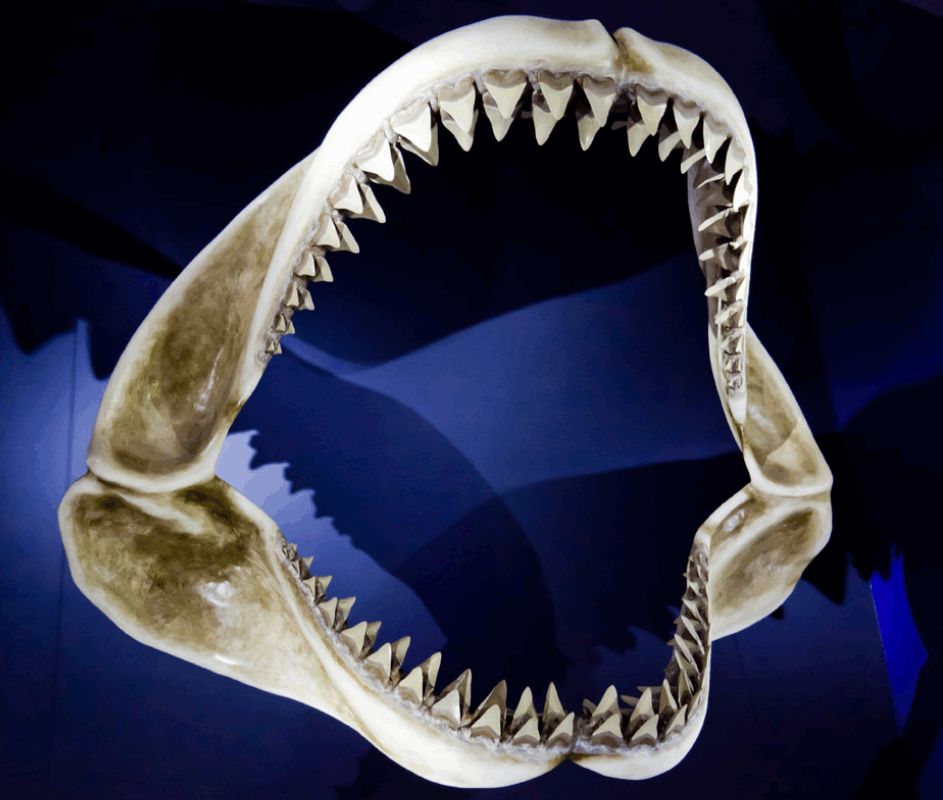
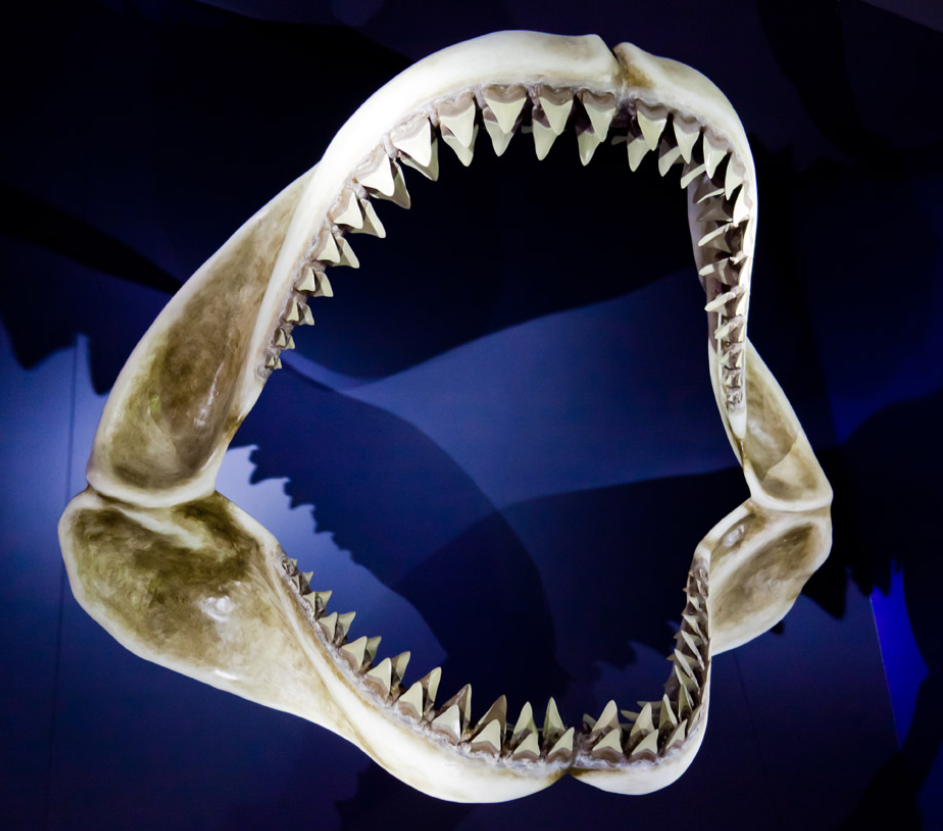
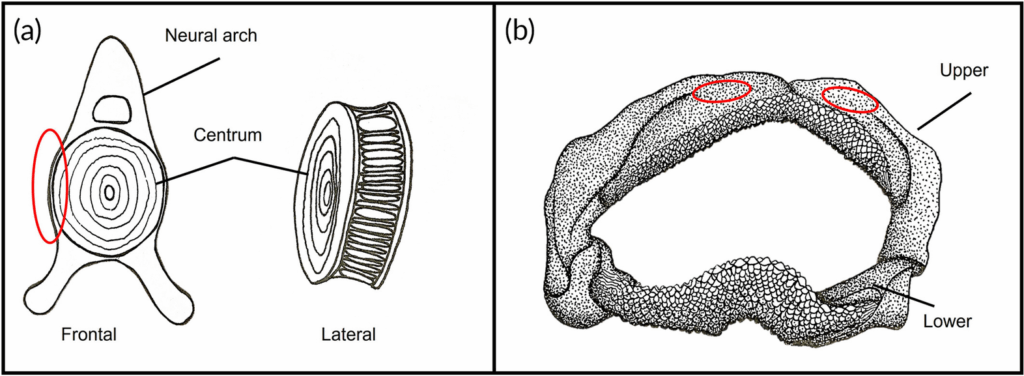
As the name implies, cartilaginous fish lack hard skeletons to capture and hold these carbon isotopes. Thankfully, a number of structures in the cartilage skeleton do mineralize to provide extra strength, including the vertebrae, jaws, and teeth. Díaz-Delgado et al. (2025) tested these mineralized structures in 13 chondrichthyans (sharks, skates, rays, and chimeras) to not only see if the carbon isotope ratio was present, but then estimate FMR for each species.
While the carbon isotope ratio was found and assessed in all three mineralized structures, teeth samples were found to be inconsistent with vertebrae and jaw samples. This indicated the teeth may exchange isotopes with the environment, disrupting the ratio that was found in the other samples. Therefore, the vertebrae and jaw were only considered in the FMR estimation.
Stroke of Choice
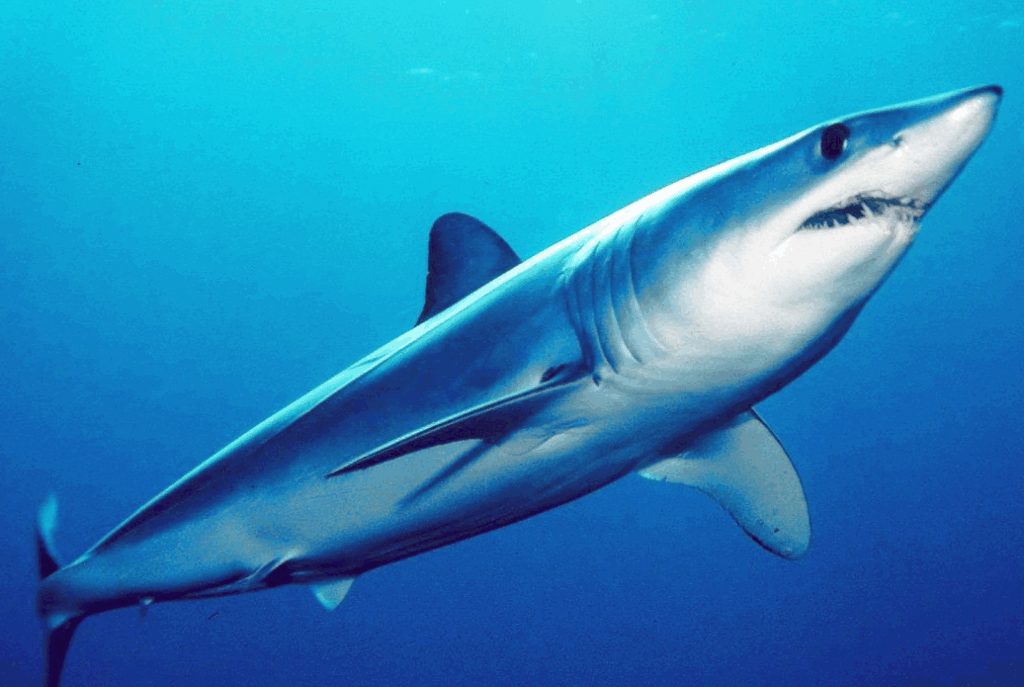
Researchers used swimming styles as a proxy for the activity level in each species. Given each style is a reflection of the species’ hunting style and movement through the water, almost all activity measured in these animals comes from their swimming. They found species with a thunniform swimming style had the lowest δ¹³C and therefore highest energy usage. This makes sense as the thunniform swimming style is a high speed style that’s used by pelagic sharks such as the shortfin mako and porbeagle shark.
On the other hand, undulatory and subcarangiform swimming styles had similar δ¹³C which were higher than the thunniform style demonstrating lower energy use. The undulatory style is found in rays which undulate their large pectoral fins as they move across the bottom of the ocean. The subcarangiform style is favored by charcharhinus species such as the reef sharks and sandbar sharks. This style is characterized by tail movements restricted to the back half of the body which allow high maneuverability in reef environments.
More Rates Needed
While scientists were successful in estimating field metabolic rates from mineralized cartilage samples in cartilaginous fish, there is still a lot of work to be done. The sample size of this study was very small. It was less than ideal to build a strong base for all types of lifestyles with some species only represented by one individual. This issue is compounded with the intrusiveness of the sampling. Individuals unfortunately need to be euthanized or found dead in order to collect the samples needed. With many shark and ray populations endangered, removing individuals from the wild is not ideal.
Future work should look to bycatch from commercial fishing operations to quickly grow the sample size. The more samples we have, the more refined field metabolic rates we can determine for each swimming style and species.

I am a recent MSc graduate in marine biology from Bangor University, where I studied population dynamics of elasmobranchs off the coast of Wales. My interests lie in ecological data analysis to understand environmental processes and identify natural patterns. However, nothing beats being in the field and interacting directly with the marine life.


