McKindles, K., Seto, K., Nguyen, D.Q., James, T.Y., and McKay, R.M. (2025), Temperature and light drive physiological and transcriptional responses, modulating infection outcomes in a freshwater diatom–chytrid system. Limnol Oceanogr. https://doi.org/10.1002/lno.70224
‘Tis the Season…to Get Sick
As winter creeps in and holiday lights go up, so does the yearly wave of colds making its way through homes and offices. Most of us recover quickly, but even a mild bug can derail the daily rhythm we rely on.
So what about the ocean—do phytoplankton get sick too?
Turns out, they do. The oceans are teeming with viruses, an estimated 10³⁰ of them, or roughly 10 million per milliliter of seawater. These viruses frequently infect phytoplankton, Earth’s smallest photosynthetic contributors, shaping entire marine ecosystems in the process.
Winter in the Water
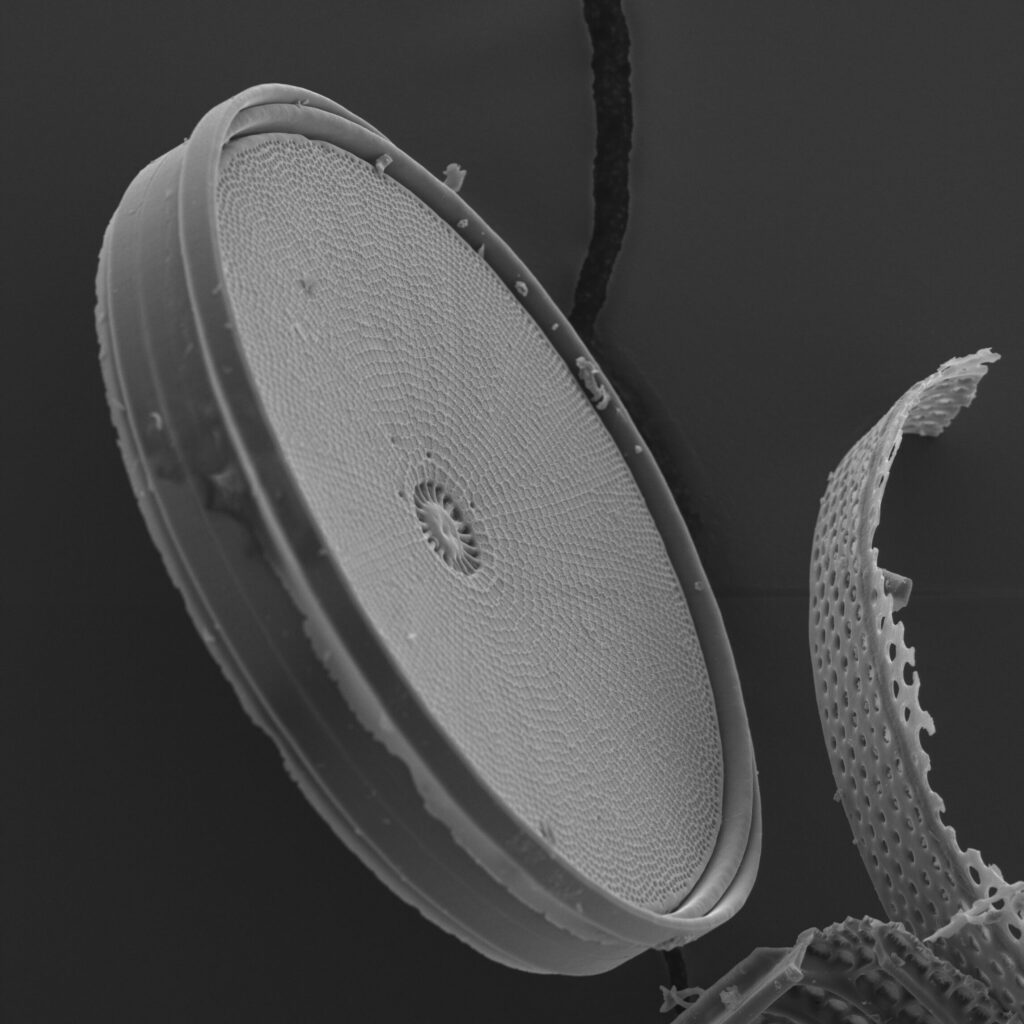
Take Lake Erie, the fourth-largest Great Lake in North America. Each winter, up to 80% of its surface can be locked in ice. As far back as the 1930s, scientists observed that filamentous diatoms like Aulacoseira and Stephanodiscus thrived in snow-free, ice-dominated waters. Wind-driven mixing keeps them circulating near the surface, where they can still catch enough light to grow.
Climate change is rewriting these seasonal dynamics. Warmer winters mean less ice and more turbulent mixing, increasing turbidity and altering light availability. These abiotic shifts, along with biotic ones like predation and parasitism, could reshape the lake’s microbial community.
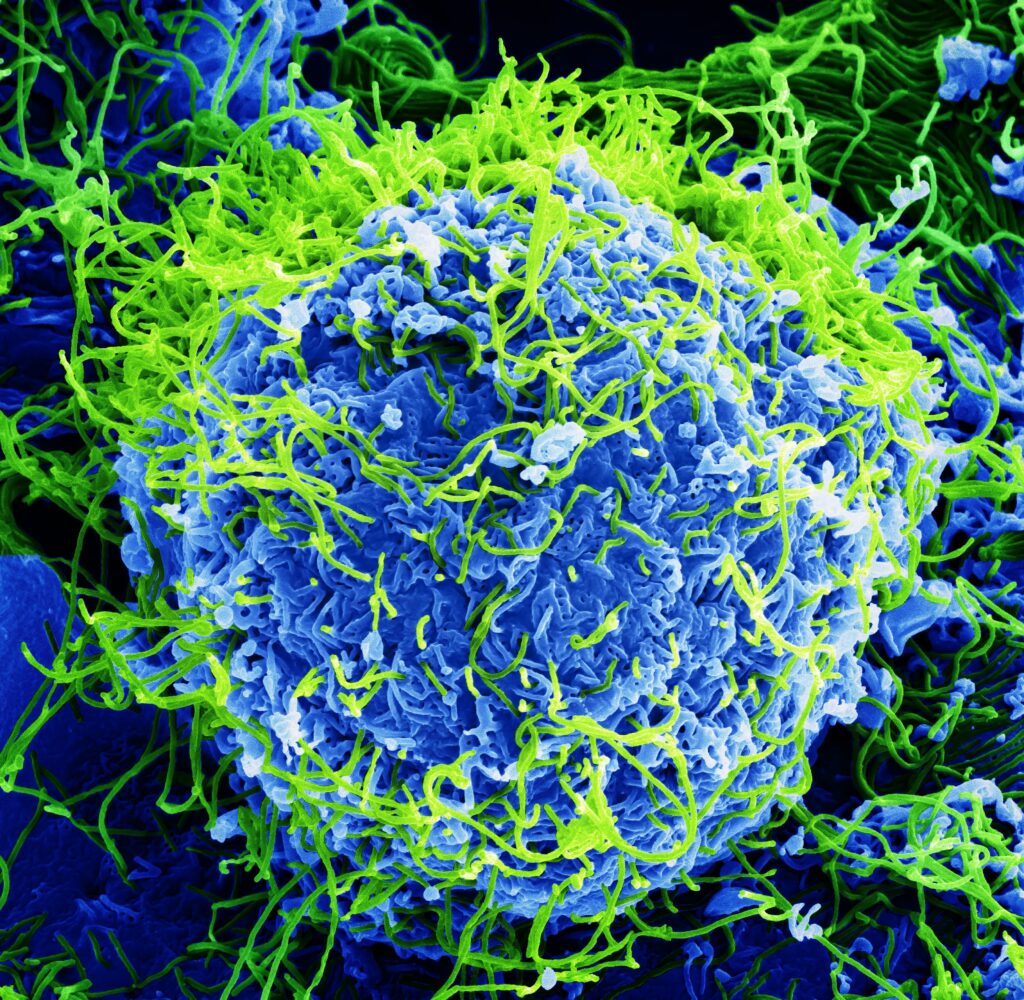
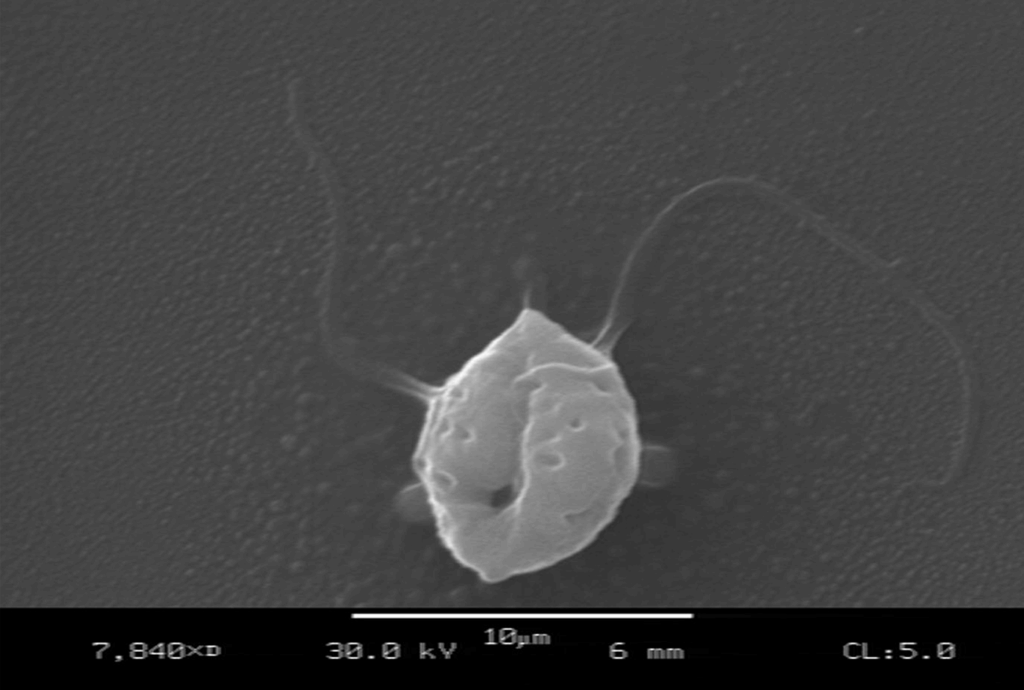
Enter the chytrids: a group of parasitic fungi that produce tiny swimming spores known as zoospores. They can infect phytoplankton such as Stephanodiscus binderanus, a key filamentous diatom in Lake Erie. If these fungal parasites are already part of the winter food web, what happens as the lake warms?
A Warming Petri Dish
In 2020, the USCGC Neah Bay collected samples during an unusually low-ice winter. Scientists from the U.S., Canada, and Japan teamed up to study how warming and light changes influence the relationship between S. binderanus and its chytrid parasite, Zygophlyctidales sp.
The team cultured live samples under controlled light and temperature conditions that mimicked future climate scenarios. Their hypothesis: warmer water would boost growth in both diatom and parasite but also increase host infection when light was scarce, just as stress can make us more susceptible to illness.
Fungi Gone Wild
They were right. The highest infection rates occurred at warmer temperatures, suggesting chytrids could thrive as Lake Erie heats up. The diatoms, meanwhile, showed a downregulation of genes tied to motility and reproduction, signs of stress that could slow population turnover.
Under both cold (<12°C) and warm (>20°C) conditions with low light, infection stunted diatom growth. Chytrid spores attached along diatom filaments, reducing biovolume and increasing cell roughness.
No Refuge in the Future
The team found no “thermal refuge” for diatoms; chytrids infected successfully across all tested temperatures. As winters continue to warm, increased turbidity and lower light could make diatoms even more vulnerable. And because warming also alters the timing of reproduction in both host and parasite, these interactions might persist longer into spring blooms.
So yes, phytoplankton get sick too. And as climate change reshapes aquatic ecosystems, the effects of these microscopic epidemics can ripple across entire food webs.
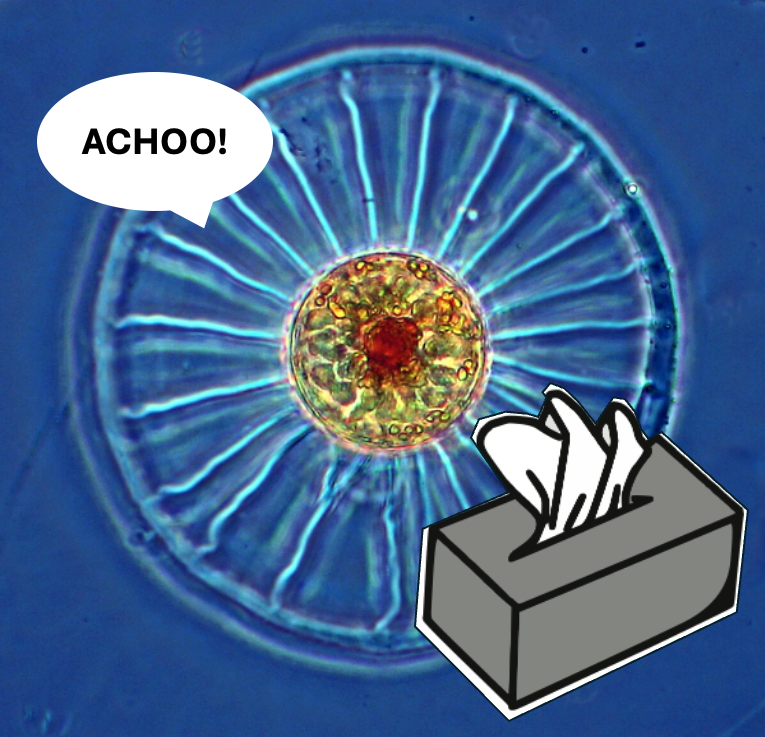
Cover image is a sick diatom (poorly) made by the author from Wikimedia images of a wagon wheel diatom, John R. Dolan, and a tissue box, Pixabay.

I’m a former oceanographer with an MSc in Biological Oceanography from UConn where I studied mixotrophy in marine ciliates. After a year in Poland (studying freshwater critters) I moved to California. I currently work as a lab technician at Stanford. Outside of science, I enjoy a good book, a long run, and frozen fruit.