Castellani, G., Granskog, M. A., Elias Chereque, A. et al. Arctic sea-ice ridges: a major contributor to algal habitable space in spring. Front. Mar. Sci. (2025). https://doi.org/10.3389/fmars.2025.1653882
The Surface of Sea Ice
Sea ice is not a flat, level surface. Think about a glass of water with ice cubes. None of the ice sits evenly. The pieces float at different angles, bump into each other, and stack in various ways. Sea ice behaves in a similar way. Sea ice varies across space, and many studies have shown just how uneven and complex it really is. Nevertheless, the full extent of its natural variation is still not well understood due to limited data. Among the many types of sea ice features, pressure ridges are some of the least studied. This lack of understanding creates challenges for field observations and computer models that try to simulate sea ice environments. This variability is particularly important when it comes to the organisms that call the sea ice pressure ridges home: sea-ice algae.
Sea Ice Ridges
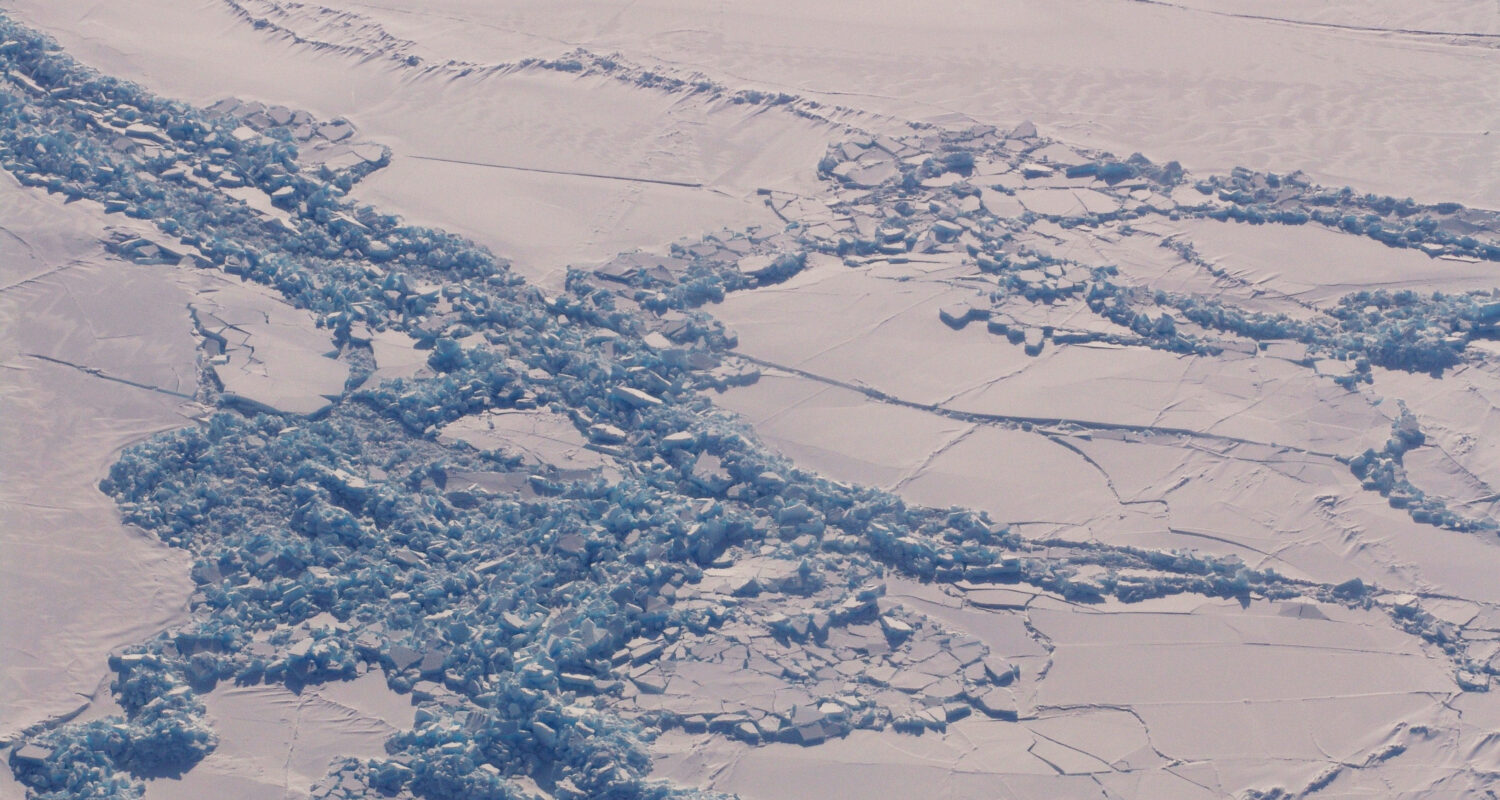
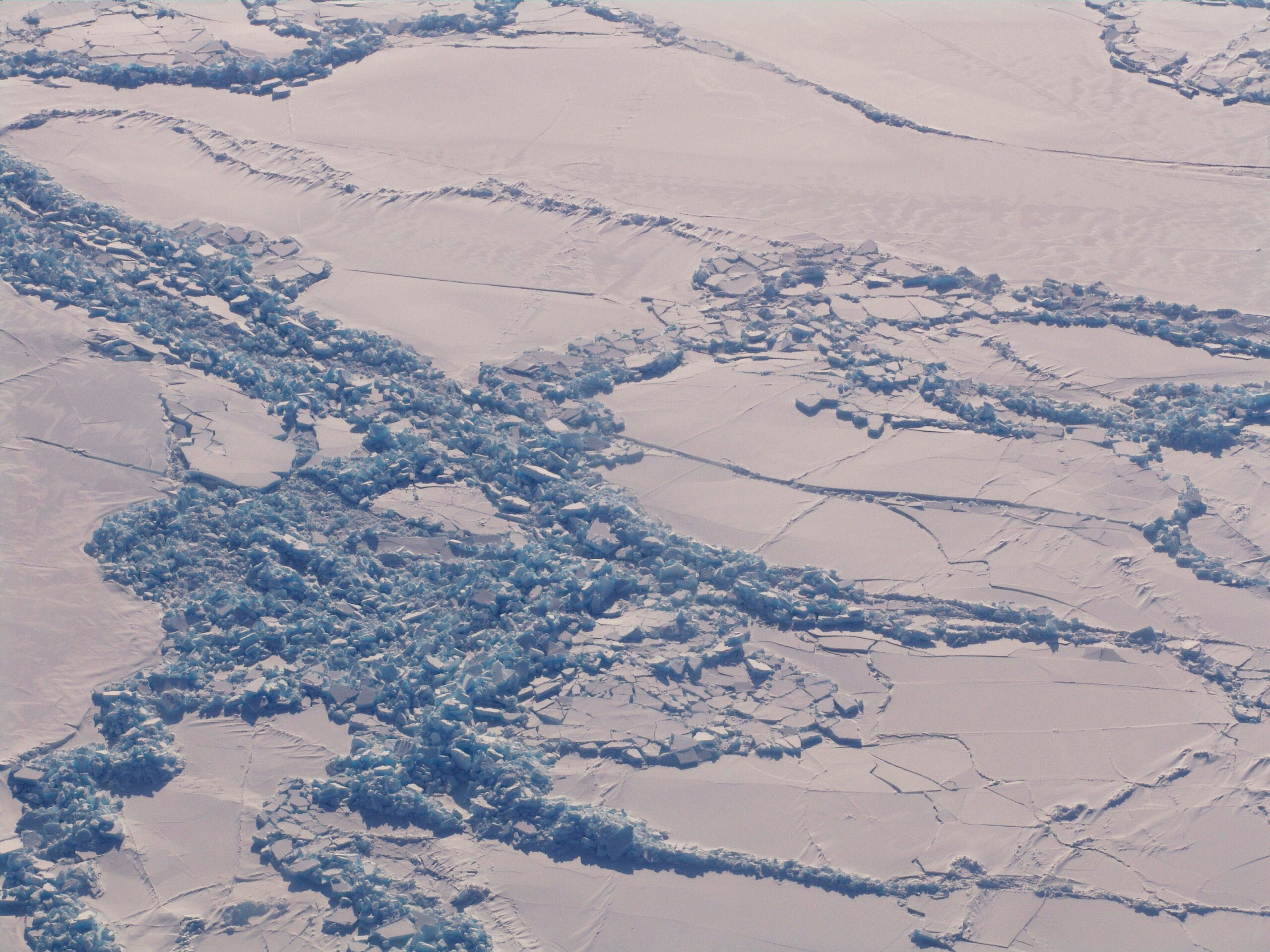
Sea ice itself is already a unique habitat, supporting specialized algae and larger organisms while constantly cycling between melting and freezing processes. Sea ice ridges add another layer of complexity. These ridges form when sheets of ice collide into each other, shatter, and pile up into jagged structures that stick out above the ice surface and extend down into the water below (Figure 1). Their structure changes how sea ice interacts with the air above and ocean beneath, but the ridge structure also creates physical conditions that are not found in level ice. This makes ridges prime real estate for biological activity, both in concentrating organisms and supporting distinct communities, which ultimately increases biodiversity.
With the loss and thinning of sea ice in the polar regions, ridging events have become more frequent, even though the individual ridge heights have generally decreased. This makes understanding ridges even more important as the Arctic and Antarctic continue to change.
Combining Science Tools to Better Understand Ridges
Traditionally, scientists have studied sea ice by drilling sea ice cores. However, for large and complex ridges, this is a challenging and unrealistic approach. To overcome this, researchers have used under-ice surveys and computer modeling studies. These tools suggest ridges may act as potential hotspots for sea ice algae because their structure allows more light to pass through compared to surrounding level ice.
To better understand this, Castellani and the research team combined several approaches to compare sea ice algae living in level ice versus ridges. During a 2017 Arctic expedition, they used a mix of traditional ice coring, ridge coring, under-ice surveys with a remotely operated vehicle (ROV), and under-ice hauls using a Surface and Under Ice Trawl (SUIT). They measured chlorophyll-a, a pigment found in phytoplankton, to assess for the presence of algae across all sampling methods.
The results showed that ridges can indeed be biological hotspots and need to be included in algal biomass estimates. Because ridges are more porous and complex, they allow much more light penetration. This means that their light extinction coefficient, a measure of light transmission in sea ice, is much lower than what is typically used in sea ice models. In fact, ridged ice had extinction coefficients about six times smaller than level ice.
Such low extinction coefficients mean deeper light penetration, which greatly increased the habitable space, or the vertical area between the ice surface and a given depth where light conditions are suitable for algal growth. Ridges were found to provide larger habitable space than level ice for sea ice algae. In many SUIT hauls, ridges accounted for over 50% of the habitable space (Figure 2).
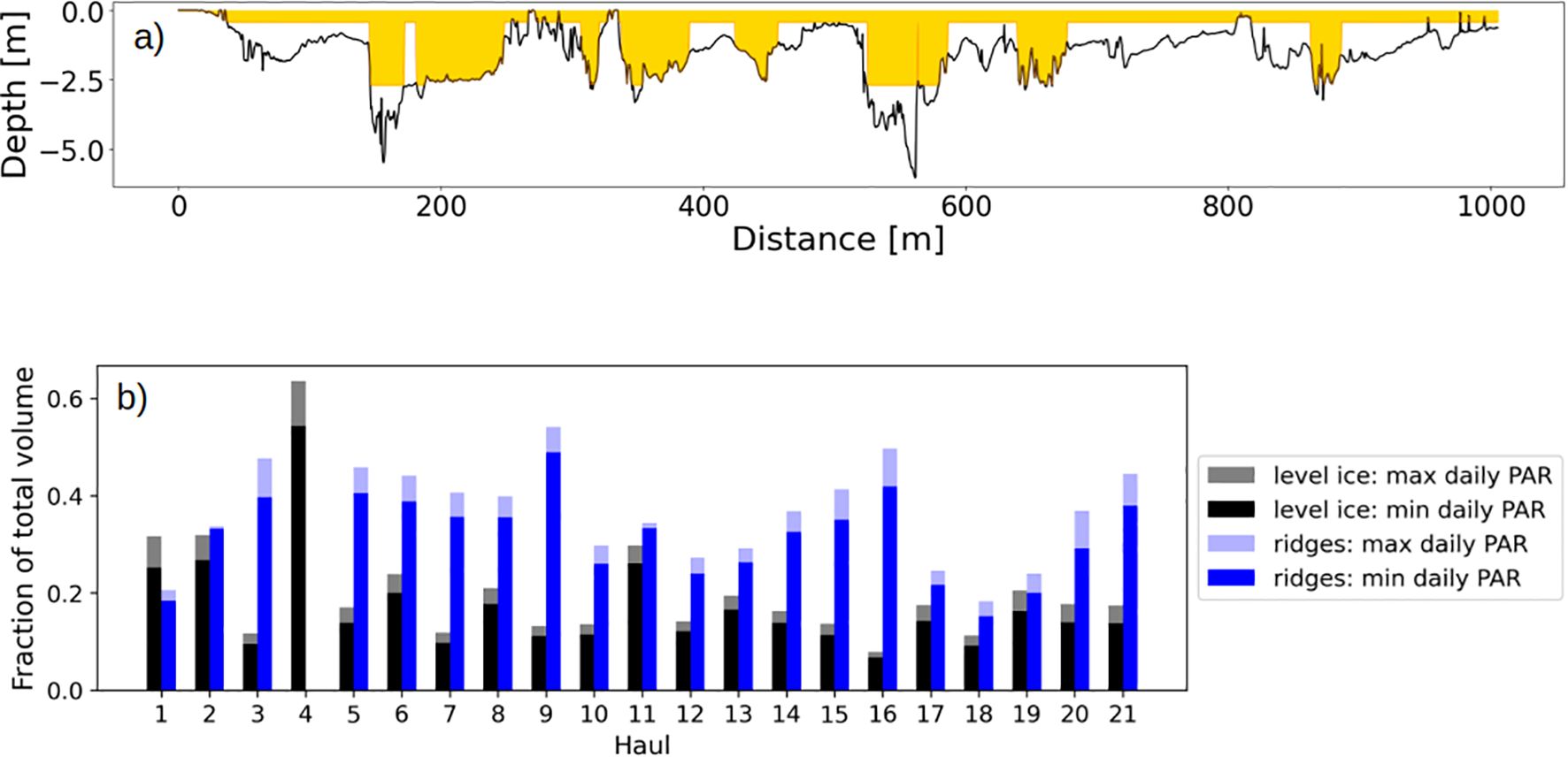
These findings are especially important in the spring when ridge crests are often free of snow while level ice may still be heavily covered. This difference allows ridges to act like light funnels, delivering light to under-ice phytoplankton communities. The researchers described these ridges as “windows” that help to create conditions that favor and activate biological activity.
While the research team was not able to fully resolve all ridge dynamics on the sea ice landscape, the team was able to combine under-ice technologies that helped to dissect the sea ice processes that coring is not able to fully reveal. Most importantly, this work highlighted that sea ice ridges are, indeed, biological hotspots. Understanding how ridges function is key to predicting how polar ecosystems will respond to rapid environmental changes.
Cover image is sourced from the collection of Dr. Pablo Clemente-Colon, Chief Scientist at the National Ice Center. Image depicts pressure ridges and upthrown ice in the Beaufort Sea near Alaska in April 2007, obtained from the NOAA Public Domain Library.

I am a Ph.D. Candidate at the University of Connecticut–Avery Point studying the marine carbonate system in the Arctic Ocean. My research focuses on biogeochemical changes occurring within sea ice as the Arctic continues to warm. Outside of my research, I enjoy hiking, running, aerial gymnastics, paddleboarding, traveling, and spending time with family and friends.