Lotte S Dahlmo, Keno Ferter, Claudia Junge, Otte Bjelland, James Thorburn, Gaute Velle, Knut Wiik Vollset, Spatial and temporal interaction patterns of spiny dogfish (Squalus acanthias), ICES Journal of Marine Science, Volume 83, Issue 1, January 2026, fsaf218, https://doi.org/10.1093/icesjms/fsaf218
Vulnerable Dogfish
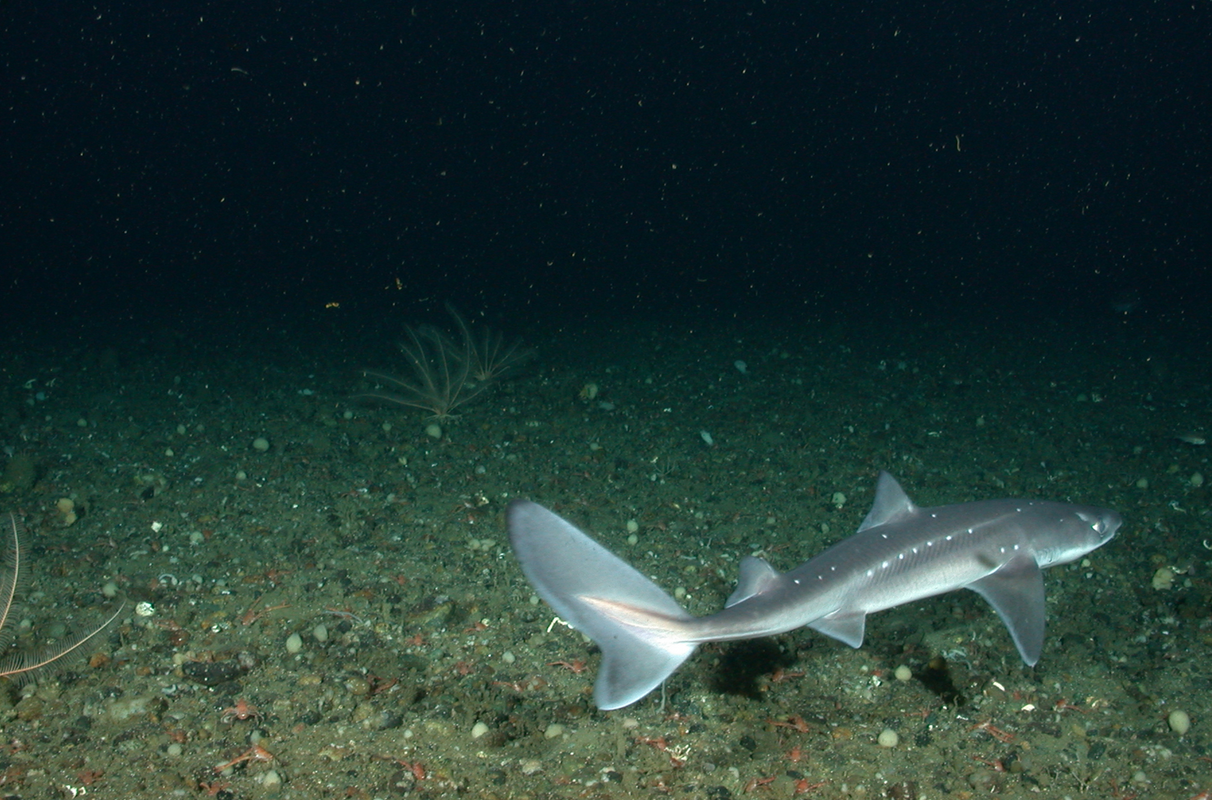
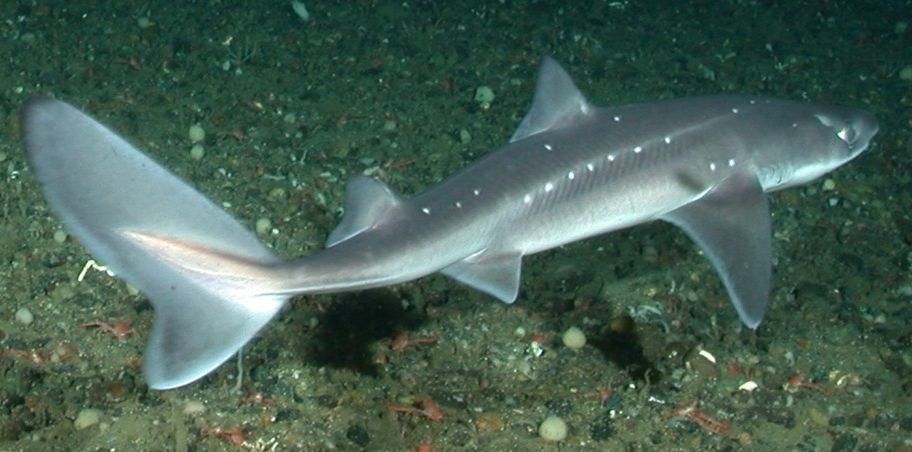
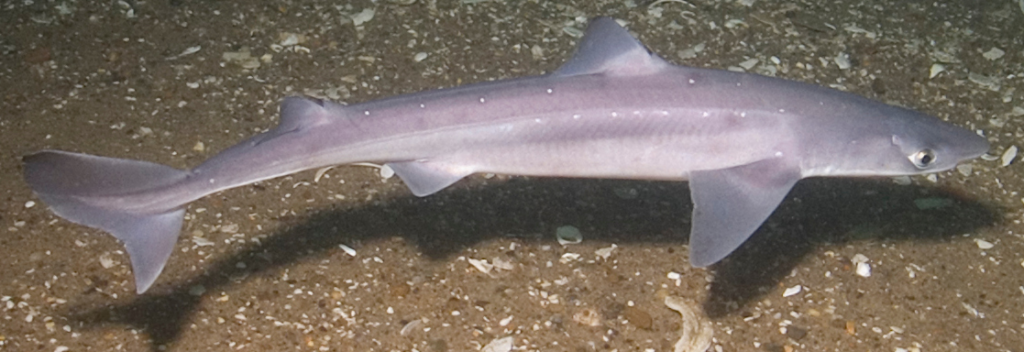
Spiny dogfish (Squalus acanthias) is a widespread, coastal shark of the Squalidae (dogfishes) family. They’re arguably the most well known species of the family, yet their aggregations are still shrouded in mystery.
Like many other chondrichthyans (sharks, rays, skates, and chimaeras) they have experienced significant population declines due to overfishing. Not only do they mature late and have low reproduction rates, but their grouping behavior makes them vulnerable to commercial fishing. Large numbers of individuals can be removed from the water with just one pass of a trawling net.
Dogfish Protection
The International Council for the Exploration of the Seas (ICES) introduced management in the 2000s that restricted how many could be caught to protect against these mass removals. The management worked, taking the species from Critically Endangered to Vulnerable on the Norwegian Red List by 2021. The fishing restrictions were lifted in 2022 as a result.
However, spiny dogfish aggregations remain vulnerable to overfishing. Therefore, scientists used telemetry tags on the dogfish to understand what, when, and where these aggregations are to provide information for future management strategies.
Fjord Home
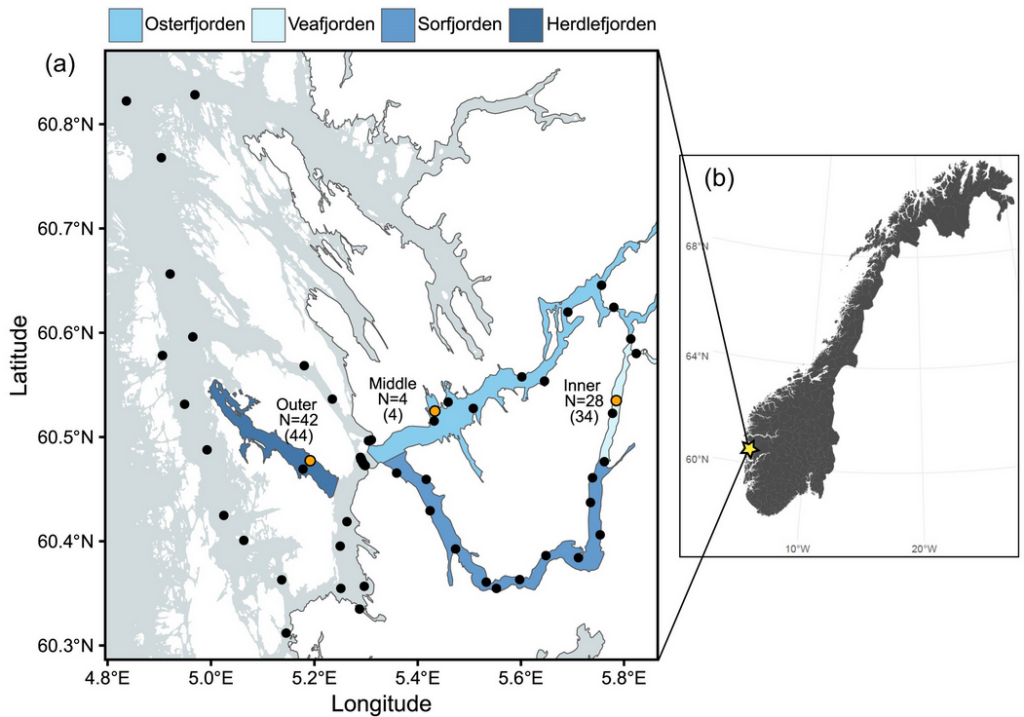
The study focused on a series of fjords just west of Bergen, Norway where intense human activity such as boat traffic and fish farm activities regularly disturb the area. The tagging locations were split into “Inner”, “Middle” and “Outer” regions and assigned to the individual dogfish depending on where they were caught. In total, 82 spiny dogfish were caught and fitted with an internal acoustic tag that pinged receivers in the fjords when the sharks were nearby, transmitting data such as depth and time.
Dogfish Hangouts
The researchers found that the sharks were more likely to interact with individuals caught in the same area they were caught. In other words, sharks caught in the “Inner” portion of the fjords were more likely to interact with sharks from this “Inner” area as well. The same goes for individuals caught in the “Middle” and “Outer” locations.They also found that same-sex interactions were significantly more frequent than male-female interactions.
Digging deeper, time of year had the greatest effect on interactions between males and females. Male-female interactions peaked during August and September. These interactions were primarily concentrated in the “Inner” region and eastern half of Herdlefjorden. On the other end, February and March had the lowest male-female interaction.
It’s also important to note that depth did have an influence on the interactions between the sexes. All three (male-male, female-female, and male-female) interactions increased only slightly with depth, but it was found to be statistically significant.
Not So Secret Meetings Anymore
This study found that spiny dogfish not only demonstrate strong aggregation behaviors by seeking out other spiny dogfish, but are more likely to group with individuals from the same location and sex. This indicates there may be multiple subpopulations not only within the study area but across all of Norway’s fjords.
There was also a very distinct time from August to September that male-female interactions would occur, indicating seasonality to their mating. Prior studies have estimated their mating season anywhere from late October to March. Much of these results seem to be regionally specific due to environmental conditions.
Given the indication of subpopulations and unique mating seasons, future management of the spiny dogfish population should address each region on a case by case basis. Even within Norway’s fjords, challenges faced by the sharks can vary from shipping lanes to fishing pressure. Breaking down the shark’s subpopulations will help preserve each unique group, strengthening the diversity of the population for any adversity in the future.

I am a recent MSc graduate in marine biology from Bangor University, where I studied population dynamics of elasmobranchs off the coast of Wales. My interests lie in ecological data analysis to understand environmental processes and identify natural patterns. However, nothing beats being in the field and interacting directly with the marine life.