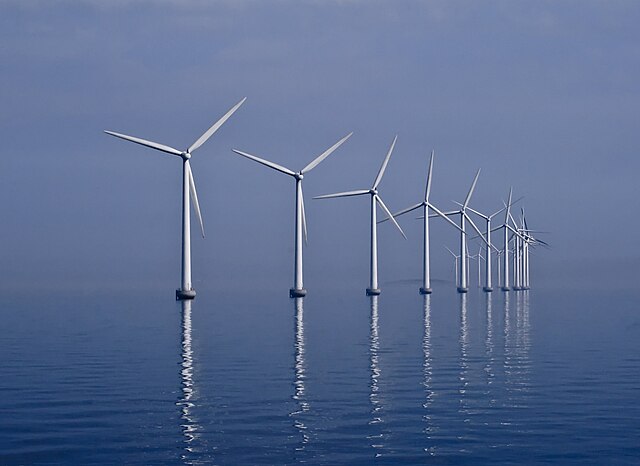
Offshore wind farm located off Øresund, Denmark. Photo credit: Kim Hansen.
Reviewing: Jeong, S-Y., Oh, S-Y., Kim, S., Lee, C-L., Ahn, D-S., Kim, C-S., Lee, D., & Yoo, J-W. (2025). Offshore wind farms and associated wave-induced processes influence microbenthic diversity and biomass in coastal ecosystems. Frontiers Marine Science, 12:1552274. https://doi.org/10.3389/fmars.2025.1552274
Meet the players: Offshore windfarms and benthic communities
It is well known that anthropogenic activities cause disturbances to marine life and ecosystems. Increased sediment runoff produced by construction projects and manmade pollution are just a couple of ways we alter and harm the natural environment. As a way to combat our negative impact on the environment, humans have looked to find new, clean ways to create and gather energy. Offshore windfarms (OWFs) have boomed in popularity recently because they are producers of green energy. However, the topic of OWFs is highly nuanced, as the building, maintenance, and operation of these wind turbines may introduce some negative impacts to the surrounding environment. For example, the increase in noise associated with wind turbines disorients animals’ communication and the disruption of sediment uses up valuable oxygen and clouds animals’ vision.
Among the animals impacted by wind turbines are marine invertebrates such as lobsters, crabs, molluscs, corals, and sea urchins who live on the seafloor (Figure 1). They play a critical role in the health of their ecosystem through degrading organic matter, transferring energy to higher levels on the food chain, and contributing to nutrient and element cycling. Therefore, the diversity, abundance, and biomass of benthic communities around the world provides crucial insights into the ecosystem. By studying macrobenthos, we can understand not only how healthy the ecosystem is or isn’t, but we can also track and analyze changes that occur and how those changes impact the ecosystem.
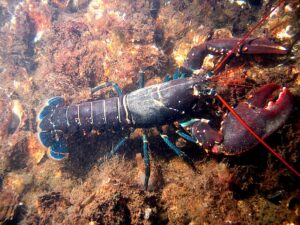
Figure 1: A European lobster, an example of a member of macrobenthic communities. Photo credit: Bart Braun.
Jeong’s team wanted to answer the question of how wind turbines change current and wave hydrodynamics, chemical pollution status, sediment properties, and interactions between marine life. The team conducted a study in the Yellow Sea off the coast of South Korea to do just that. The researchers also sought to understand whether factors such as wind, mud, and sediment differ for ecosystems in the open ocean (where OWFs are often built) versus in protected bays, as a comparison between the two would help give context and insight into the impacts of OWFs.
The Study
Jeong and the team identified a study site in the eastern central Yellow Sea located in the South Jeolla Province of the Republic of South Korea (Figure 2). The sea is characterized as a continental sea shelf with an average depth of around 44 meters. Within the study region is the Southwest Offshore Wind Farm, a farm of 20 wind turbines. The region experiences four distinct seasons and is influenced by strong East Asian monsoons. Seasonal variation and storms impact water dynamics and processes that occur in the region, making it an ideal study area for testing how different weather conditions, combined with the presence of wind turbines, alters local ecosystems and environments.

Figure 2: Map of study site in the Yellow Sea off South Korea. Empty black circles indicate wind turbines; yellow/pink crosses indicate location of land weather stations and coastal wave buoys; blue square, red circle, and green triangle represent locations of previous sample points and studies. Courtesy of Jeong et al., 2025.
Researchers recorded several variables in order to determine which would have the biggest effect on marine invertebrate diversity and abundance. These variables were separated into two categories: sea and air. The sea category included water temperature, depth, salinity, dissolved oxygen, acidity, and sediment size and type. Any factors outside of the ocean were categorized as air, which included wind speed and wave height.
Main Takeaways
After dozens of surveys over the course of eight years, Jeong’s team utilized 28 of the most complete surveys to determine some interesting results. There were seven sea variables they measured that adequately explained the diversity of macrobenthic communities: depth, salinity, dissolved oxygen, acidity, suspended particulate matter, sand content, and sediment aluminum concentration. The air variables significant for diversity included average wind speed, max wind speed, monthly average of wave height, and previous monthly average of wave height. These variables were also significantly correlated with biomass.
Overall, benthic community diversity and biomass depended on several factors, and not all factors had a positive impact. For example, salinity had a negative correlation with diversity and biomass in the study. This means that the higher the salinity, the less diverse and abundant the community was. Sinking particulate matter, another measured variable, also had a negative correlation with diversity and biomass. When the particles sink, they blanket and suffocate the seafloor, which can cause benthic wildlife to die.
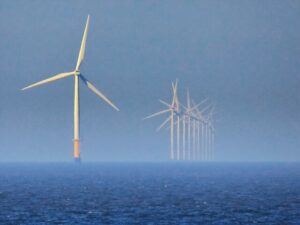
Figure 3: Rhyl Flats Offshore Wind Farm. Photo credit: David Dixon
How do OWFs play into all of this? Well, OWFs have a complicated relationship with nearby benthic communities. Wind turbines in the open ocean act as a barrier against some conditions such as wave height and intensity, which may have the detrimental effect of trapping sediment. Trapped sediment can impact the formation and productivity of benthic communities by depleting oxygen, clogging up the habitat, and introducing pollutants. However, the spinning of the turbines may also increase the wave activity in the area. This could lead to an increase in disturbances on the seafloor. A potential positive impact of wind turbines would be that changes in hydrodynamic processes could lead to increased organic matter in sediment.
For now, data indicates that both positive and negative changes occur in these communities as a result of their presence. This raises the question: how should we make decisions when there are both positive and negative outcomes, for ourselves and the environment?
I am a student in the Master of Oceanography program at the University of Rhode Island and enjoy scuba diving, boating, walking my dogs, reading, and being with friends and family.