Porz, L., Chen, J., Yilmaz, R., Kuhlmann, J., Zhang, W., Schrum, C. Dredging and dumping impact coastal fluxes of sediment and organic carbon. Nat. Commun. 17, 216. (2026). https://doi.org/10.1038/s41467-025-68105-5
Ocean dredging and dumping are two types of human activities that impact coastal environments by removing sediment from the seafloor and relocating it elsewhere in the ocean, respectively. While not all beach-goers or coastal residents may see these activities, they are commonplace around the world (Figure 1).
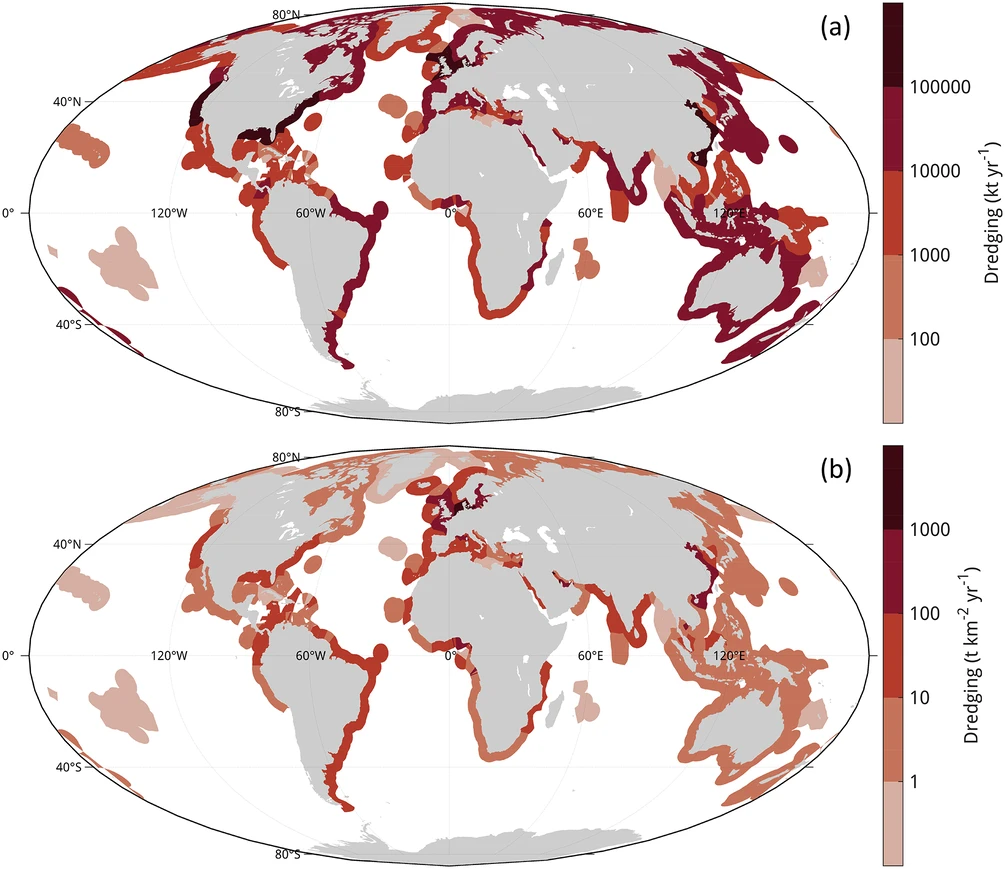
Dredging and Dumping Activity
Dredging can be used to remove bottom sediments (e.g., dirt, sand, gravel, or mud) to create accessible and navigable waterways, channels, and ports, which allow goods to be shipped worldwide. Dumping can be used in conservation and restoration areas to rebuild marsh areas or to simply relocate sediment, be that near the coast or farther away in the deep ocean. Both processes are like vacuuming, where dredging is like vacuuming dirt off a carpet and dumping is like emptying the vacuum bag in another spot. However, both processes can release and resuspend sediments in the water before sinking back to the bottom of the ocean.
Connecting Dredging and Dumping Activity to the Carbon Cycle in Sediments
Nutrients in the coastal ocean are used by phytoplankton, or tiny organisms, to convert CO2 from the atmosphere into oxygen, just as trees do on land. These organisms and the material they produce, such as organic carbon, eventually sink to the seafloor. Essentially, carbon shuffles from the atmosphere to the ocean ultimately to the seafloor, like money being transferred from a checking account into savings and then into long-term investments. Importantly, the money can be moved back if conditions change. On the seafloor, chemical reactions transform the material that sinks there. Some is stored as carbon, but some is returned to the water, becoming CO2 in a process called remineralization. Because dredging and dumping can resuspend sediments, these processes can promote remineralization, leading to less carbon stored on the seafloor.
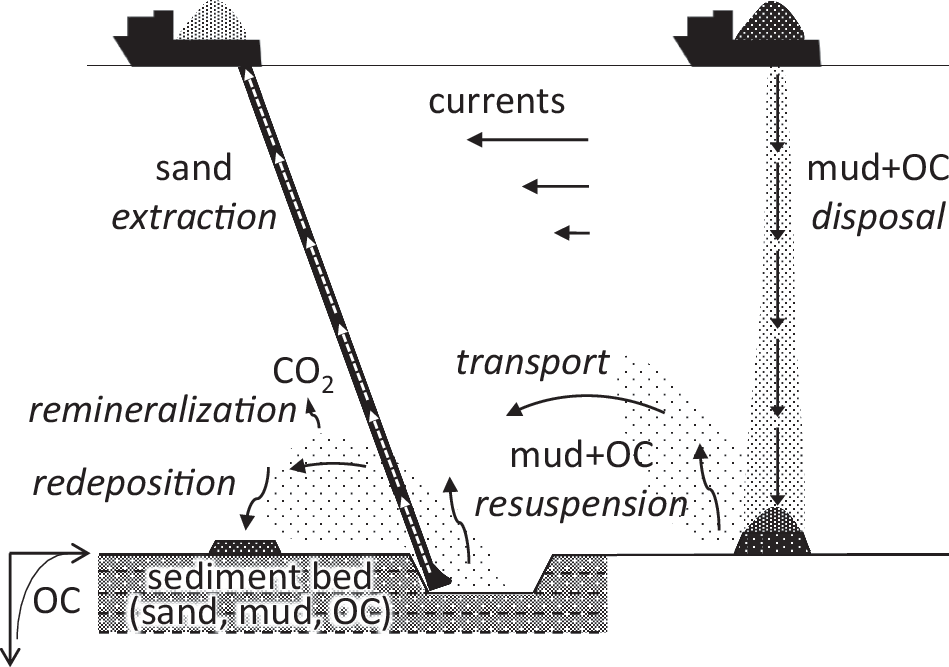
How Important are Dredging and Dumping to the Carbon Cycle?
Porz and their research team sought to quantify if and how important dredging and dumping interactions were on the carbon cycle. The team used computer simulations of dredging and dumping to estimate the amount of sediment and organic carbon disturbed in the North Sea (Figure 3).
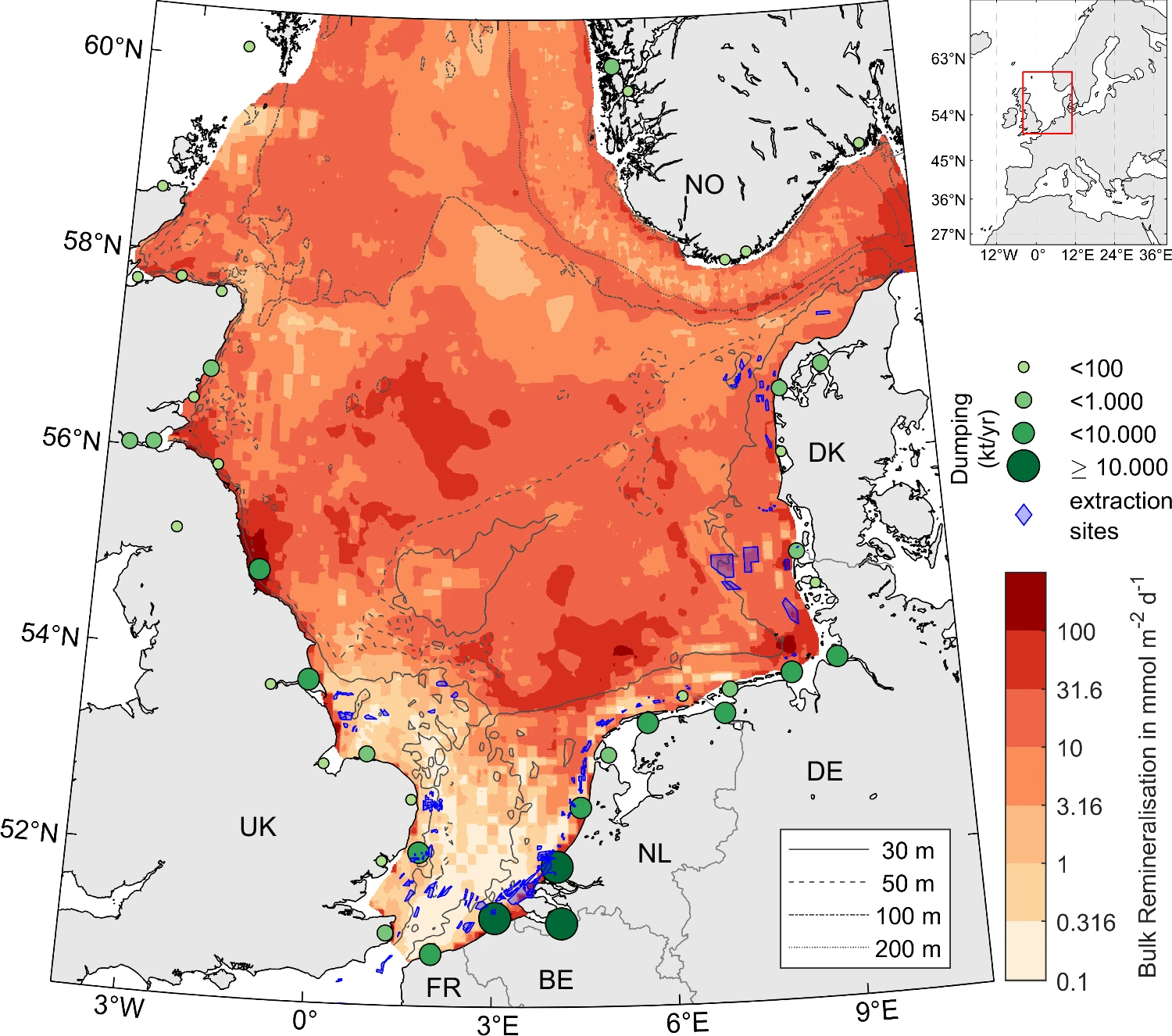
The team’s results found that dredging corresponded to a disturbed organic carbon estimate of 100 kilotons of carbon (ktC). For dumping, the disturbed organic carbon was estimated to range from 500 to 5000 ktC per year. The magnitude of these activities was approximately equal in magnitude to the natural processes that move organic carbon. Compared to other human activities, dumping and dredging were estimated as larger disturbances than marine construction (e.g. wind farms) but less than bottom-contacting fisheries (e.g. trawling for shrimp or flatfish) (Figure 4).
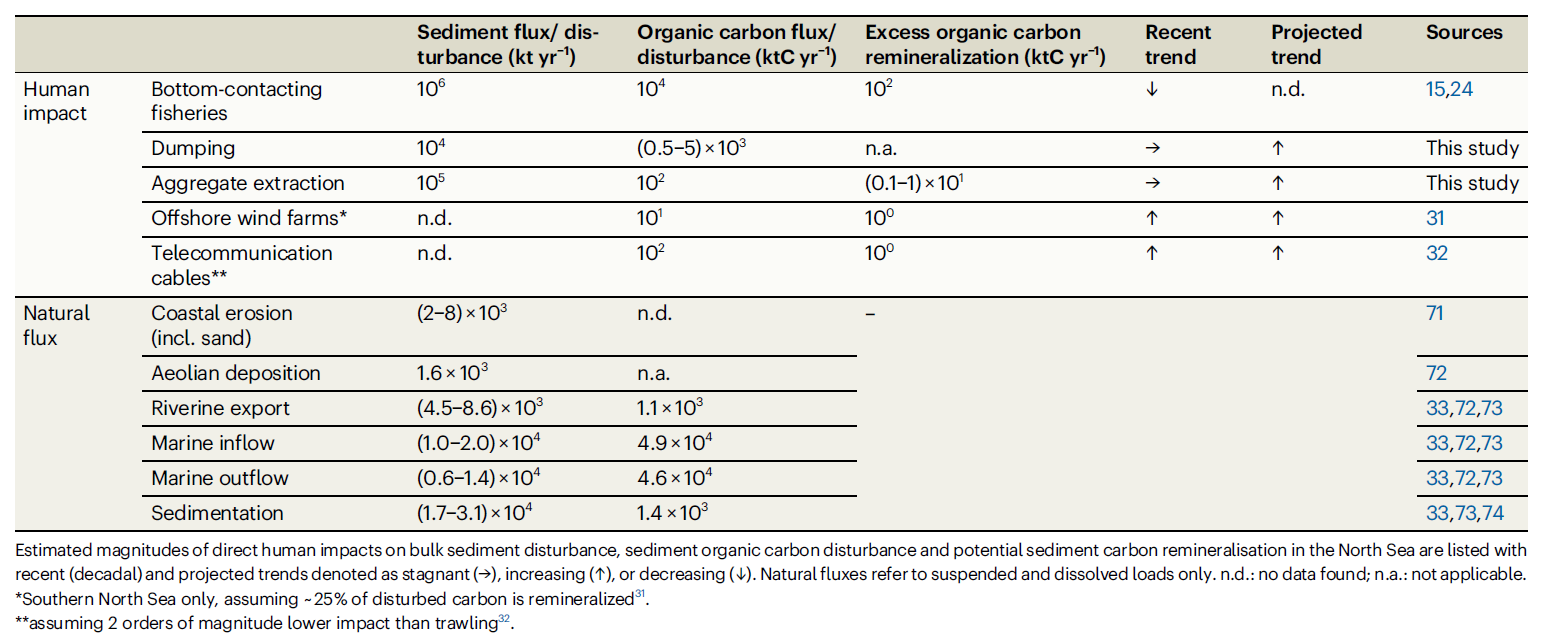
Scaling their results globally, assuming similar sediment qualities, Porz and their team found dredging in the form of mineral extraction resulted in a global carbon disturbance of 0.04-0.08 gigatons of carbon (GtC) per year while dumping ranged from 0.09 to 0.46 GtC per year.
Based on the analysis, these two human activities were found to have a significant impact on organic carbon and its degree of disturbance. For accurate budgets of sediment and carbon exchanges, the research team urges dredging and dumping be included. Such practices would best represent human impacts on the marine environment rather than sweeping these sediment interactions under the rug.
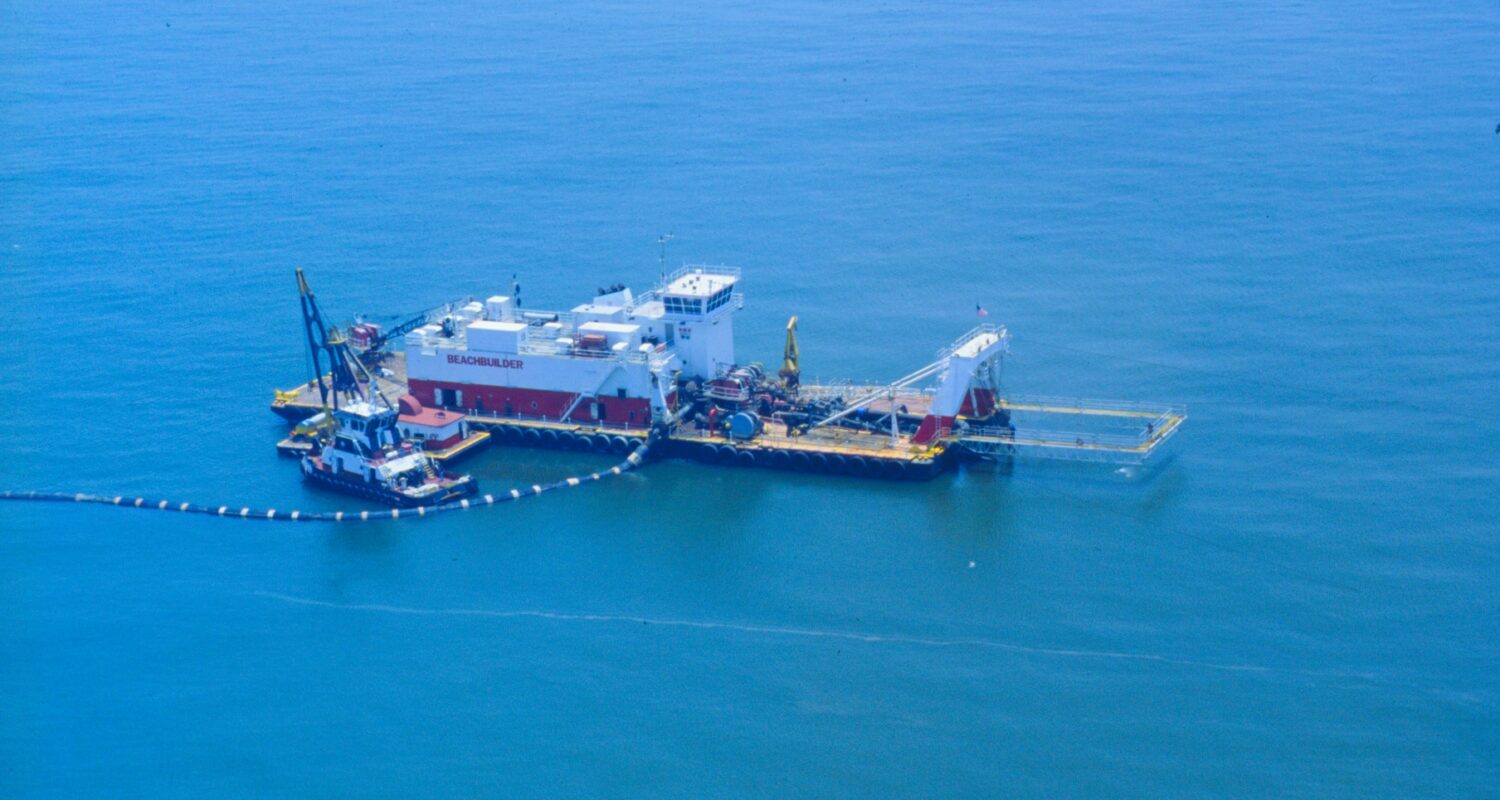
Cover image is sourced from Erik Zobrist at the NOAA Restoration Center. Image depicts a hydraulic dredge used to build beaches in the Lafourche Parish area of Louisiana in July 2000, obtained from the NOAA Public Domain Library.
I am a Ph.D. Candidate at the University of Connecticut–Avery Point studying the marine carbonate system in the Arctic Ocean. My research focuses on biogeochemical changes occurring within sea ice as the Arctic continues to warm. Outside of my research, I enjoy hiking, running, aerial gymnastics, paddleboarding, traveling, and spending time with family and friends.