Hayward, A., Wright, S.W., Carroll, D., Law, C. S., Wongpan, P., Gutiérrez-Rodriguez, A., Pinkerton, M. H. (2025). Antarctic phytoplankton communities restructure under shifting sea-ice regimes. Nature Climate Change, 15, 889-896. https://doi.org/10.1038/s41558-025-02379-x
For many people, images of starving polar bears stranded on melting ice sheets have become the defining symbol of sea ice loss. Popularized by the media, these visuals evoke emotional connections to climate change in polar regions. But this only scratches the surface. The real story of sea ice decline reaches much deeper. There isn’t just an impact on apex predators but also the microscopic photosynthetic organisms at the base of the food web: phytoplankton.
While Antarctica has no polar bears, its complex marine food web begins with phytoplankton, the tiny, photosynthetic organisms that play a crucial role in the ecosystem as well as carbon cycling. These microscopic plants fuel the food chain and drive carbon export to the deep ocean.
In the Southern Ocean, several phytoplankton groups dominate including diatoms, haptophytes, and cryptophytes. Notably, diatoms, with their heavier silica shells, sink faster and contribute more to carbon export compared to the smaller haptophytes and cryptophytes.
Antarctic Sea Ice Trends
Unlike the Arctic, where sea ice extent, thickness, and age have declined steadily since the 1980s, Antarctic sea ice has followed a more complex course. Sea ice around Antarctica increased until 2016, after which a sharp and sustained decline began. In fact, recent years (i.e., 2023) have set record lows in the Antarctic sea ice extent. This shifting sea ice pattern has major implications for the base of the food web.
To better understand how phytoplankton communities are responding to changing ice conditions, Hayward’s team analyzed 14,824 in situ pigment samples collected between 1997 and 2023 during the summer. While satellites can detect the presence of phytoplankton by scanning for chlorophyll, satellites cannot determine species. The research team combined satellites with their samples to understand the changes in the phytoplankton community over time.
Trends in Chlorophyll Shifts
Researchers observed significant spatial and temporal variation in phytoplankton communities across the Antarctic shelf. Over the entire study period, diatom chlorophyll declined while haptophyte and cryptophyte chlorophyll increased. The community shifted towards smaller phytoplankton, especially on the Antarctic shelf, and these shifts were strongly linked to changes in sea ice concentration.
- Before 2016 (Period of sea ice increase): diatoms and cryptophytes decreased, haptophytes increased
- After 2016 (Period of sea ice decline): diatoms and cryptophytes increased, haptophytes decreased
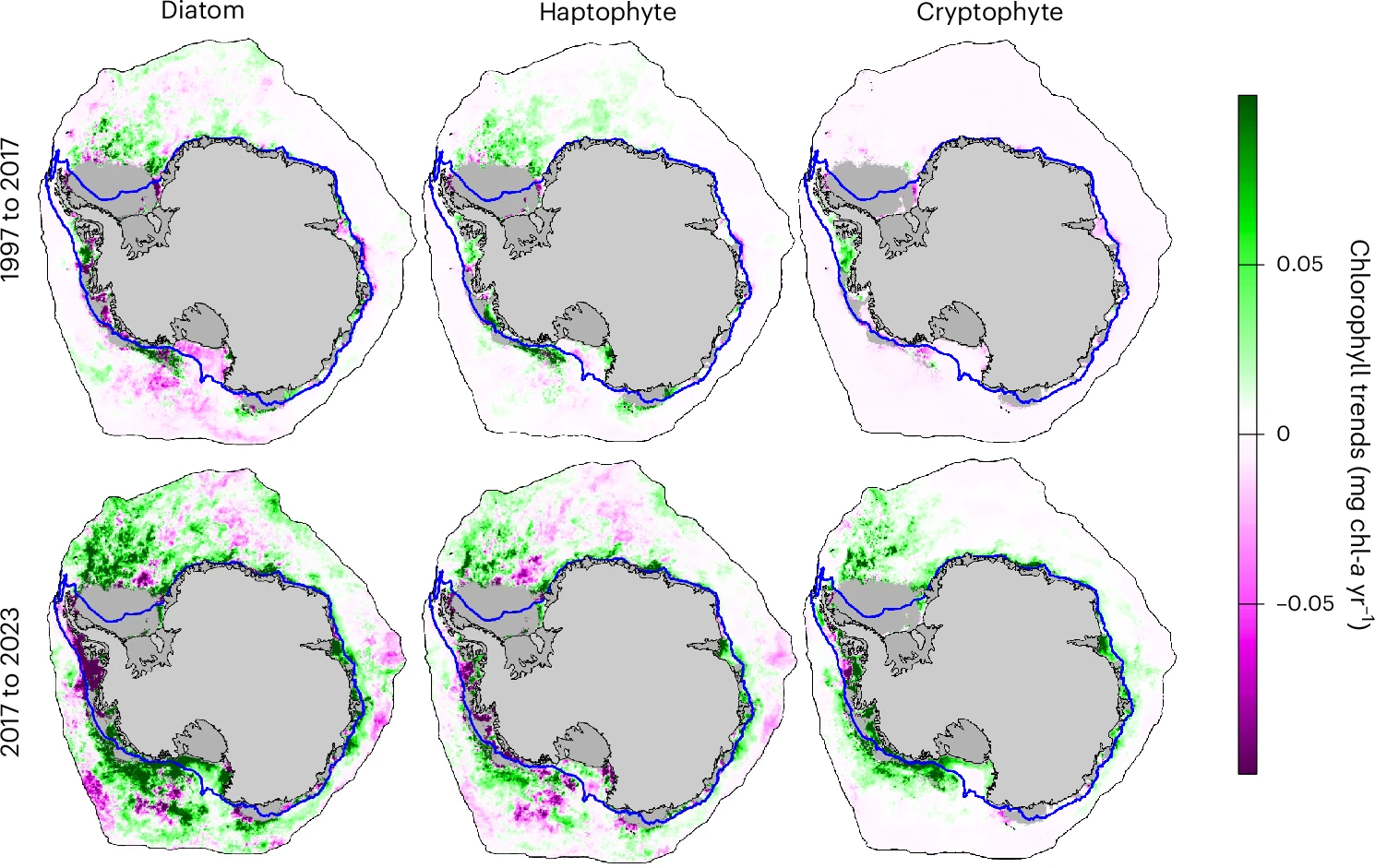
Hayward and their team identified the key drivers of the phytoplankton change. Iron (Fe) availability decreased during the study period. Since diatoms have a high dependence on Fe, this decline was important. Sea ice decline also introduces melt water into ocean surface layers, which affects salinity, temperature, nutrient delivery, and the timing and magnitude of phytoplankton blooms. All of these variables influence which phytoplankton species survive and thrive. For example, warming Antarctic temperatures push phytoplankton communities towards smaller species.
So What? The Domino Effect
These tiny organisms ultimately influence the entire Antarctic food web. The next trophic level, zooplankton, feed on phytoplankton. Krill, the Antarctic zooplankton keystone species, prefer diatoms. In contrast, salps, gelatinous zooplankton, consume wider varieties of phytoplankton including haptophytes and cryptophytes.
As phytoplankton communities shift, so too do zooplankton populations. Since the 1970s, Antarctic krill have declined by 59%. Because many species (fish, penguins, seals, and whales) depend on krill, fewer krill can have large, cascading effects throughout the ecosystem. Moreover, smaller phytoplankton have a weaker carbon export capacity, which may suggest a reduction in the potential to remove carbon dioxide from the atmosphere and store it in the deep ocean.
Antarctica’s rapidly changing sea ice is reshaping life, including the tiniest organisms. As the ice retreats, the entire ecosystem begins to change, one domino tipping the next. In a warming world, understanding the changes at the foundation of the food web continues to be critical to predict the future of the Antarctic ecosystem.
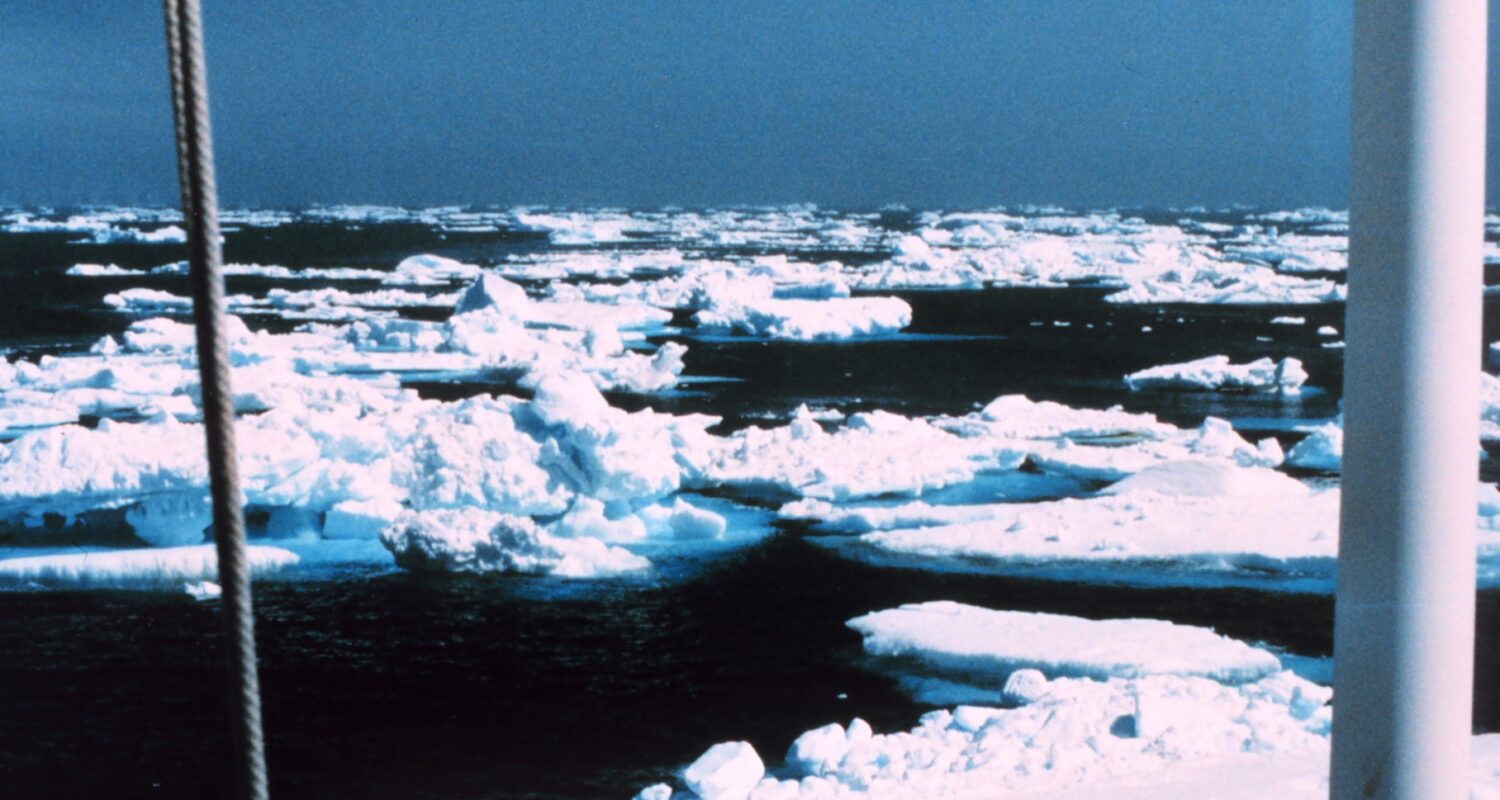
Cover image is a photograph from Commander Richard Behn of ice floes off the Antarctic Peninsula in summer of 1988- 1989, obtained from the NOAA Public Domain Library.
I am a Ph.D. Candidate at the University of Connecticut–Avery Point studying the marine carbonate system in the Arctic Ocean. My research focuses on biogeochemical changes occurring within sea ice as the Arctic continues to warm. Outside of my research, I enjoy hiking, running, aerial gymnastics, paddleboarding, traveling, and spending time with family and friends.