Diversity Under Threat
The Indian Ocean contains a wide range of elasmobranchs with over 244 species cataloged. However, many of them face pressures from human activity such as overfishing and habitat degradation that have reduced their populations in the region. This makes information on their distribution important, to understand what areas to protect to allow recovery.
A great case study for this situation is the island nation of Seychelles in the Western Indian Ocean. Its economy is primarily marine focused which included major fishing activity during the 1940s and 1960s. This led to major reductions in the elasmobranch populations in the area. Seychelles also lacks IUCN Red list assessments which means we don’t truly understand how healthy the populations are.
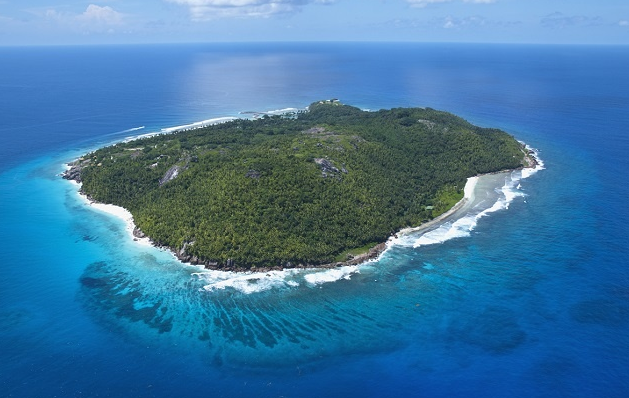
As a result, researchers set out to catalog elasmobranchs around Frégate Island, Seychelles. Their goal was to assess their abundance and distribution with the hope to inform future conservation efforts to protect local species.
Sharks, Batoids, and More
From 2019 to 2022 (excluding 2021), surveys encountered 18 elasmobranch species with nine of them sharks, and nine of them batoids. Grey reef shark (Carcharhinus amblyrhynchos) was the most common with 179 individuals documented. This was followed by the tawny nurse shark (Nebrius ferrugineus) with 49 individuals and the short-horned pygmy devil ray (Mobula kuhlii) with 33. Surprisingly, the whitespotted guitarfish (Rhynchobatus australiae), also known as the bottlenose wedgefish, was the fifth most common species with 20 individuals. The guitarfish is listed as critically endangered by the IUCN Red List, so finding any concentrated population of them is very important.
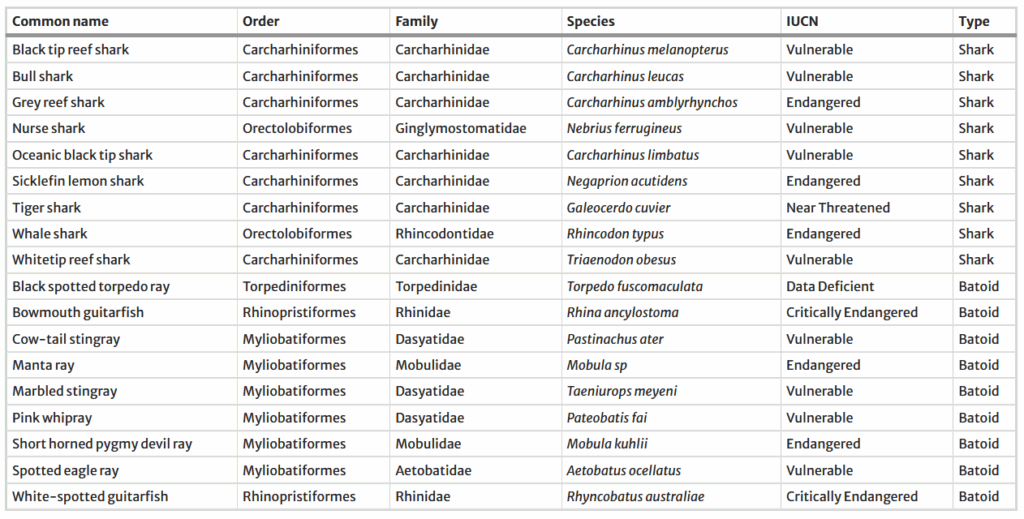
The researchers found no seasonal differences in elasmobranch distribution or abundance. In other words, the majority of the species surveyed stay in the area year-round. Environmental variables were much more impactful on the animals’ presence. The composition of the ocean floor was the best predictor for the species surveyed, and high temperatures (~ 30ºC) were found to significantly reduce their abundance.
Future Changes
This study is one of only a few spatio-temporal studies on elasmobranchs in the Western Indian Ocean. Prior work has been focused on whale sharks (Rhincodon typus) around Mahé Island, sicklefin lemon sharks (Negaprion acutidens) near the Amirate Islands, and assorted reef sharks on the Aldabra Atoll. The study on Frégate Island adds to this growing information by providing a critical catalog of elasmobranchs in the area. This is all the more important considering all but one of the species found are at some risk for extinction.
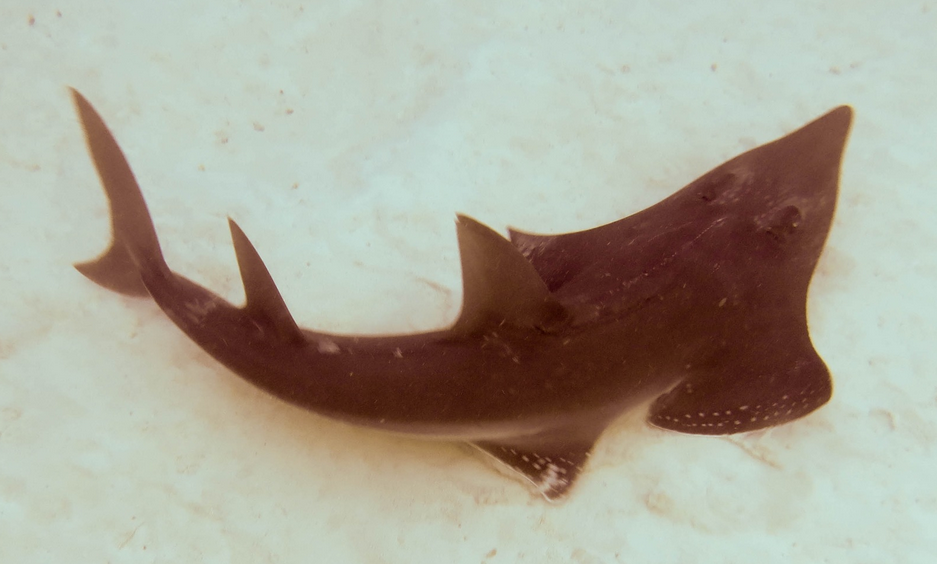
In this region, overfishing and habitat degradation are the primary threats to elasmobranch populations. Unfortunately, they don’t have any protections either to try to reduce the impact of these activities. Reportedly, a National Plan of Action is being drafted to remedy this issue, but it could still be some time before it’s implemented.
Ideas for this plan could include a Marine Protected Area or establishing specific fishing seasons. These strategies offer targeted protection to vulnerable species while preserving established economic activities, allowing the two to coexist. As the plan continues to be developed, collecting more information on local elasmobranchs will help better inform these strategies to make them more effective.

I am a recent MSc graduate in marine biology from Bangor University, where I studied population dynamics of elasmobranchs off the coast of Wales. My interests lie in ecological data analysis to understand environmental processes and identify natural patterns. However, nothing beats being in the field and interacting directly with the marine life.