Taylor, J. J., Huetz, C., Charrier, I., Gray, R. B., & McIntosh, R. R. (2026). Passive Acoustic Monitoring and Mapping of Vessel Visitation at an Australian Fur Seal Breeding Colony. Marine Mammal Science, 42(1), e70100.
https://doi.org/10.1111/mms.70100
Wildlife watching doesn’t always get the seal of approval…
Wildlife watching is often billed as a “green” activity. It is reported as boosting a deeper connection with nature, financially supporting conservation efforts and providing opportunities for education, as well as economic opportunities for local communities. However, while this can be true, it is important that the wildlife watching activity doesn’t start to become a problem for the animals that people are watching. For marine species, including seals, the presence of boats and the noise and other pollution made by boats can be a real problem. Noise can mask (hide) animals communicating (think: trying to shout to your friend across a noisy street), and the presence of people and boats can be disruptive to rest and cause increased stress.
Slow recovery
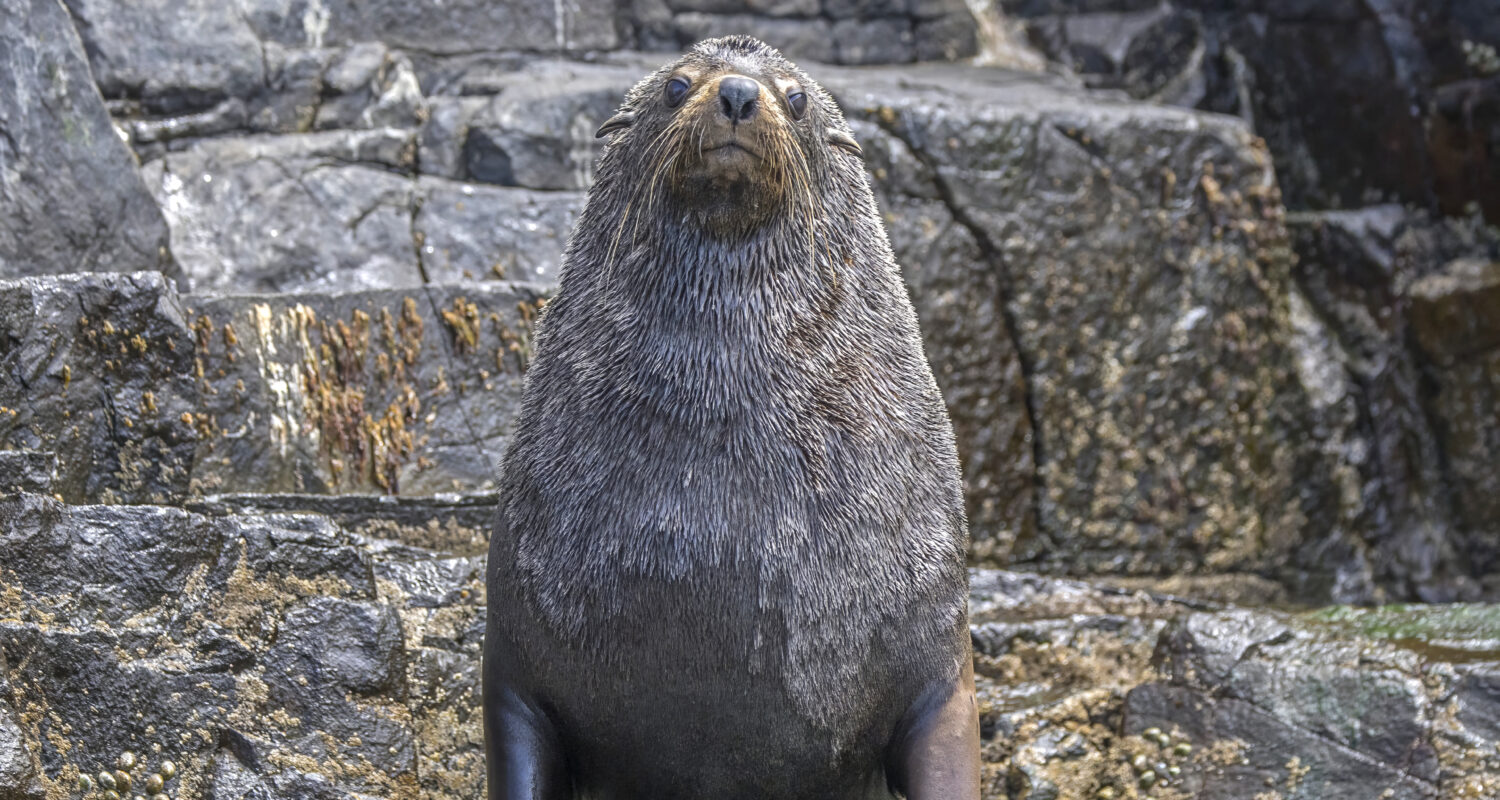
The Australian fur seal (Arctocephalus pusillus doriferus) was almost hunted to extinction in the early 1800’s, and populations have been slow to recover. The last 20 or so years have also seen lower numbers of pups surviving each year, which is a concern for a population that reproduces slowly. One of the largest breeding colonies for this species is called Seal Rocks, and is located on the traditional Sea Country of the Bunurong Peoples in central Bass Strait, Australia. Like many marine mammal species, Australian fur seals are at risk from pollution, disease and climate change.
Assessing vessel presence
A new study, by Jessalyn Taylor and co-authors, looked to monitor the amount of boat visits to Seal Rocks. Taylor and team used a variety of methods to do this, including passive acoustic monitoring, observation, and the use of vessel traffic data. There are rules for how close different types of boat can get to the seal colony at Seal Rocks. Recreational vessels must remain at least 60m away and personal watercraft (jet skis) must stay at least 200m away. Some tour vessels may come closer if they have a permit – as close as 20m away. One of the aims of the study was to see if these regulations were followed.
To collect the passive acoustic data, the team placesd recorders containing an underwater microphone (hydrophone) at two locations. These devices can record continuously for several months, allowing researchers to tell how noisy the underwater environment is. Data were also collected from the Australian Marine Safety Authority’s Craft Tracking System database. Vessels recorded on the database within a 1km radius of the study site were checked against the acoustic data to validate the recordings.
Observers collected data from a lookout point with a direct line of sight to the seal colony, but 1.8km away. This meant the researchers themselves weren’t disturbing the colony. From here, the research team recorded the presence of vessels every 15 minutes, noting number of vessels, type of vessel (small, medium, large, personal watercraft (eg jetski) or non-motorized (eg kayak) and where they were located.
Results
As you might expect, the number of visits by boats to the breeding colony, and the associated noise, were significantly higher during the peak season compared with the off-peak season. Locations of visits are shown in Figure 1.
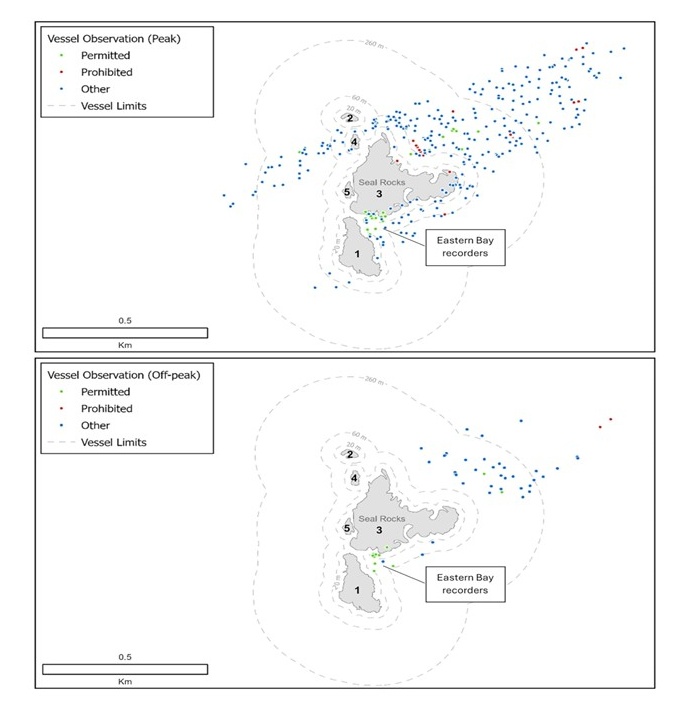
The visual observations showed that boats often approached closer than regulations allow (32% of the time), which shows there is a need for both improved education on the impacts of these approaches, and increased enforcement to encourage people follow the rules. The approach of using acoustic data and visual observations was found to be a good one, and the authors of the study recommend this at other locations. This kind of baseline information is very important for assessing what kinds of impacts the vessel noise and presence may be having on the seals
Cover image: Australian fur seal (Arctocephalus pusillus doriferus) male, Bruny Island, Tasmania, Australia. by Charles J. Sharp
I am a post-doctoral researcher at the University of Hawaiʻi at Mānoa. My research interests cover many aspects of the ecology of marine mammals, in particular the factors that drive distribution and abundance of whales and dolphins, as well as the impacts of human activities on these animals. I’ve spent a lot of time in the field, conducting surveys (very lucky). When back at my desk, I use ecological modelling techniques to investigate relationships between animals and their environment.