McClenachan, L., Neal, B., McMahan, M., Batchelder, E., Villanueva-Galarza, N. and Grabowski, J. (2025), Fishers’ Local Ecological Knowledge Reveals Complex Food Web Dynamics With Rapidly Warming Waters. Fish Fish, 26: 1122-1133. https://doi.org/10.1111/faf.70021
Lobster Fishery
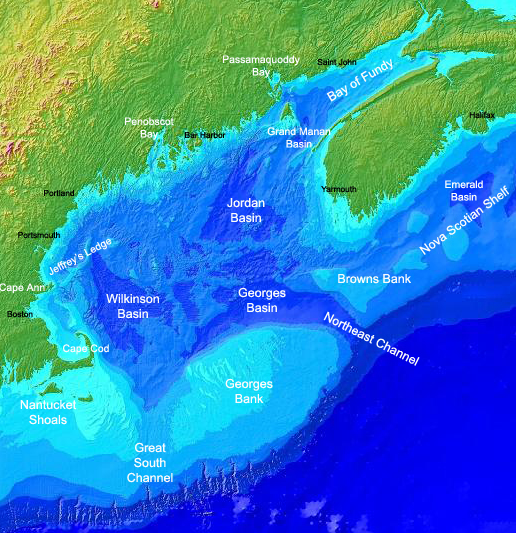
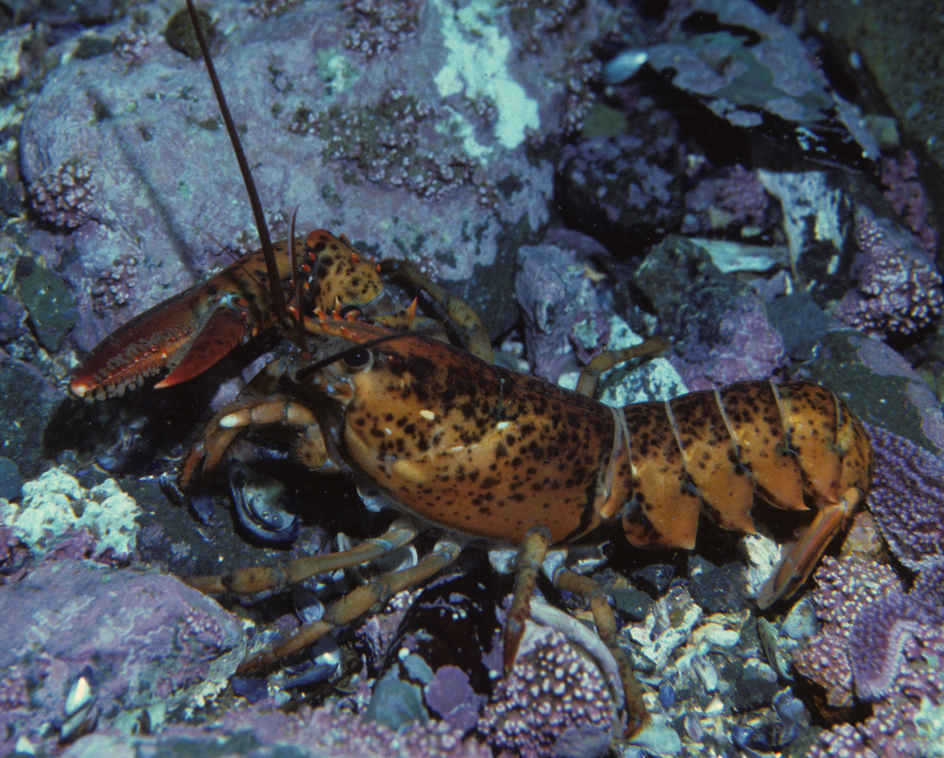
The Gulf of Maine is a major hydrological feature of the New England states that stretches from Cape Cod in Massachusetts to the southern coastline of Nova Scotia. Many people call this area home and depend on its resources for their livelihood. The primary industry here is the lobster fishery which targets American lobster (Homarus americanus). However, it wasn’t always that way. Just 20 years ago, large fish species like cod were the focus of local fishers. Population declines hit these fish hard and forced the fishers to transition to other species such as lobsters. Now, the lobster populations are at risk; not from overfishing but climate change.
The Gulf of Maine is currently warming faster than 99% of the world’s oceans. This is significantly disrupting the lobster fishery. Not only are the lobsters moving to deeper water to escape the heat, warm water species such as black sea bass (Centropristis striata) are moving in. Shifting populations create new ecological interactions not seen before, making it difficult to understand the full implications of these changes. The speed at which all this is happening makes it difficult for science and management policies to keep up. That’s why Loren McClenachan and her research team looked to a different source of information; the lobster fishers themselves!
Local Ecological Knowledge
Fishers possess unique information known as local ecological knowledge. Local ecological knowledge is the lived experiences of individuals and their relationship with the environment. Many fishers in the Gulf of Maine are out on the water every day and interact with the ecosystem at a level not feasible by current monitoring standards. Tapping this knowledge could answer some critical questions about how the gulf and its residents are reacting to the warming waters. Therefore, McClenachan et al. interviewed lobster fishers to gauge their understanding of the current food web in the Gulf of Maine as it undergoes this change.
Web of Fish
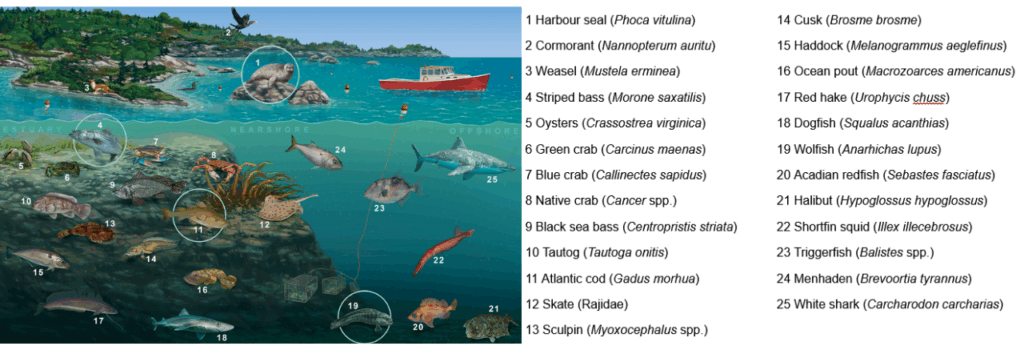
The fishers identified over 35 unique species that interact with the lobsters across all stages of their life. This included key predators such as harbour seal (Phoca vitulina), striped bass (Morone saxatilis), and Atlantic cod (Gadus morhua). Even weasel (Mustela erminea) and mink (Neovison vison) were observed taking lobsters or bait from nearshore traps. Striped bass, Atlantic cod, seals and black sea bass were identified as the most significant predators of lobsters in that order.
When asked about the impacts of climate change, the fishers noted that warming water was their greatest concern. They believed that warmer water would have a negative impact on the lobsters, pushing them to deeper water. On the other hand they identified predators like black sea bass and striped bass could increase and therefore have an even greater impact on lobster populations.
Connecting Perceptions and Science
While the local ecological knowledge of the lobster fishers is valuable, these results are based on their perspectives and unique interactions with the environment. Individuals who primarily fished inshore had different beliefs and priorities compared to those who were offshore. Perspectives are not facts. These observations can inform science, but can’t tell us for certain what is truly happening. This is why we should use local ecological knowledge to inform experts who can then adjust their study to better investigate the perceptions made by local fishers. The Gulf of Maine can be an excellent case study to marry the two and help not only preserve the fishery, but the natural food web as well.

I am a recent MSc graduate in marine biology from Bangor University, where I studied population dynamics of elasmobranchs off the coast of Wales. My interests lie in ecological data analysis to understand environmental processes and identify natural patterns. However, nothing beats being in the field and interacting directly with the marine life.