Chawarski, J., Coté, D., Stranne, C., Jakobsson, M., Mayer, L., Cohen, J. H., Geoffroy, M. Distribution of marine snow and copepods vary between two Arctic fjords with contrasting ice cover and stratification regimes. Front. Mar. Sci. 13, 1516750. (2026). https://doi.org/10.3389/fmars.2026.1516750
Snow Below the Surface
Snow in the Arctic might bring to mind blizzards and icy landscapes, but the ocean has its own version of snow. It’s called marine snow, and instead of falling from the sky, it rains down through the water. These particles often look like soft, white flakes, which is how they got their name.
After bursts of biological activity at the ocean’s surface, tiny bits of organic material begin to sink. This includes dead plants and animals, fecal pellets, microbes, and other debris. As they fall, they feed organisms living in deeper waters and move carbon dioxide from the atmosphere to the seafloor. Among the creatures that depend on this falling food are copepods, a type of zooplankton, or tiny drifting animal, that play a key role in the ocean food web. In turn, copepods are eaten by fish, seabirds, and even whales. In short, marine snow connects surface life to the deep ocean and helps link microscopic life and larger animals.
The Ocean Has Layers
The ocean is not one uniform body of water, rather it is more like a layered system. A simple way to picture this is a vinaigrette salad dressing: oil floats on top while vinegar settles below. Even if you shake it, the layers separate again. The ocean behaves similarly. Ocean water separates into layers based on temperature and saltiness, where warmer and less salty water stays near the surface and colder and saltier water sinks. This layering is called stratification, and it makes it harder for the ocean to mix. These layers matter because they control how heat moves, how nutrients reach marine life, where organisms can survive, and how particles like marine snow sink.
An Extra Arctic Ocean Twist
Stratification happens all over the world, but in the Arctic, sea ice adds another layer of complexity. Sea ice shapes where and when life can grow, influences how carbon moves through the ocean, acts as a habitat for many organisms, and affects how water layers form and mix. Then, when sea ice and stratification interact, they can influence how marine snow forms, what types of particles develop, how fast they sink, where they travel, and how they clump together.
Understanding the Connections
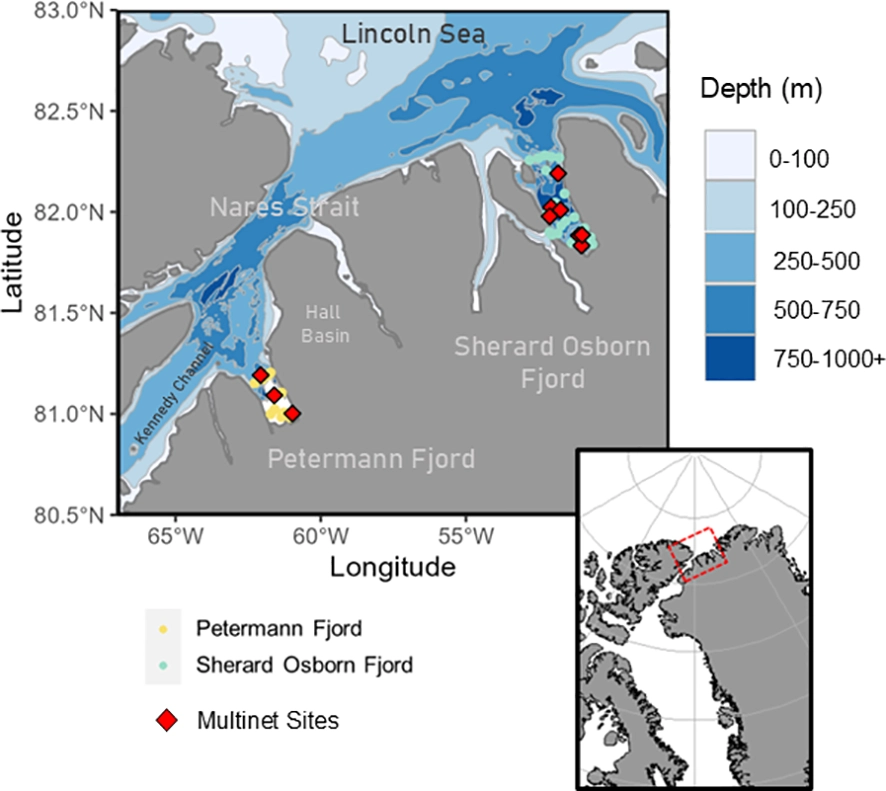
To explore these relationships, the research team studied two fjords during the 2019 Ryder Glacier expedition in Greenland using optics, acoustics, and conventional sampling nets:
Peterman Fjord
- Home to the marine terminating Petermann Glacier that drains into Nares Strait, which exports glacial ice
- More open water
- Less stratified (more mixing)
- Greater sea ice export out of fjord
Sherard Osborn Fjord
- Home to the marine terminating Ryder Glacier that drains to Lincoln Sea, which accumulates thick multi-year sea ice
- Frequently experiences ice damming, where sea ice acts as a barrier trapping water inside the fjord
- More stratified (stronger layering)
- Sea ice remains throughout much of summer
Their goal was to determine how stratification and sea ice conditions would affect primary production, marine snow, and zooplankton communities. The researchers expected that stronger stratification in Sherard Osborn Fjord would limit surface biological activity and change both marine snow and zooplankton communities.
What Did They Find?
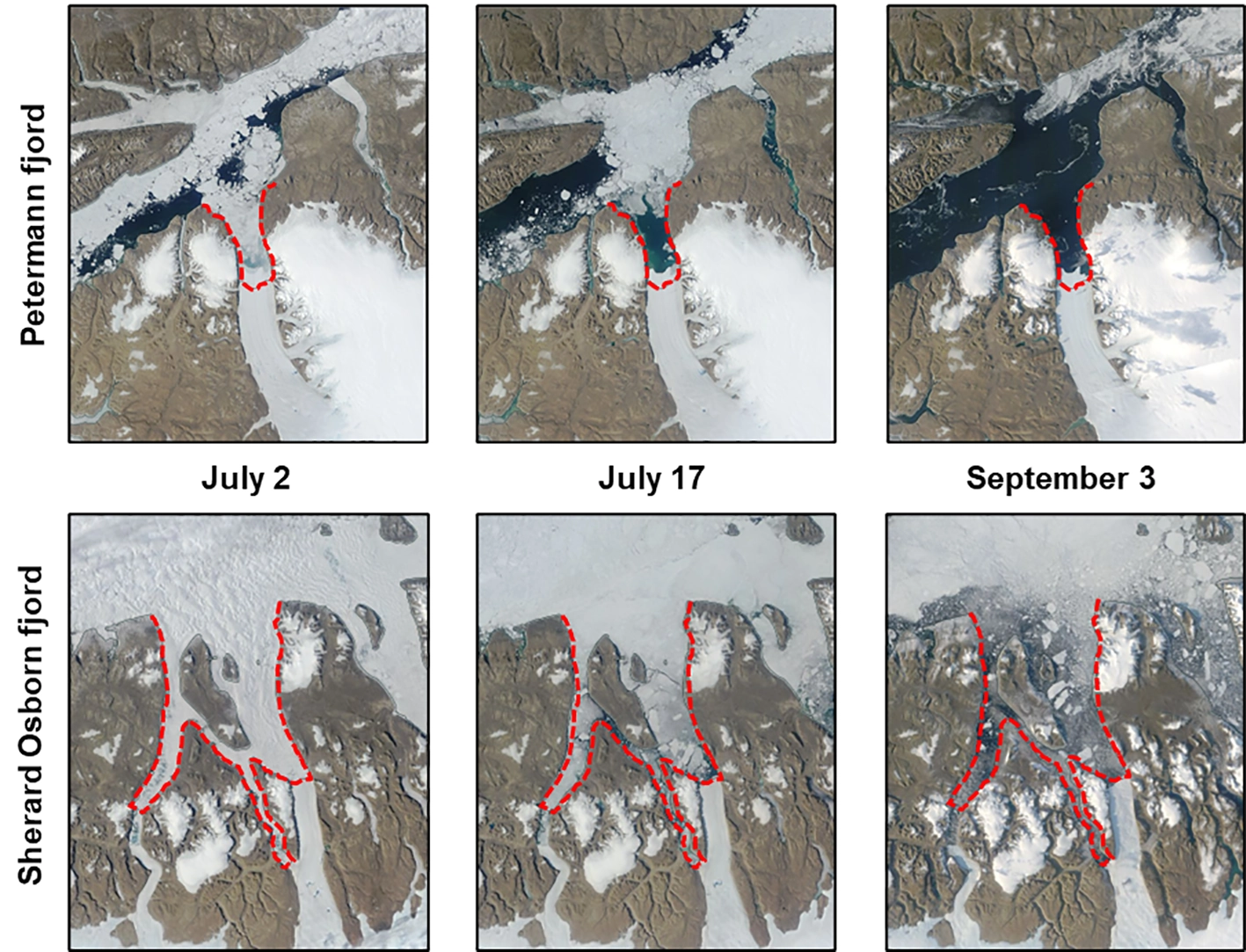
With satellite imagery, the team confirmed very different sea ice conditions between the two fjords. Petermann Fjord had lost its sea ice by August 14th whereas Sherard Osborn Fjord remained ice-covered the entire summer season due to ice damming (Figure 2). This led to stronger stratification in Sherard Osborn Fjord.
Life in the Two Different Fjords
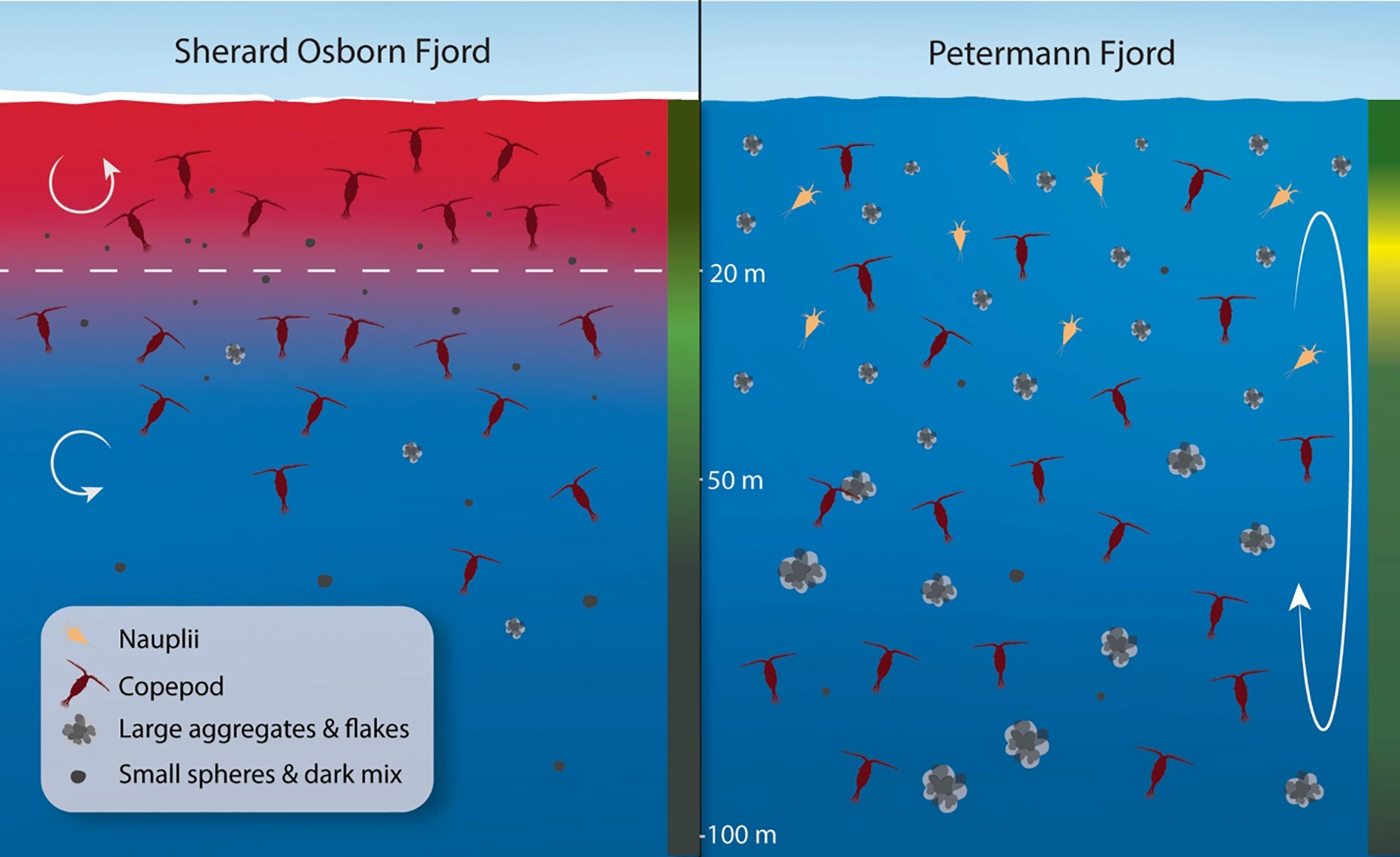
The researchers found clear, stark differences in the marine snow and zooplankton between the two fjords (Figure 3).
Peterman Fjord (well-mixed)
- Greater abundance of all marine snow particle types
- Primary marine snow type: dark mix
- More balanced copepod sizes
- Higher numbers of copepods, including juveniles
- Copepods spread deeper in the water
Sherard Osborn Fjord (stratified)
- Less marine snow
- Primary marine snow type: flake and dark mix with small spherical particles in upper layers
- Fewer copepod juveniles
- More small copepod species
- Copepods concentrated closer to surface
The Impact and Future
In open fjords, like Petermann, winds can stir the ocean, bringing nutrients up to the surface and fueling life. But in ice-restricted fjords that are strongly stratified, like Sherard Osborn, mixing is reduced, nutrients stay trapped below, and surface biological activity declines. This ultimately affects the entire food web, from the microscopic particles to zooplankton and beyond.
It is unclear which of these two fjord scenarios will become more common in the future. Climate change is expected to increase stratification, which would create scenarios like Sherard Osborn. On the other hand, a reduction in sea ice cover may reduce the chances of ice damming, which would produce a Petermann Fjord scenario. This means that both scenarios in this study could become more common in different places. To disentangle further, scientists will need more studies connecting physics, ice, and life in the rapidly changing Arctic.
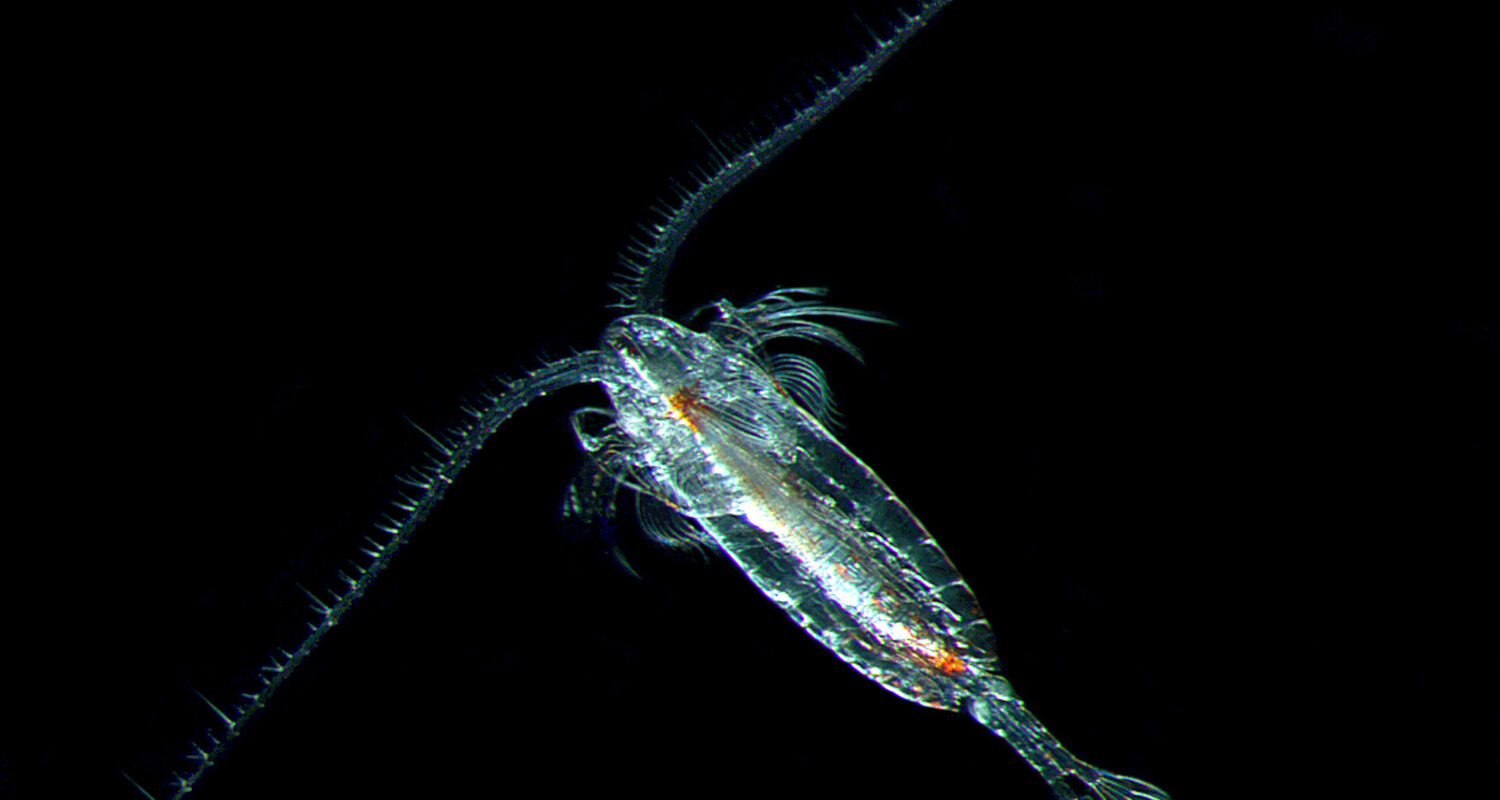
Cover image is a copepod (species Calanus finmarchicus), which is a zooplankton commonly found in the Arctic. Photograph was taken by Russ Hopcroft and obtained from the NOAA Public Domain Library.
I am a Ph.D. Candidate at the University of Connecticut–Avery Point studying the marine carbonate system in the Arctic Ocean. My research focuses on biogeochemical changes occurring within sea ice as the Arctic continues to warm. Outside of my research, I enjoy hiking, running, aerial gymnastics, paddleboarding, traveling, and spending time with family and friends.

Can you give an example in real life where things are not as pure or simple as they seem?