What is Avian Vomitomics?
Surveys of fish populations traditionally use boats and nets to catch and record fish. However, what if there was another way to record that biological information? Pelletier et al. 2025 proposes a new method they are aptly naming avian vomitomics. It involves collecting seabird regurgitations to record the length and age of undigested juvenile fish. So, why does this matter, and how did they do it?
Population Assessment 101
Small schooling fish, also known as forage fish, are important portions of commercial fishing catches and the marine food web. A balance must be struck between our harvest and maintaining a healthy population for marine predators. Stock assessments, also known as population studies, help us understand how many individuals of a particular species there are in an area. With that information, we can predict how many fish we can safely remove without risking the population’s ability to recover. However, forage fish are difficult to assess due to unknowns about their survival rates at young ages. Much of this stems from poor sampling data of these early life stages due to their small size which can evade capture much easier than their adult counterparts.
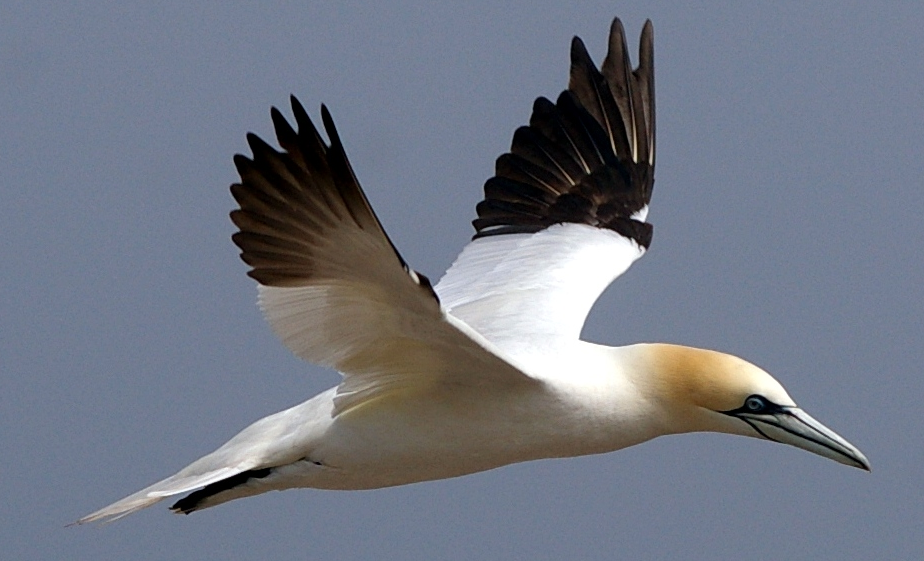
While humans have problems capturing juvenile forage fish, seabirds such as northern gannets (Morus bassanus) specialize in eating them. So how do we get to look at these fish after being eaten? Well, these birds will naturally regurgitate their food in response to a disturbance, which makes for a convenient, non-invasive method to collect samples.
Heads, Tails, and Age
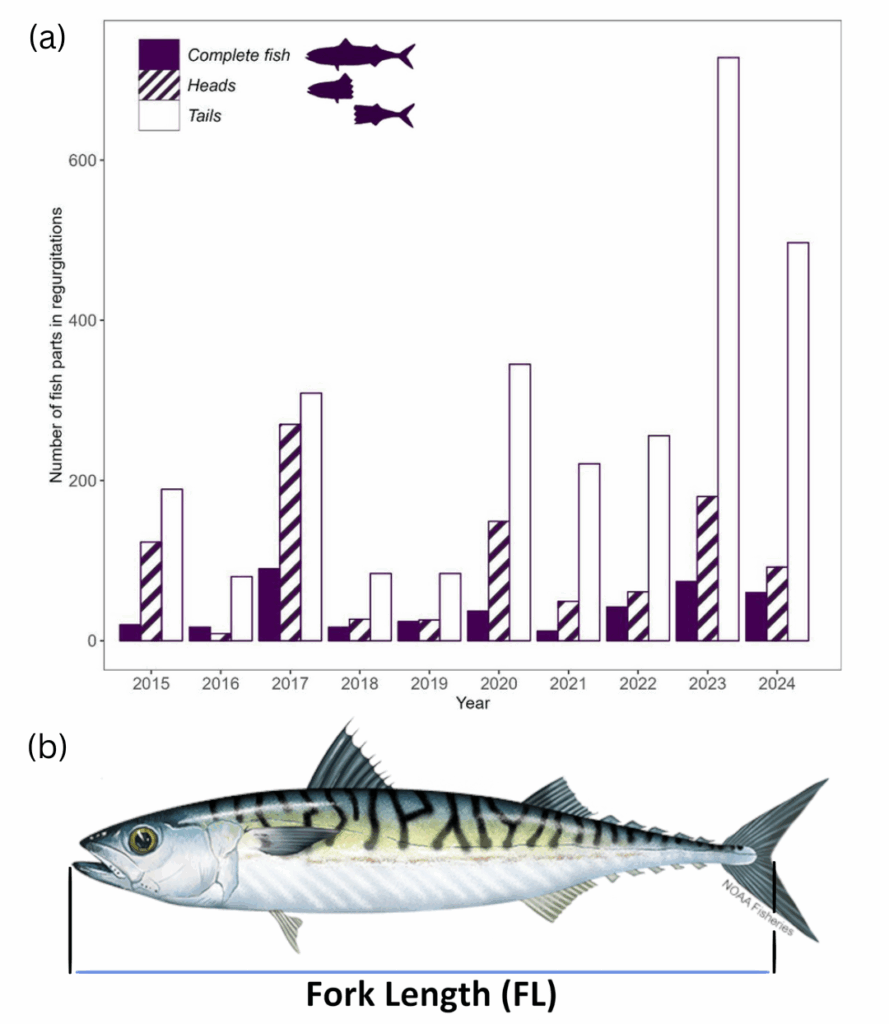
Pelletier and his team tested this methodology at Bonaventure Island in the Gulf of St. Lawrence, Québec, Canada. Here a large northern gannet population thrives on local forage fish populations, primarily made up of Atlantic mackerel (Scomber scombrus). The team was able to collect a large sample of fish from regurgitations, but the majority of the time, the fish were incomplete. The tail was the most common portion of the mackerel to be found, followed by the head and lastly the complete fish. So, rather than only use complete fish, the team used prior length data to predict the fork length of the fish which is the length of the fish from the tip of its head to the center of the fork in its tail. With the fork length in hand, they were able to then estimate the age of the fish.
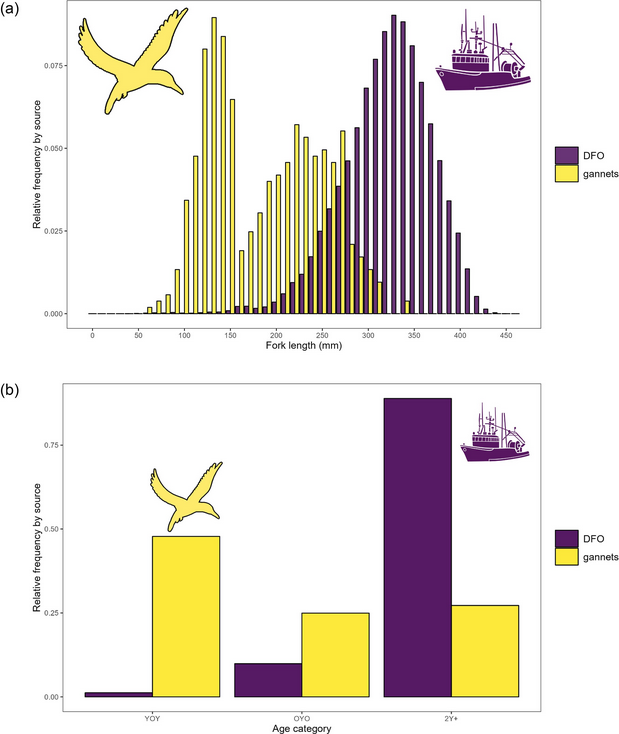
The northern gannets were found to catch significantly smaller and younger Atlantic mackerel than boat surveys. This can be seen in Figure 2 with fish collected by gannets primarily born that year, or one year old. Boat surveys, on the other hand, would primarily capture mackerel at least 2 years old.
Completing the Life Cycle
The gannets were not only found to be an effective sampler in collecting elusive juvenile mackerel, but length and age data were able to be collected as well from the partially digested fish. This makes the avian vomitomics method just as effective as a traditional boat survey. Both of them in concert can cover the full age range of a population, something that has been missing for many forage fish species up until now. As a result, population studies could become more accurate for these forage fish, providing better harvest limits for commercial fisheries to maintain a healthy ocean.

I am a recent MSc graduate in marine biology from Bangor University, where I studied population dynamics of elasmobranchs off the coast of Wales. My interests lie in ecological data analysis to understand environmental processes and identify natural patterns. However, nothing beats being in the field and interacting directly with the marine life.


