Ganley, L. C., Redfern, J. V., O’Brien, O., Pendleton, D. E., Ryder, M., Spooner, I., Campbell, C., Rice, A. N. Balancing marine species conservation with cost-effective renewable energy development. Nature Climate Change (2026). https://doi.org/10.1038/s41558-026-02696-9.
North Atlantic Right Whales and Current Protections
North Atlantic right whales are critically endangered, with only about 400 individuals remaining. Their population has declined largely because of human-caused threats such as ship collisions and entanglement in fishing gear.
Currently, the species is protected under both the US Marine Mammal Protection Act and the US Endangered Species Act. The Marine Mammal Protection Act prohibits the “take” of marine mammals, where “take” refers to harassing, harming, killing, capturing, or disturbing a marine mammal in ways that can disrupt its normal behavior. Harassment is divided into two categories. Level A harassment has the potential to injure a marine mammal whereas Level B harassment has the potential to disturb normal behaviors without causing injury. The Endangered Species Act provides additional protection, including a 500-yard approach rule, and these protections are complemented by vessel speed restrictions and efforts to reduce entanglement in fishing gear.
Despite these protections, climate change is creating new conservation challenges. As ocean temperatures change, more whales are shifting their feeding locations and migration routes. These changing distributions make protecting them even more complicated.
Offshore Wind
Offshore wind energy is an important tool to reduce greenhouse gas emissions and slow climate change, but wind farm construction simultaneously increases industrial activity in the ocean. One of the loudest construction activities is pile driving, where massive steel foundations are hammered into the seafloor. The underwater noise can disturb whales, and depending on how close they are, whales may experience harmful sound exposure leading to injury (Level A) or behavioral changes (Level B).
Conservation Challenge
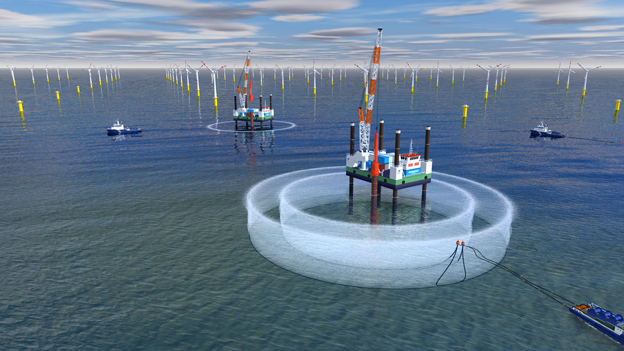
Whale protection during construction is not free. Noise-reduction technologies, such as double big bubble curtains, provide acoustic barriers around pile driving activity. A double big bubble curtain is an underwater noise mitigation system that uses two concentric rings on the seafloor to push air upward, creating a thick, rising wall of bubbles that act as soundproofing (Figure 1). Each system, however, costs $7 million. Another option is limiting construction to months when whales are less likely to be present. Construction window restrictions can delay projects, with each day of additional construction adding $805,000 and an extension into a second year adding around $30 million. So, can we protect whales and keep offshore wind on budget?
To study this balancing act, Ganley and colleagues conducted a tradeoff analysis to evaluate the cost and conservation benefit of different mitigation strategies for pile driving. During permitting, seasonal construction windows were originally designed using historical whale migration patterns to minimize overlap between construction and right whales. Climate-driven shifts in whale distribution, however, mean those historical patterns may no longer reflect where whales are found today. To address this, Ganley and colleagues developed updated models of right whale distribution within wind energy areas and simulated ten different construction scenarios that combined seasonal restrictions with noise-reduction technologies. Each scenario compared the cost with its predicted conservation benefit.
Key Findings
The current seasonal restriction strategy served as the baseline for comparison and had an estimated cost of about $96 million. When the researchers removed seasonal restrictions and allowed pile driving throughout the year, the predicted number of Level A takes increased by 263% and costs increased by approximately $6 million (Figure 2). Allowing pile driving throughout the year but adding additional noise attenuation was still costly, increasing Level A takes by 13% and costs by around $13 million compared to the baseline. Year-round construction increased both cost and the risk of harmful noise exposure.
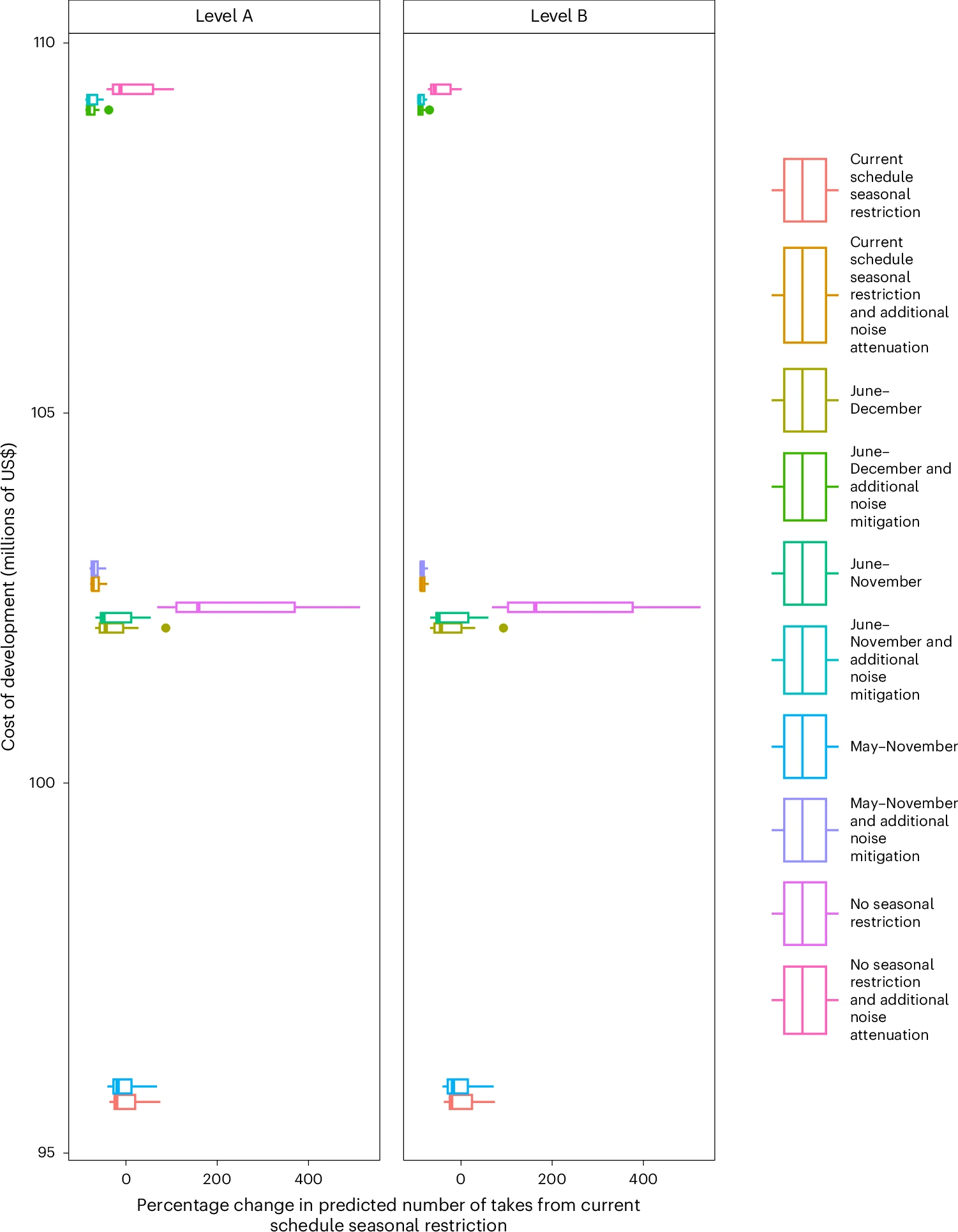
The researchers found that simply shifting the construction to alternative seasonal windows (June-November and June-December) reduced Level A takes by 23% and 24%, respectively. The greatest conservation benefits came from combining seasonal construction windows with noise attenuation technologies like double big bubble curtains. Adding a double big bubble curtain to the current seasonal schedule reduced predicted Level A takes by 66% for an additional $7 million. Modified seasonal schedules paired with noise attenuation performed even better, reducing predicted Level A takes by as much as 74% (Table 1).

The research team identified multiple scenarios that would increase conservation value with minimal additional costs. Simply adjusting seasonal construction windows reduced the predicted number of Level A takes. Combining these revised schedules with noise attenuation technologies produced even greater reductions and only modestly increased project costs. In fact, delays caused by supply chain disruptions or political factors can increase cost anywhere from $50 million per week to $600 million overall. Compared with those expenses, the additional cost of implementing several mitigation strategies is relatively modest.
Although this study focused on North Atlantic right whales, the framework can be applied to other marine species and future offshore wind projects, providing a practical way to balance climate action with biodiversity conservation as offshore wind expands.
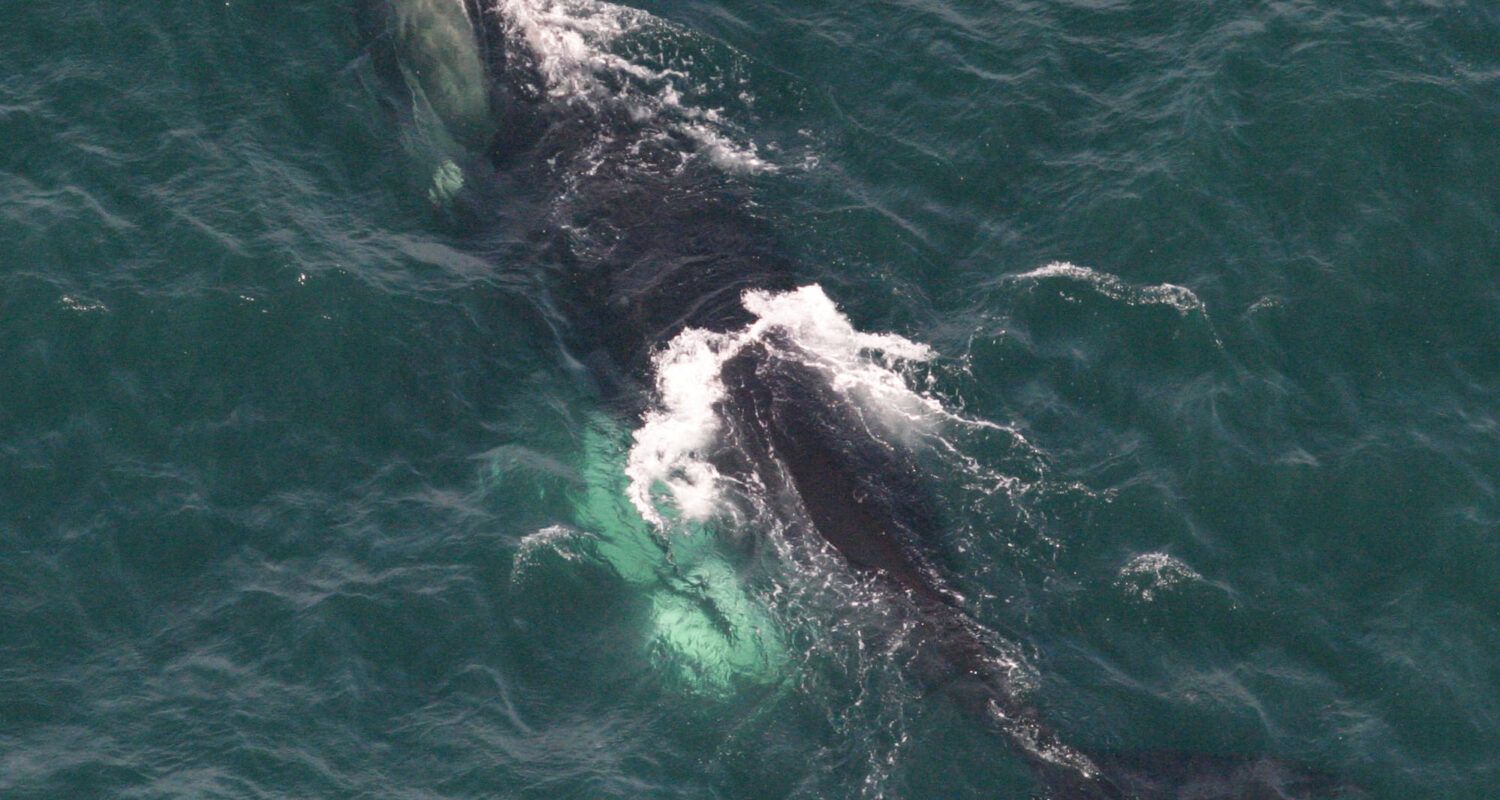
Cover image is of a North Atlantic right whale taken in the Northwest Atlantic Ocean in 2010. Photograph was obtained from the NOAA Public Domain Library.
I am a Ph.D. Candidate at the University of Connecticut–Avery Point studying the marine carbonate system in the Arctic Ocean. My research focuses on biogeochemical changes occurring within sea ice as the Arctic continues to warm. Outside of my research, I enjoy hiking, running, aerial gymnastics, paddleboarding, traveling, and spending time with family and friends.


